


A molecular network map of orexin-orexin receptor signaling system
- PMID: 36480100
- PMCID: PMC10030760
- DOI: 10.1007/s12079-022-00700-3
A molecular network map of orexin-orexin receptor signaling system
Abstract
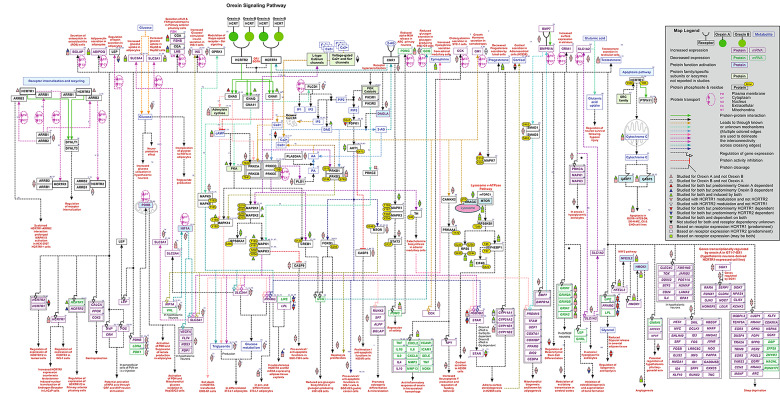
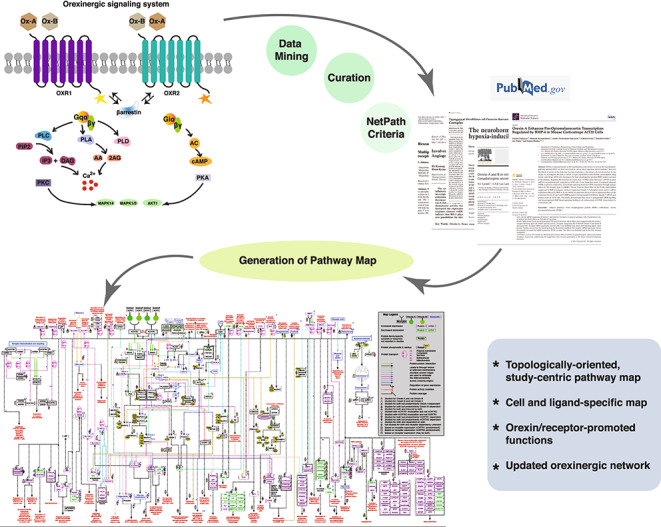
Orexins are excitatory neuropeptides, which are predominantly associated with feeding behavior, sleep-wake cycle and energy homeostasis. The orexinergic system comprises of HCRTR1 and HCRTR2, G-protein-coupled receptors of rhodopsin family and the endogenous ligands processed from HCRT pro-hormone, Orexin A and Orexin B. These neuropeptides are biosynthesized by the orexin neurons present in the lateral hypothalamus area, with dense projections to other brain regions. The orexin-receptor signaling is implicated in various metabolic as well as neurological disorders, making it a promising target for pharmacological interventions. However, there is limited information available on the collective representation of the signal transduction pathways pertaining to the orexin-orexin receptor signaling system. Here, we depict a compendium of the Orexin A/B stimulated reactions in the form of a basic signaling pathway map. This map catalogs the reactions into five categories: molecular association, activation/inhibition, catalysis, transport, and gene regulation. A total of 318 downstream molecules were annotated adhering to the guidelines of NetPath curation. This pathway map can be utilized for further assessment of signaling events associated with orexin-mediated physiological functions and is freely available on WikiPathways, an open-source pathway database ( https://www.wikipathways.org/index.php/Pathway:WP5094 ).
Keywords: Feeding; Hypothalamus; Orexin; PathVisio; Signaling pathway; Sleep.
© 2022. The International CCN Society.
Conflict of interest statement
The author(s) declare no conflicts of interest.
Figures
References
-
- Al-Barazanji KA, Wilson S, Baker J, et al. Central orexin-A activates hypothalamic-pituitary-adrenal axis and stimulates hypothalamic corticotropin releasing factor and arginine vasopressin neurones in conscious rats. J Neuroendocrinol. 2001;13:421–424. doi: 10.1046/j.1365-2826.2001.00655.x. - DOI - PubMed
LinkOut - more resources
Full Text Sources
