


Iron Brain Menace: The Involvement of Ferroptosis in Parkinson Disease
- PMID: 36497089
- PMCID: PMC9735800
- DOI: 10.3390/cells11233829
Iron Brain Menace: The Involvement of Ferroptosis in Parkinson Disease
Abstract
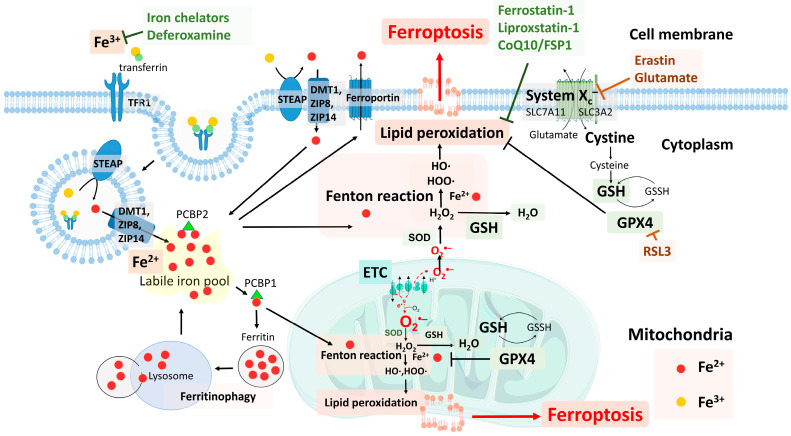
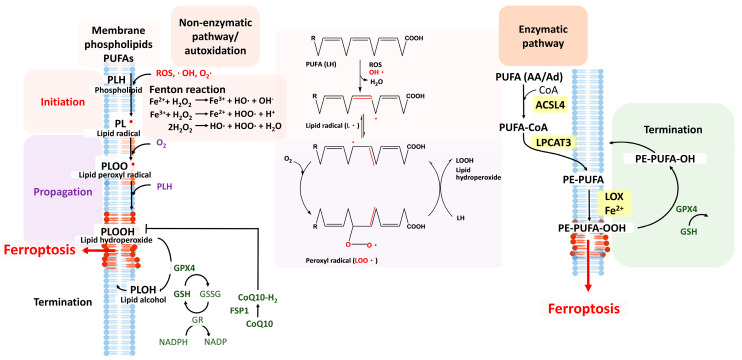
Parkinson disease (PD) is the second-most common neurodegenerative disease. The characteristic pathology of progressive dopaminergic neuronal loss in people with PD is associated with iron accumulation and is suggested to be driven in part by the novel cell death pathway, ferroptosis. A unique modality of cell death, ferroptosis is mediated by iron-dependent phospholipid peroxidation. The mechanisms of ferroptosis inhibitors enhance antioxidative capacity to counter the oxidative stress from lipid peroxidation, such as through the system xc-/glutathione (GSH)/glutathione peroxidase 4 (GPX4) axis and the coenzyme Q10 (CoQ10)/FSP1 pathway. Another means to reduce ferroptosis is with iron chelators. To date, there is no disease-modifying therapy to cure or slow PD progression, and a recent topic of research seeks to intervene with the development of PD via regulation of ferroptosis. In this review, we provide a discussion of different cell death pathways, the molecular mechanisms of ferroptosis, the role of ferroptosis in blood-brain barrier damage, updates on PD studies in ferroptosis, and the latest progress of pharmacological agents targeting ferroptosis for the intervention of PD in clinical trials.
Keywords: CoQ10; FSP1; GPX4; Parkinson disease; ferroptosis; glutathione; iron metabolism; lipid peroxidation; lipoxygenase; system xc−.
Conflict of interest statement
The authors declare that the research was conducted in the absence of any commercial or financial relationships that could be construed as a potential conflict of interest.
Figures
References
Publication types
MeSH terms
Substances
Grants and funding
LinkOut - more resources
Full Text Sources
Other Literature Sources
Medical
Research Materials
