


Exposure to Bisphenol A Substitutes, Bisphenol S and Bisphenol F, and Its Association with Developing Obesity and Diabetes Mellitus: A Narrative Review
- PMID: 36497992
- PMCID: PMC9736995
- DOI: 10.3390/ijerph192315918
Exposure to Bisphenol A Substitutes, Bisphenol S and Bisphenol F, and Its Association with Developing Obesity and Diabetes Mellitus: A Narrative Review
Abstract
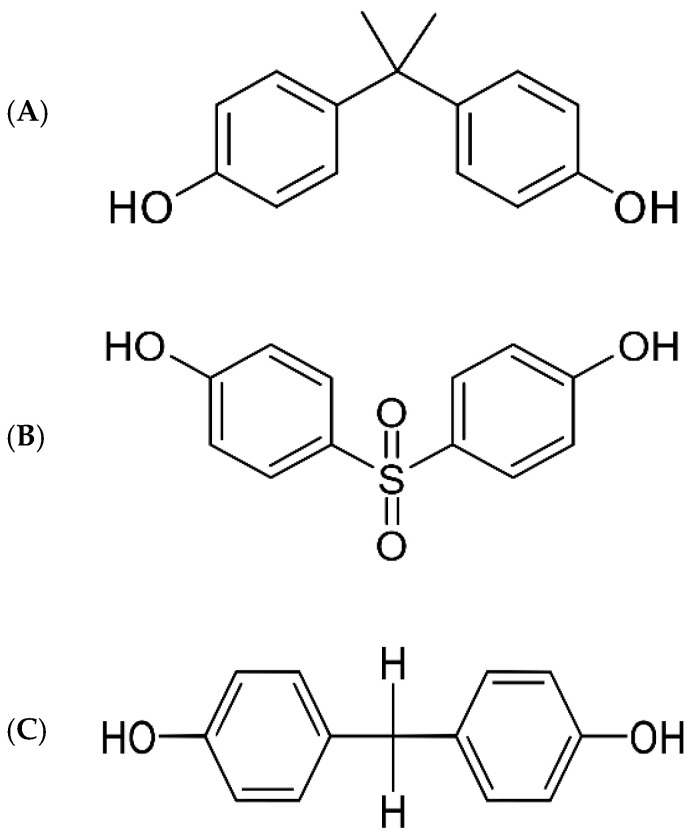
Bisphenol A, a well-known endocrine-disrupting chemical, has been replaced with its analogs bisphenol S (BPS) and bisphenol F (BPF) over the last decade due to health concerns. BPS and BPF are present in relatively high concentrations in different products, such as food products, personal care products, and sales receipts. Both BPS and BPF have similar structural and chemical properties to BPA; therefore, considerable scientific efforts have investigated the safety of their exposure. In this review, we summarize the findings of relevant epidemiological studies investigating the association between urinary concentrations of BPS and/or BPF with the incidence of obesity or diabetes. The results showed that BPS and BPF were detected in many urinary samples at median concentrations ranging from 0.03 to 0.4 µg·L-1. At this exposure level, BPS median urinary concentrations (0.4 µg·L-1) were associated with the development of obesity. At a lower exposure level (0.1-0.03 µg·L-1), two studies showed an association with developing diabetes. For BPF exposure, only one study showed an association with obesity. However, most of the reported studies only assessed BPS exposure levels. Furthermore, we also summarize the findings of experimental studies in vivo and in vitro regarding our aim; results support the possible obesogenic effects/metabolic disorders mediated by BPS and/or BPF exposure. Unexpectedly, BPS may promote worse obesogenic effects than BPA. In addition, the possible mode of action underlying the obesogenic effects of BPS might be attributed to various pathophysiological mechanisms, including estrogenic or androgenic activities, alterations in the gene expression of critical adipogenesis-related markers, and induction of oxidative stress and an inflammatory state. Furthermore, susceptibility to the adverse effects of BPS may be altered by sex differences according to the results of both epidemiological and experimental studies. However, the possible mode of action underlying these sex differences is still unclear. In conclusion, exposure to BPS or BPF may promote the development of obesity and diabetes. Future approaches are highly needed to assess the safety of BPS and BPF regarding their potential effects in promoting metabolic disturbances. Other studies in different populations and settings are highly suggested.
Keywords: bisphenol F; bisphenol S; bisphenols; diabetes; endocrine disruptors; obesity.
Conflict of interest statement
The authors declare no conflict of interest.
Figures
References
-
- Ritchie H., Roser M. Obesity. [(accessed on 14 September 2022)]. Available online: https://ourworldindata.org/obesity.
-
- International Diabetes Federation . IDF Diabetes Atlas. 10th ed. Volume 102. International Diabetes Federation; Brussels, Belgium: 2021. pp. 147–148.
-
- Serván P.R. Obesity and Diabetes. Nutr. Hosp. 2013;28:138–143. - PubMed
Publication types
MeSH terms
Substances
LinkOut - more resources
Full Text Sources
Medical
