


Dietary Intakes of Elite Male Professional Rugby Union Players in Catered and Non-Catered Environments
- PMID: 36498314
- PMCID: PMC9737971
- DOI: 10.3390/ijerph192316242
Dietary Intakes of Elite Male Professional Rugby Union Players in Catered and Non-Catered Environments
Abstract
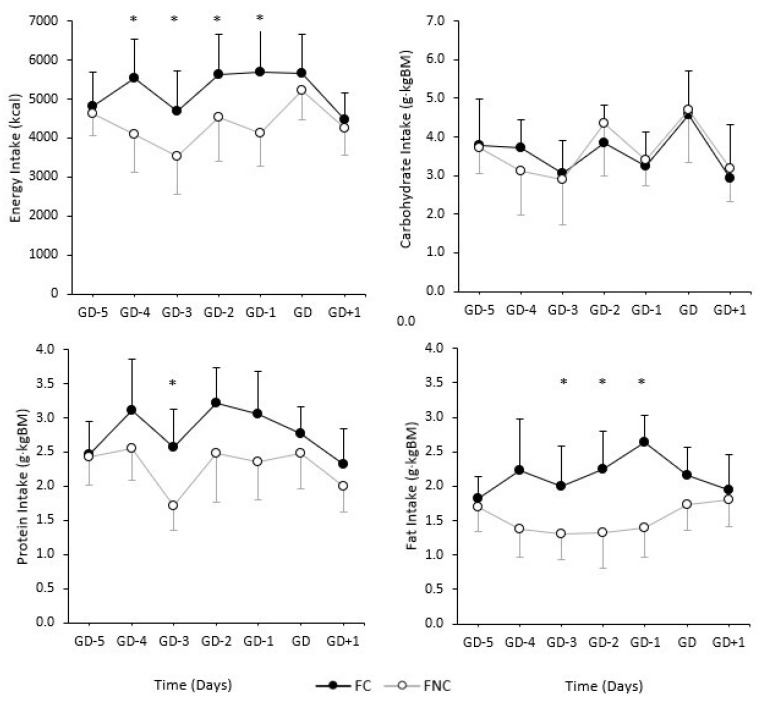
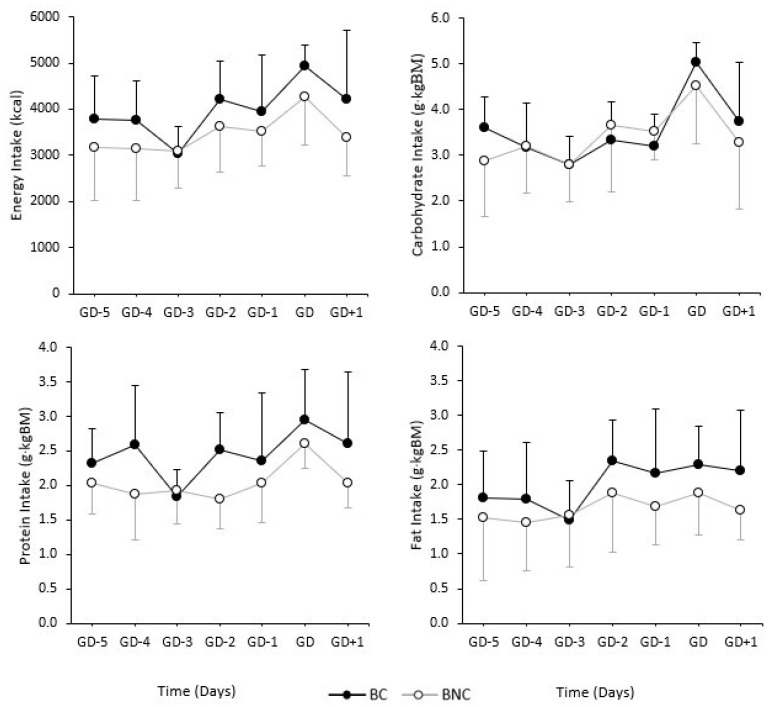
In professional rugby union, it is common for players to switch between catered and non-catered dietary environments throughout a season. However, little is known about the difference in dietary intake between these two settings. Twelve elite male professional rugby union players (28.3 ± 2.9 y, 188.9 ± 9.5 cm, 104.1 ± 13.3 kg) from the New Zealand Super Rugby Championship completed seven-day photographic food diaries with two-way communication during two seven-day competition weeks in both catered and non-catered environments. While no significant differences were observed in relative carbohydrate intake, mean seven-day absolute energy intakes (5210 ± 674 vs. 4341 ± 654 kcal·day-1), relative protein (2.8 ± 0.3 vs. 2.3 ± 0.3 g·kgBM·day-1) and relative fat (2.1 ± 0.3 vs. 1.5 ± 0.3 g·kgBM·day-1) intakes were significantly higher in the catered compared to the non-catered environment (respectively) among forwards (n = 6). Backs (n = 6) presented non-significantly higher energy and macronutrient intakes within a catered compared to a non-catered environment. More similar dietary intakes were observed among backs regardless of the catering environment. Forwards may require more support and/or attention when transitioning between catered and non-catered environments to ensure that recommended dietary intakes are being achieved.
Keywords: body composition; dietary analysis; energy intake; macronutrients; team-sport.
Conflict of interest statement
I.R. is an employee of the Gatorade Sports Science Institute, a division of PepsiCo, Incorporated. L.P. completed this study as part of a research position with the Gatorade Sports Science Institute, a division of PepsiCo, Incorporated. The views expressed in this article are those of the authors and do not necessarily reflect the position or policy of PepsiCo, Incorporated.
Figures
References
-
- Naughton M., Miller J., Slater G.J. Impact-Induced Muscle Damage and Contact Sports: Etiology, Effects on Neuromuscular Function and Recovery, and the Modulating Effects of Adaptation and Recovery Strategies. Int. J. Sports Physiol. Perform. 2018;13:962–969. doi: 10.1123/ijspp.2017-0268. - DOI - PubMed
MeSH terms
LinkOut - more resources
Full Text Sources
