


Artificial Intelligence in Pediatric Cardiology: A Scoping Review
- PMID: 36498651
- PMCID: PMC9738645
- DOI: 10.3390/jcm11237072
Artificial Intelligence in Pediatric Cardiology: A Scoping Review
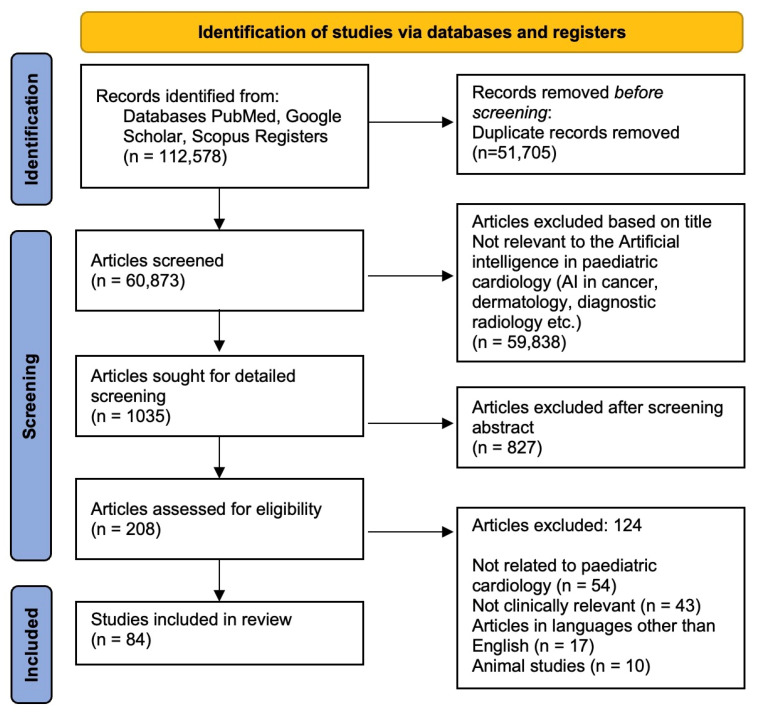
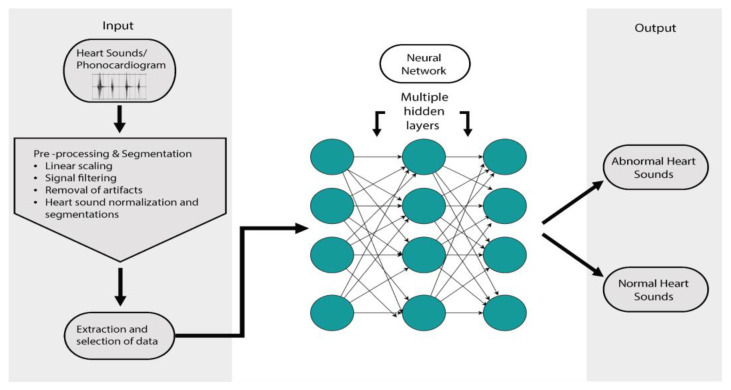
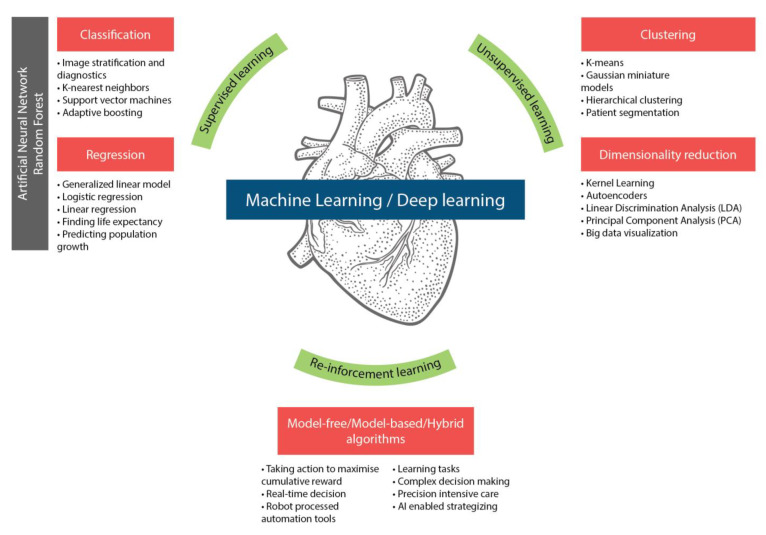
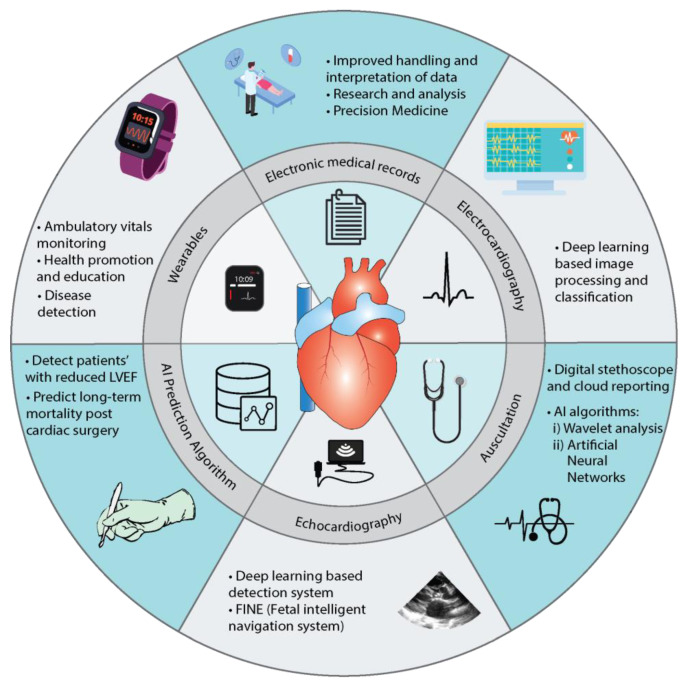
Abstract
The evolution of AI and data science has aided in mechanizing several aspects of medical care requiring critical thinking: diagnosis, risk stratification, and management, thus mitigating the burden of physicians and reducing the likelihood of human error. AI modalities have expanded feet to the specialty of pediatric cardiology as well. We conducted a scoping review searching the Scopus, Embase, and PubMed databases covering the recent literature between 2002-2022. We found that the use of neural networks and machine learning has significantly improved the diagnostic value of cardiac magnetic resonance imaging, echocardiograms, computer tomography scans, and electrocardiographs, thus augmenting the clinicians' diagnostic accuracy of pediatric heart diseases. The use of AI-based prediction algorithms in pediatric cardiac surgeries improves postoperative outcomes and prognosis to a great extent. Risk stratification and the prediction of treatment outcomes are feasible using the key clinical findings of each CHD with appropriate computational algorithms. Notably, AI can revolutionize prenatal prediction as well as the diagnosis of CHD using the EMR (electronic medical records) data on maternal risk factors. The use of AI in the diagnostics, risk stratification, and management of CHD in the near future is a promising possibility with current advancements in machine learning and neural networks. However, the challenges posed by the dearth of appropriate algorithms and their nascent nature, limited physician training, fear of over-mechanization, and apprehension of missing the 'human touch' limit the acceptability. Still, AI proposes to aid the clinician tomorrow with precision cardiology, paving a way for extremely efficient human-error-free health care.
Keywords: artificial intelligence; congenital heart diseases; machine learning; pediatric cardiac surgery; pediatric cardiology.
Conflict of interest statement
The authors declare no conflict of interest.
Figures
References
-
- Roth G.A., Mensah G.A., Johnson C.O., Addolorato G., Ammirati E., Baddour L.M., Barengo N.C., Beaton A.Z., Benjamin E.J., Benziger C.P., et al. Global Burden of Cardiovascular Diseases and Risk Factors, 1990–2019. J. Am. Coll. Cardiol. 2020;76:2982–3021. doi: 10.1016/j.jacc.2020.11.010. - DOI - PMC - PubMed
Publication types
LinkOut - more resources
Full Text Sources
