


Pathophysiology of Type 1 Diabetes and Gut Microbiota Role
- PMID: 36498975
- PMCID: PMC9737253
- DOI: 10.3390/ijms232314650
Pathophysiology of Type 1 Diabetes and Gut Microbiota Role
Abstract
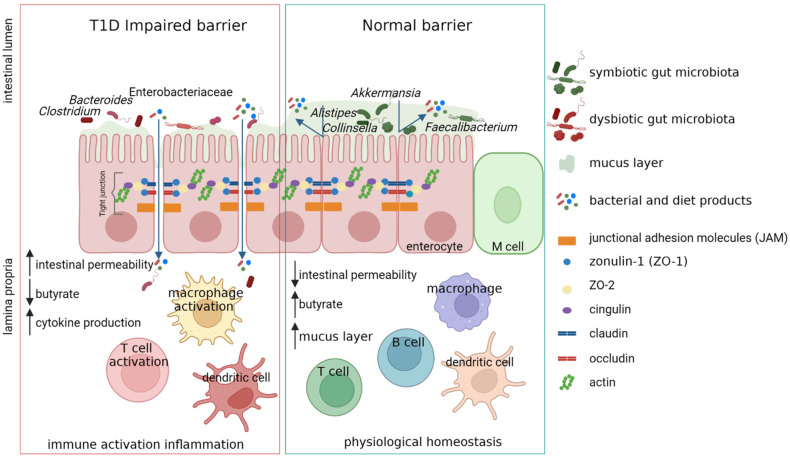
Type 1 diabetes (T1D) is a multifactorial autoimmune disease driven by T-cells against the insulin-producing islet β-cells, resulting in a marked loss of β-cell mass and function. Although a genetic predisposal increases susceptibility, the role of epigenetic and environmental factors seems to be much more significant. A dysbiotic gut microbial profile has been associated with T1D patients. Moreover, new evidence propose that perturbation in gut microbiota may influence the T1D onset and progression. One of the prominent features in clinically silent phase before the onset of T1D is the presence of a microbiota characterized by low numbers of commensals butyrate producers, thus negatively influencing the gut permeability. The loss of gut permeability leads to the translocation of microbes and microbial metabolites and could lead to the activation of immune cells. Moreover, microbiota-based therapies to slow down disease progression or reverse T1D have shown promising results. Starting from this evidence, the correction of dysbiosis in early life of genetically susceptible individuals could help in promoting immune tolerance and thus in reducing the autoantibodies production. This review summarizes the associations between gut microbiota and T1D for future therapeutic perspectives and other exciting areas of research.
Keywords: butyrate production; dysbiosis; gut microbiome; insulin resistance; intestine permeability; type 1 diabetes (T1D).
Conflict of interest statement
The authors declare no conflict of interest.
Figures
References
-
- Karuranga S., Malanda B., Saeedi P., Salpea P., editors. IDF Diabetes Atlas, 9th Edition Committee IDF DIABETES ATLAS Ninth Edition 2019. IDF; Brussels, Belgium: 2019.
-
- Lucier J., Weinstock R.S. StatPearls. StatPearls Publishing; Treasure Island, FL, USA: 2022. Diabetes Mellitus Type 1.
-
- Insel R.A., Dunne J.L., Atkinson M.A., Chiang J.L., Dabelea D., Gottlieb P.A., Greenbaum C.J., Herold K.C., Krischer J.P., Lernmark Å., et al. Staging Presymptomatic Type 1 Diabetes: A Scientific Statement of JDRF, the Endocrine Society, and the American Diabetes Association. Diabetes Care. 2015;38:1964–1974. doi: 10.2337/dc15-1419. - DOI - PMC - PubMed
Publication types
MeSH terms
LinkOut - more resources
Full Text Sources
Medical
