


Placental Transcriptome Profiling in Subtypes of Diabetic Pregnancies Is Strongly Confounded by Fetal Sex
- PMID: 36499721
- PMCID: PMC9740420
- DOI: 10.3390/ijms232315388
Placental Transcriptome Profiling in Subtypes of Diabetic Pregnancies Is Strongly Confounded by Fetal Sex
Abstract
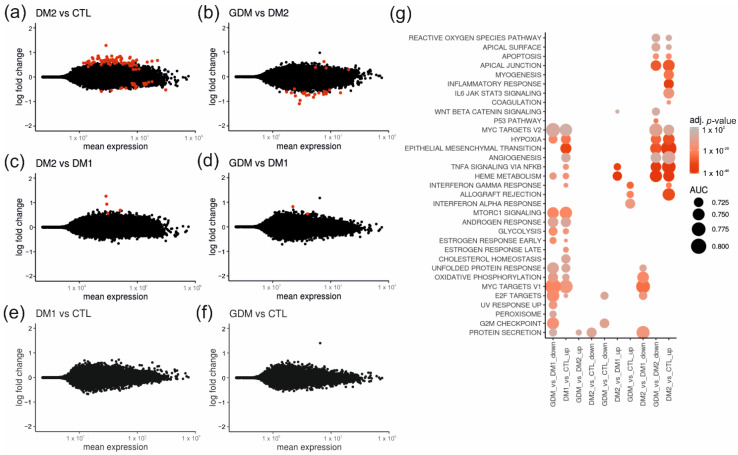
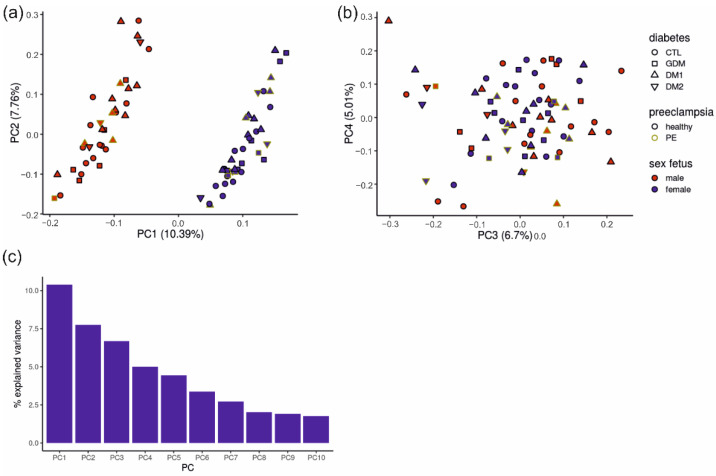
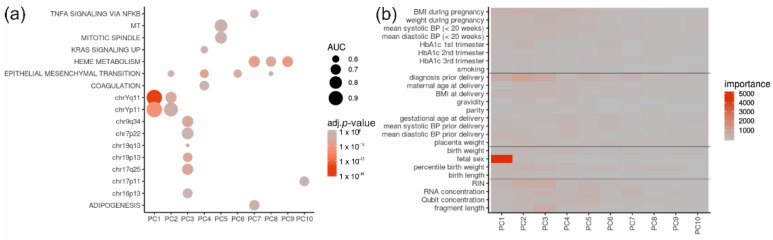
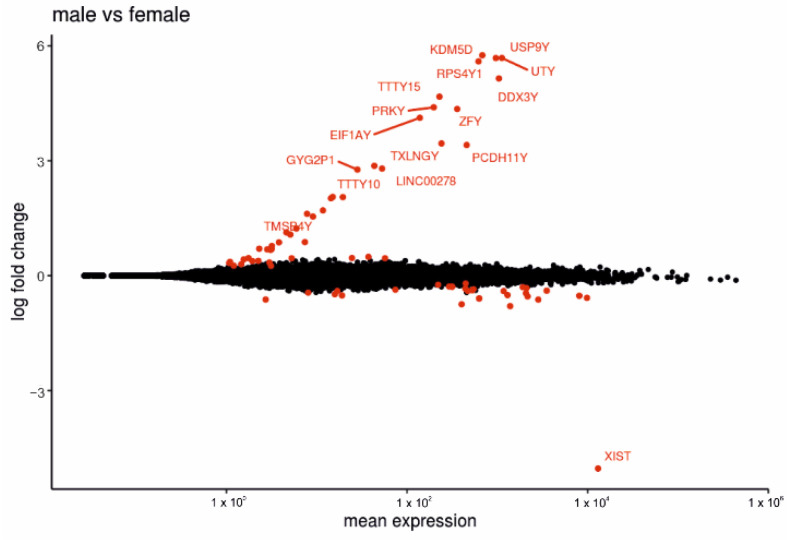
The placenta is a temporary organ with a unique structure and function to ensure healthy fetal development. Placental dysfunction is involved in pre-eclampsia (PE), fetal growth restriction, preterm birth, and gestational diabetes mellitus (GDM). A diabetic state affects maternal and fetal health and may lead to functional alterations of placental metabolism, inflammation, hypoxia, and weight, amplifying the fetal stress. The placental molecular adaptations to the diabetic environment and the adaptive spatio-temporal consequences to elevated glucose or insulin are largely unknown (2). We aimed to identify gene expression signatures related to the diabetic placental pathology of placentas from women with diabetes mellitus. Human placenta samples (n = 77) consisting of healthy controls, women with either gestational diabetes mellitus (GDM), type 1 or type 2 diabetes, and women with GDM, type 1 or type 2 diabetes and superimposed PE were collected. Interestingly, gene expression differences quantified by total RNA sequencing were mainly driven by fetal sex rather than clinical diagnosis. Association of the principal components with a full set of clinical patient data identified fetal sex as the single main explanatory variable. Accordingly, placentas complicated by type 1 and type 2 diabetes showed only few differentially expressed genes, while possible effects of GDM and diabetic pregnancy complicated by PE were not identifiable in this cohort. We conclude that fetal sex has a prominent effect on the placental transcriptome, dominating and confounding gene expression signatures resulting from diabetes mellitus in settings of well-controlled diabetic disease. Our results support the notion of placenta as a sexual dimorphic organ.
Keywords: RNA sequencing; diabetes mellitus; human; placenta; pregnancy.
Conflict of interest statement
The authors declare no conflict of interest.
Figures


References
-
- Brown M.A., Magee L.A., Kenny L.C., Karumanchi S.A., McCarthy F., Saito S., Hall D.R., Warren C.E., Adoyi G., Ishaku S. Hypertensive Disorders of Pregnancy: ISSHP Classification, Diagnosis, and Management Recommendations for International Practice. Hypertension. 2018;72:24–43. doi: 10.1161/HYPERTENSIONAHA.117.10803. - DOI - PubMed
-
- Benirschke K., Burton G.J., Baergen R.N., editors. Pathology of the Human Placenta. 6th ed. Springer; Berlin/Heidelberg, Germany: 2012.
MeSH terms
LinkOut - more resources
Full Text Sources
Medical
