


The correlation between triiodothyronine and the severity of liver fibrosis
- PMID: 36503486
- PMCID: PMC9743744
- DOI: 10.1186/s12902-022-01228-8
The correlation between triiodothyronine and the severity of liver fibrosis
Abstract
Background: The severity of liver fibrosis is an important predictor of death in patients with non-alcoholic fatty liver disease (NAFLD) and type 2 diabetes mellitus (T2DM). However, there is still no definite conclusion on the relationship between triiodothyronine (T3) and the severity of liver fibrosis. Thus, the aim of this study was to analyze the correlation between T3 level and the severity of liver fibrosis.
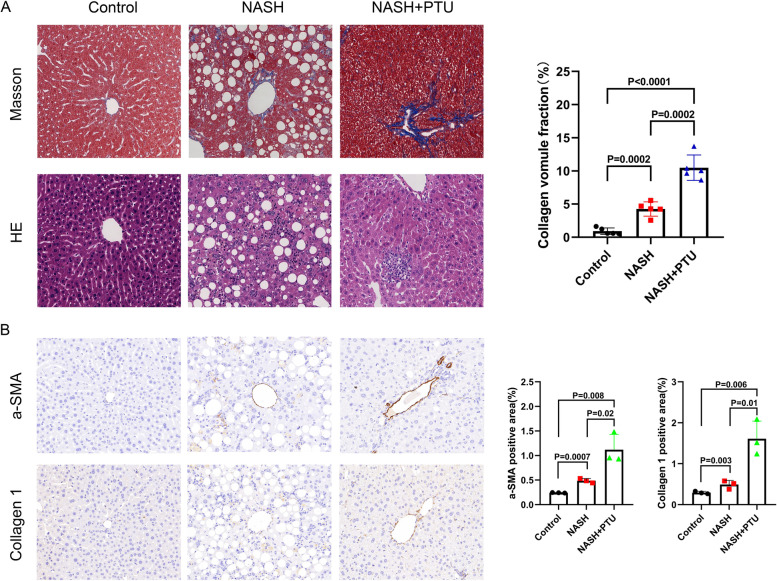
Methods: We performed a cross-sectional study of 2072 T2DM patients with normal thyroid function from January 2017 to January 2020. NAFLD fibrosis score (NFS), Fibrosis index based on the 4 factors (FIB-4) and BARD score (BARD) were used to assess the severity of fibrosis in T2DM patients, and linear regression analyses were used to determine the factors independently associated with liver fibrosis. Further experiments were performed to assess the impact of low T3 on fibrosis progression in mice model and explore possible mechanisms.
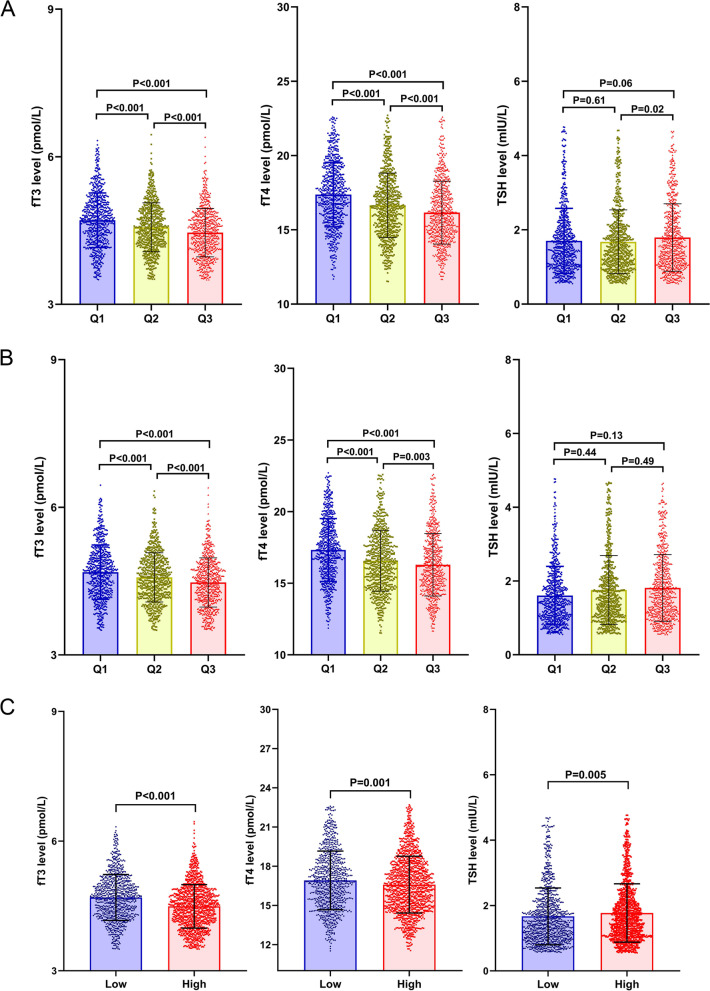
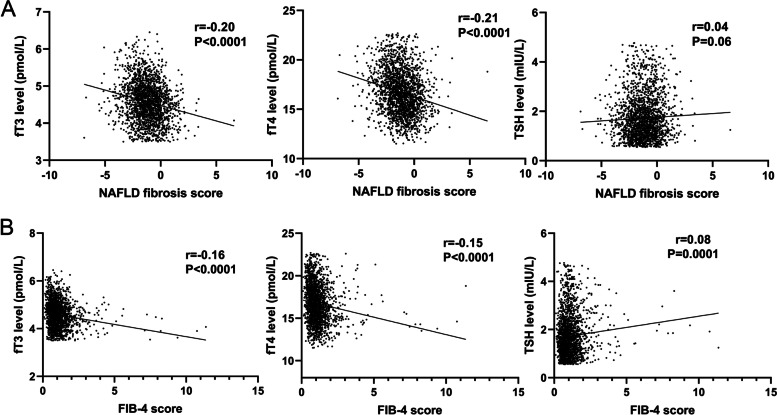
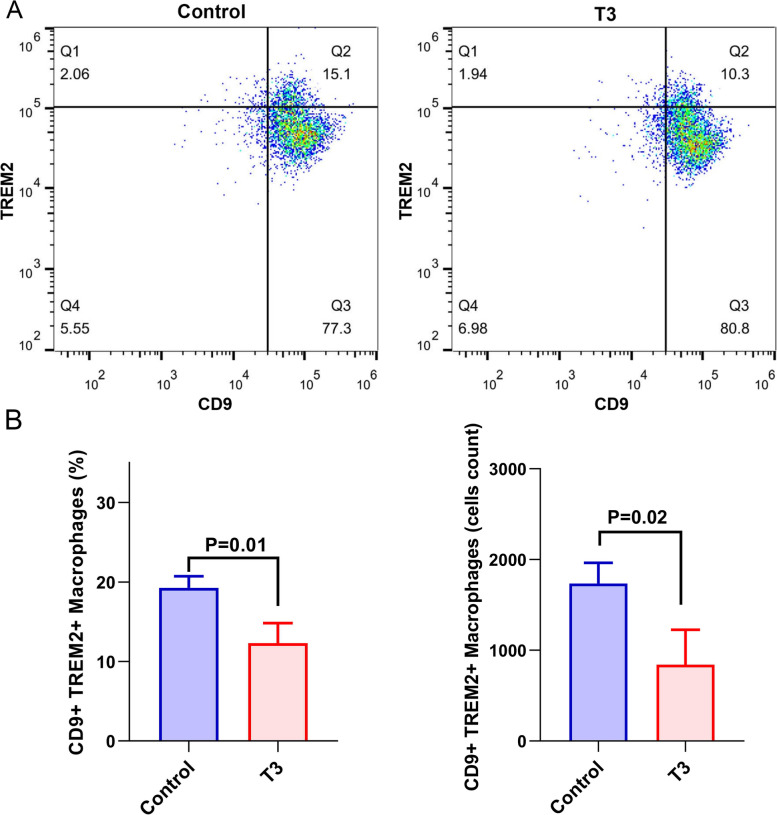
Results: Free triiodothyronine (fT3) levels had significantly inverse correlations with NFS and FIB-4, and BARD in T2DM patients (P < 0.05). In multiple linear regression analyses, decreased fT3 level was an independent risk factor for the severity of liver fibrosis of T2DM patients (P < 0.01). Findings from in-vivo experiment using mice model proved that hypothyroidism mice had more severe of liver fibrosis than those mice with normal thyroid function. We also found that T3 could inhibit the profibrotic TREM2+CD9+ macrophage, which had been identified an important player in the progression of liver fibrosis.
Conclusion: The findings from this study proved an inverse correlation between T3 level and the severity of liver fibrosis, and lower fT3 level within the normal range was an independent risk factor for severe liver fibrosis.
Keywords: Fibrosis; Free triiodothyronine; Non-alcoholic fatty liver disease; Type 2 diabetes mellitus.
© 2022. The Author(s).
Conflict of interest statement
The authors declare that they have no competing interests.
Figures
References
-
- McPherson S, Armstrong MJ, Cobbold JF, Corless L, Anstee QM, Aspinall RJ, et al. Quality standards for the management of non-alcoholic fatty liver disease (NAFLD): consensus recommendations from the British Association for the study of the liver and british Society of Gastroenterology NAFLD Special Interest Group. Lancet Gastroenterol Hepatol. 2022;7:755–69. doi: 10.1016/S2468-1253(22)00061-9. - DOI - PMC - PubMed
MeSH terms
Substances
Grants and funding
LinkOut - more resources
Full Text Sources
Medical
