


Recent advances in responsive hydrogels for diabetic wound healing
- PMID: 36504542
- PMCID: PMC9729074
- DOI: 10.1016/j.mtbio.2022.100508
Recent advances in responsive hydrogels for diabetic wound healing
Abstract
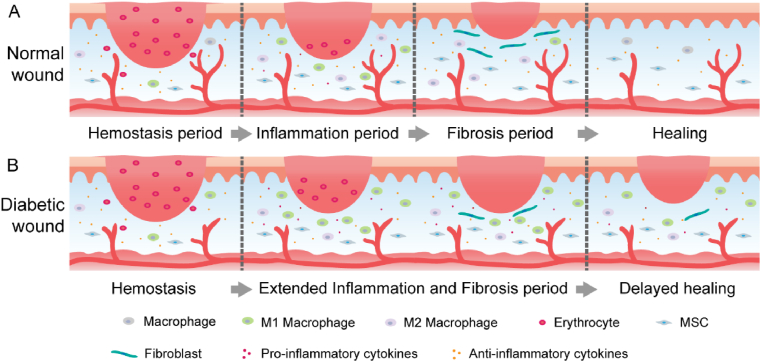
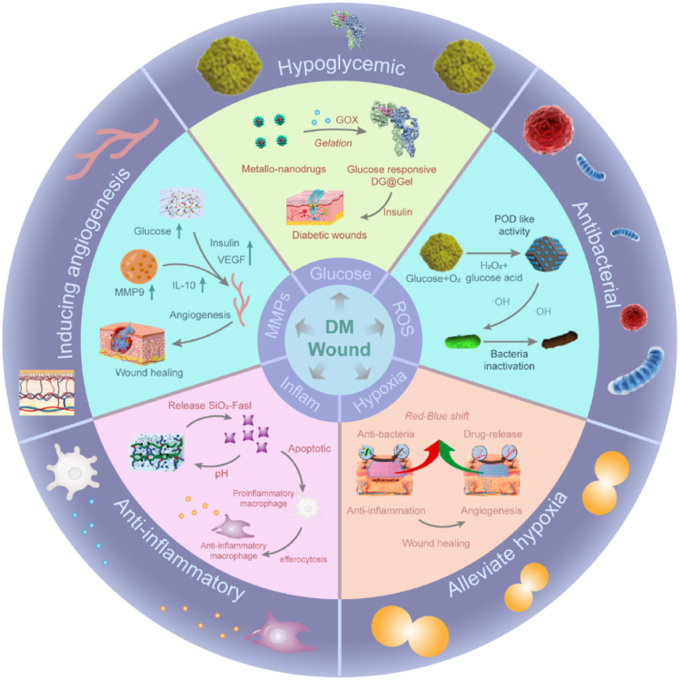
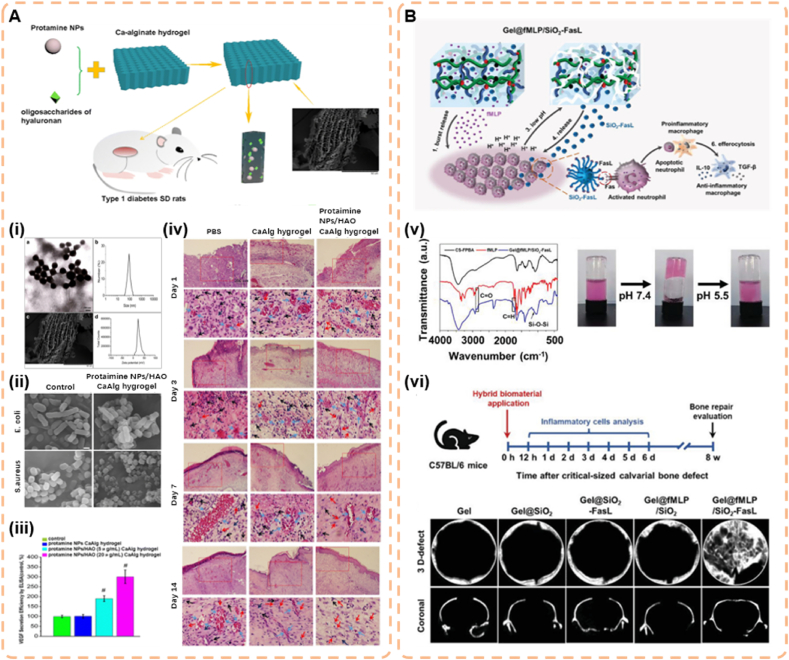
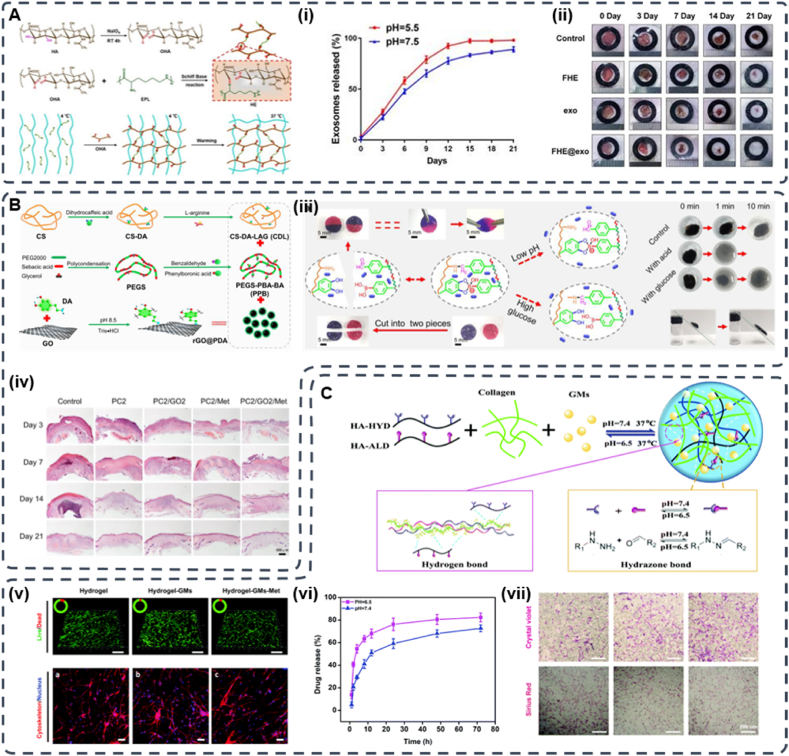
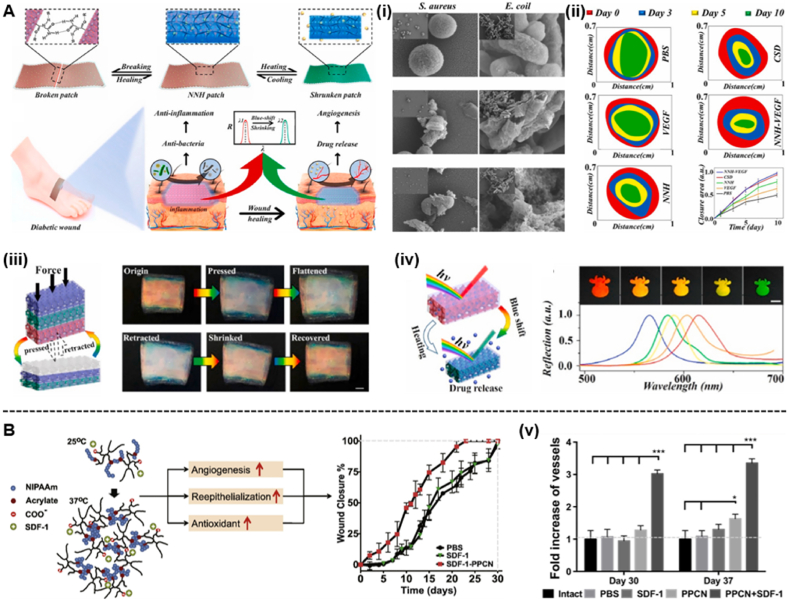
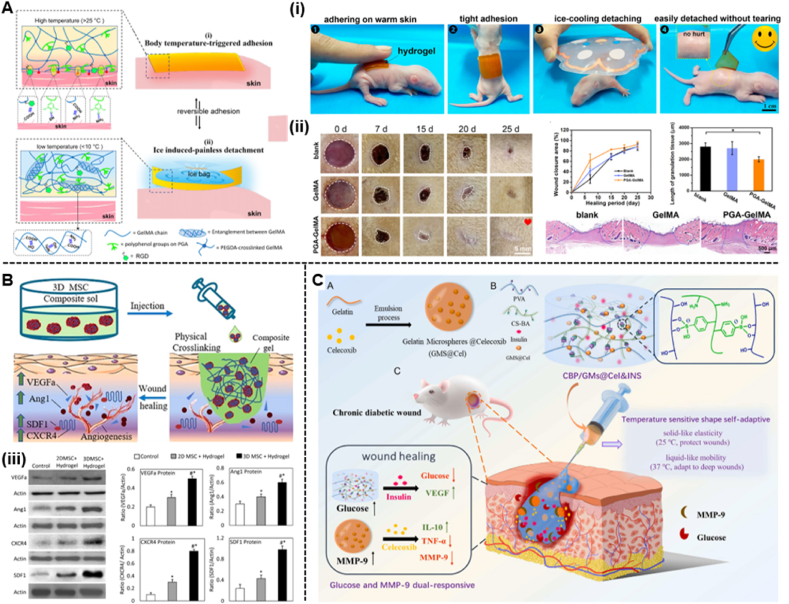
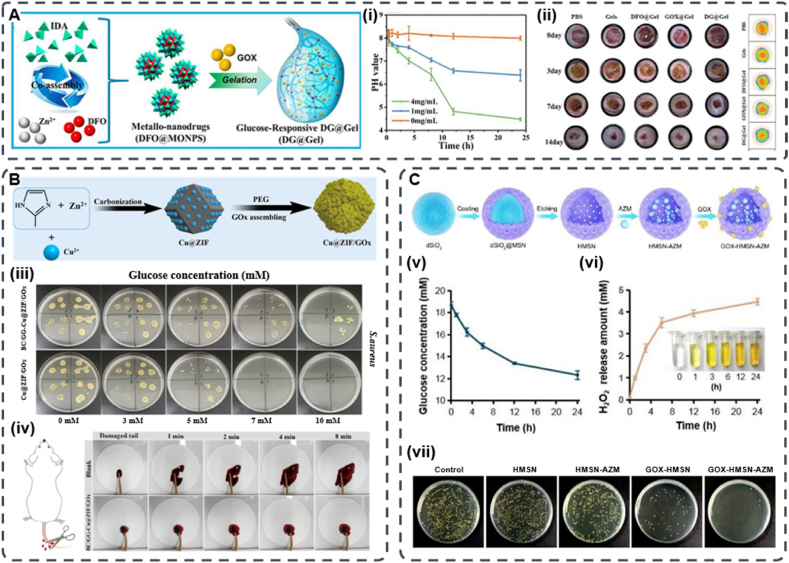
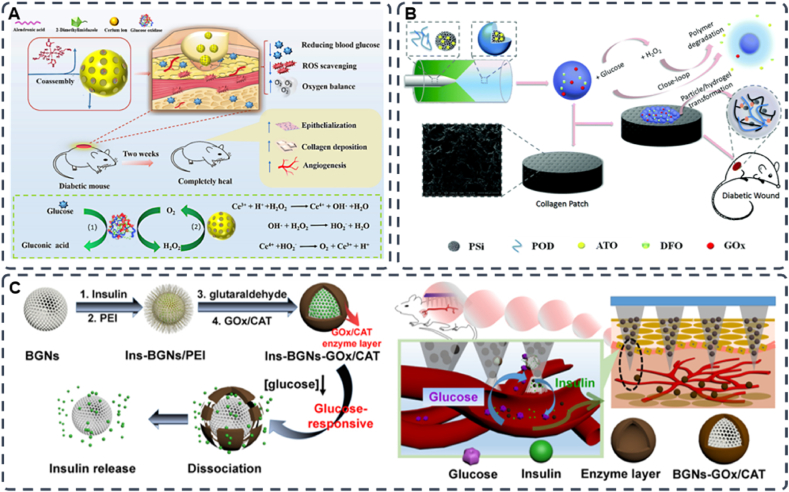
Poor wound healing after diabetes mellitus remains a challenging problem, and its pathophysiological mechanisms have not yet been fully elucidated. Persistent bleeding, disturbed regulation of inflammation, blocked cell proliferation, susceptible infection and impaired tissue remodeling are the main features of diabetic wound healing. Conventional wound dressings, including gauze, films and bandages, have a limited function. They generally act as physical barriers and absorbers of exudates, which fail to meet the requirements of the whol diabetic wound healing process. Wounds in diabetic patients typically heal slowly and are susceptible to infection due to hyperglycemia within the wound bed. Once bacterial cells develop into biofilms, diabetic wounds will exhibit robust drug resistance. Recently, the application of stimuli-responsive hydrogels, also known as "smart hydrogels", for diabetic wound healing has attracted particular attention. The basic feature of this system is its capacities to change mechanical properties, swelling ability, hydrophilicity, permeability of biologically active molecules, etc., in response to various stimuli, including temperature, potential of hydrogen (pH), protease and other biological factors. Smart hydrogels can improve therapeutic efficacy and limit total toxicity according to the characteristics of diabetic wounds. In this review, we summarized the mechanism and application of stimuli-responsive hydrogels for diabetic wound healing. It is hoped that this work will provide some inspiration and suggestions for research in this field.
Keywords: Biomaterials; Diabetic wound; Hydrogel; Skin tissue engineering; Smart responsiveness.
© 2022 The Authors. Published by Elsevier Ltd.
Conflict of interest statement
The authors declare that they have no known competing financial interests or personal relationships that could have appeared to influence the work reported in this paper.
Figures


References
Publication types
LinkOut - more resources
Full Text Sources
