. 2022 Oct:23:100396.
doi: 10.1016/j.measen.2022.100396. Epub 2022 Aug 7.

Inertial measurement unit-based motion capture to replace camera-based systems for assessing gait in healthy young adults: Proceed with caution

Affiliations

Inertial measurement unit-based motion capture to replace camera-based systems for assessing gait in healthy young adults: Proceed with caution

Julie Rekant et al. Measur Sens. 2022 Oct.

Abstract

Gait analysis can identify injury-risk markers indiscernible to the naked eye. Inertial measurement unit (IMU)-based motion capture circumvents optokinetic motion capture (OMC) clinical implementation barriers with its portability, increased affordability, and decreased computational burden. We compared an IMU system to a robust OMC marker set for gait analysis. 10 healthy adults walked at self-selected speeds equipped with Noraxon MyoMotion IMUs and a 24-marker, 5-cluster marker-set in view of 14 OMC cameras. A single calibration was applied. IMU system and OMC calculated joint angles were compared. A single calibration performed similarly to previously reported repeated calibration. IMU and OMC agreement was best in the sagittal plane with IMU axis-mixing affecting off-sagittal plane agreement. System differences were greater than 5° for most motions. Measurement system bias showed at the ankle and knee, however differences varied across participants. IMU kinematics should be interpreted with caution; consistency and accuracy must improve before IMUs can replace OMC.

Keywords: Accuracy; Gait analysis; Inertial measurement unit (IMU); Motion capture; Wearable sensors.


Conflict of interest statement

Declaration of competing interest The authors declare that they have no known competing financial interests or personal relationships that could have appeared to influence the work reported in this paper.

Figures
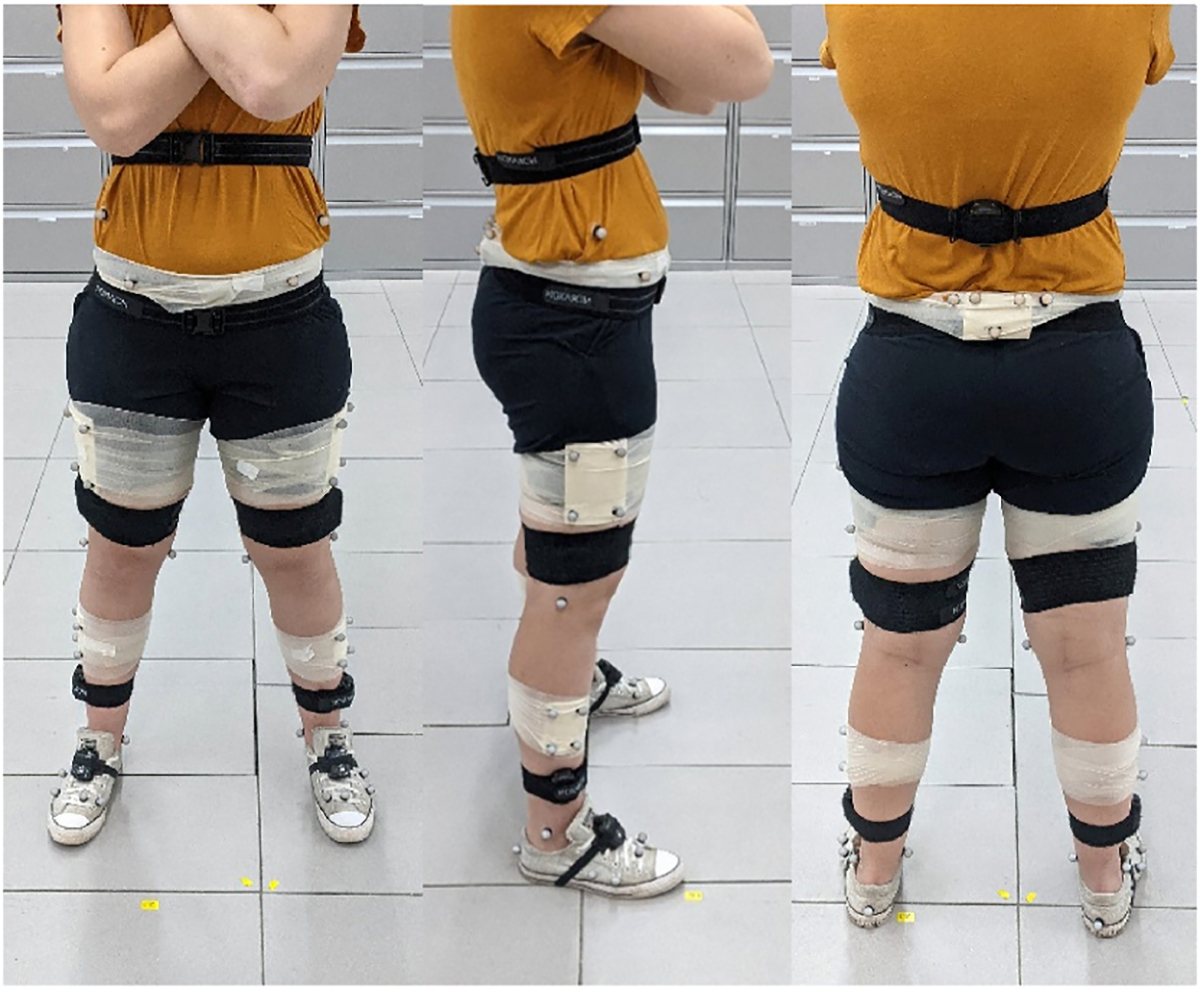
Fig. 1.
Fig. 1.
Participant equipped with optokinetic markers and IMUs.
Fig. 2.
Fig. 2.
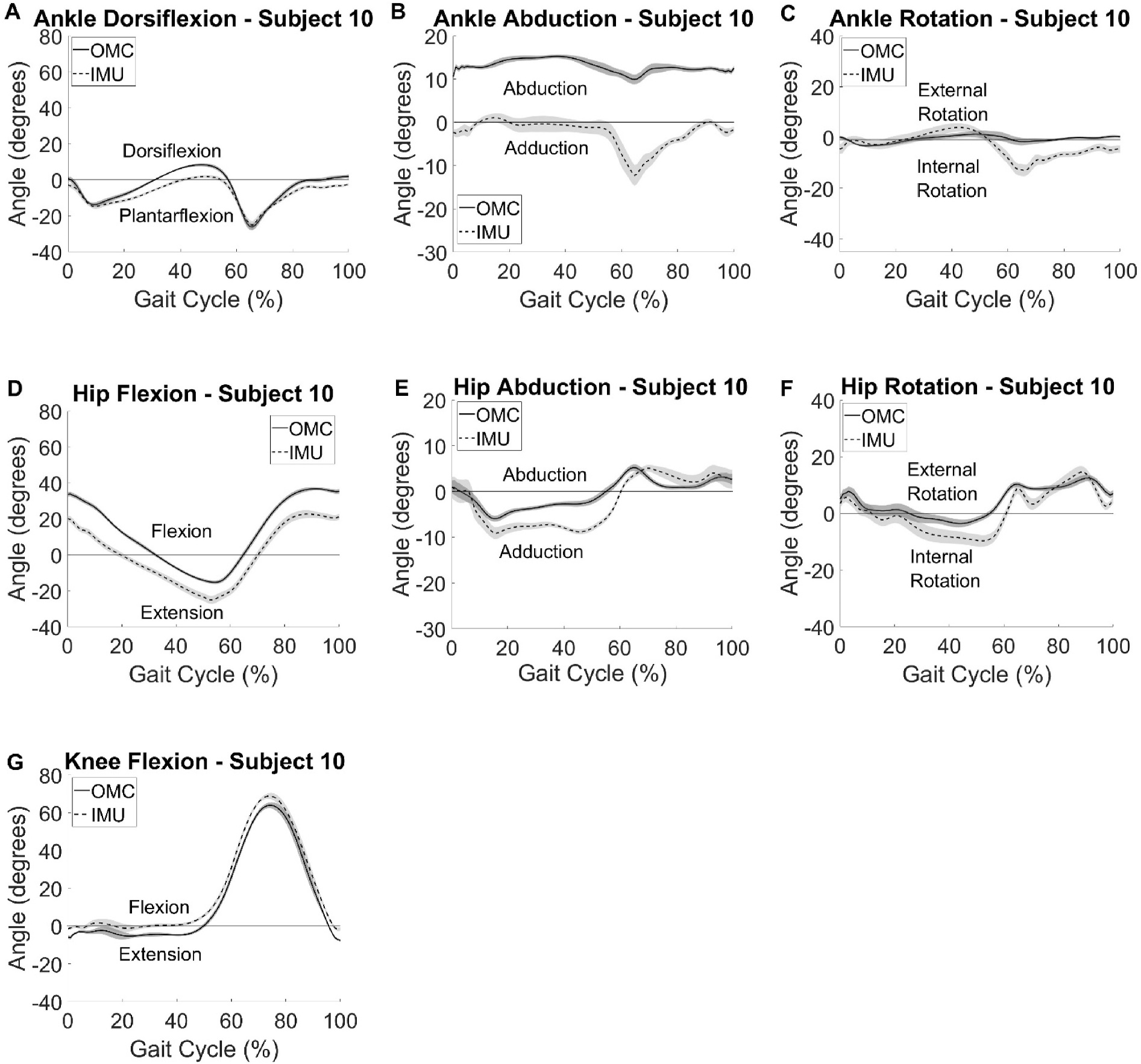
Participant summary curves for IMU (dashed) kinematic outputs compared with the gold standard OMC (solid) vs % gait cycle. A typical participant with good agreement between the two systems is provided. Curves represent average kinematics across 15 gait cycles and shaded areas are ± one standard deviation.
Fig. 3.
Fig. 3.
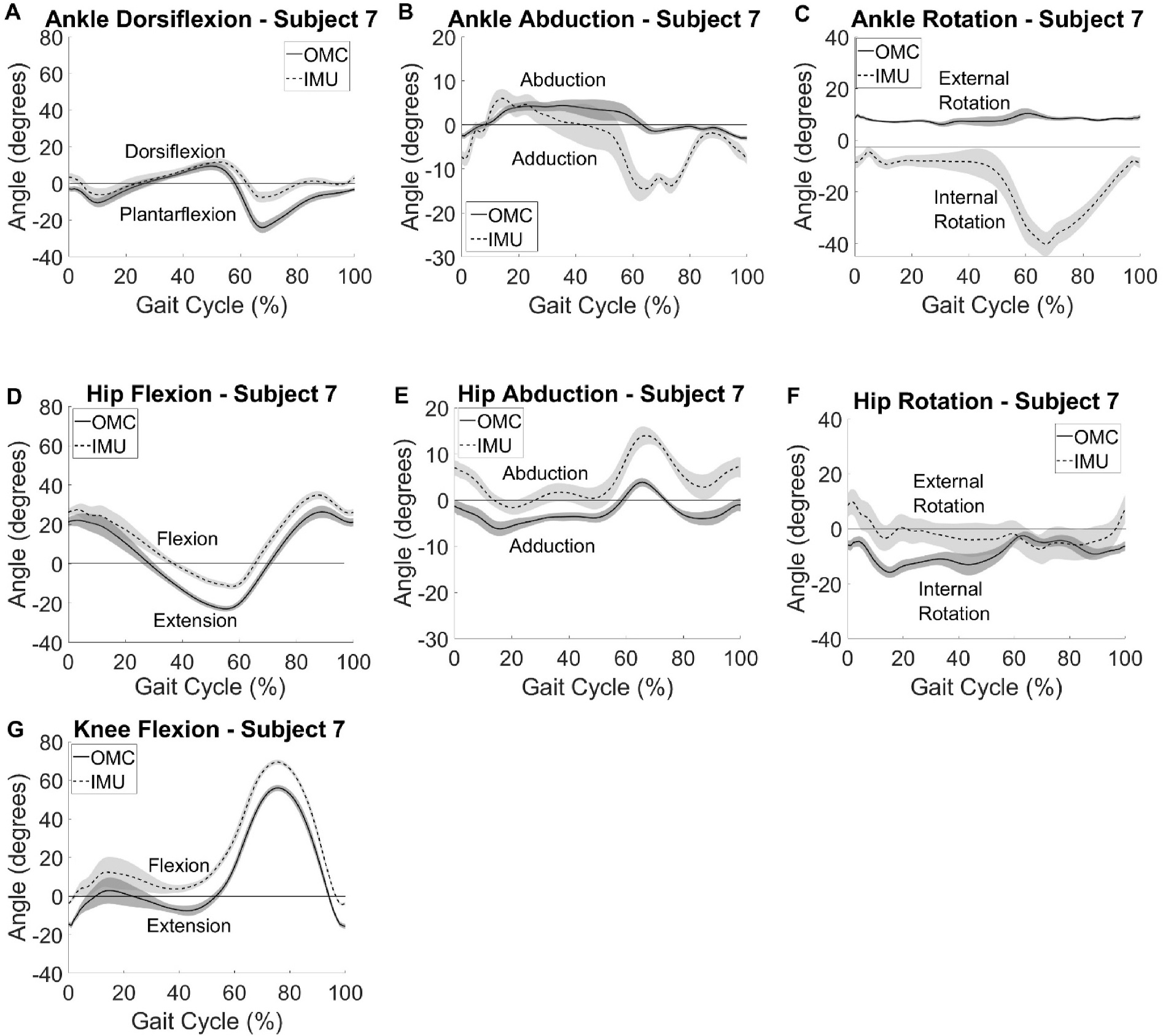
Participant summary curves for IMU (dashed) kinematic outputs compared with the gold standard OMC (solid) vs % gait cycle. A typical participant with poor agreement between the two systems is provided. Curves represent average kinematics across 15 gait cycles and shaded areas are ± one standard deviation.
Fig. 4.
Fig. 4.
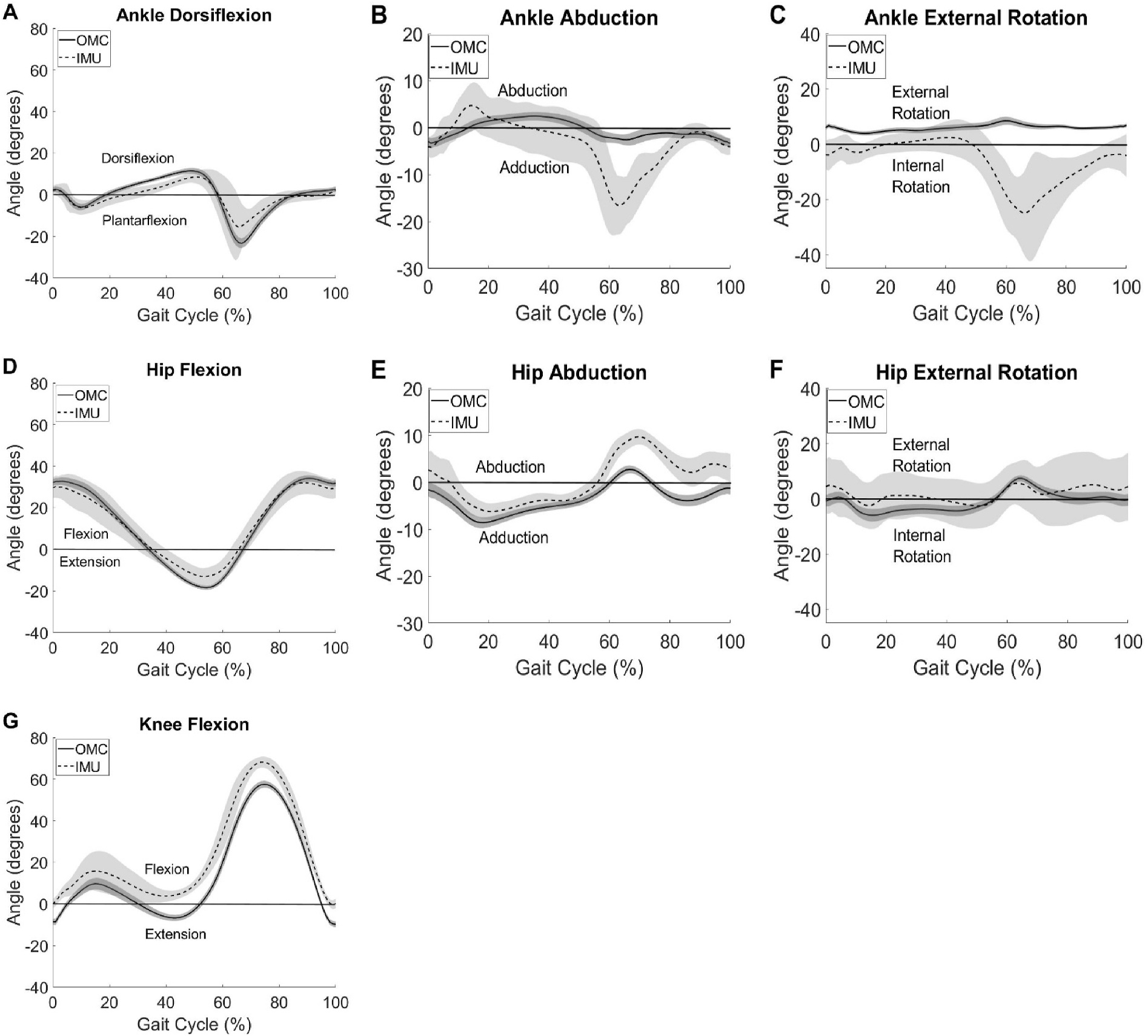
Group summary kinematics for ankle dorsiflexion (A), abduction (B), and external rotation (C), hip flexion (D), abduction (E), and external rotation (F), and knee flexion (G) for IMU (dashed) and OMC (solid) with ± 1 standard deviation in the shaded area.
Fig. 5.
Fig. 5.
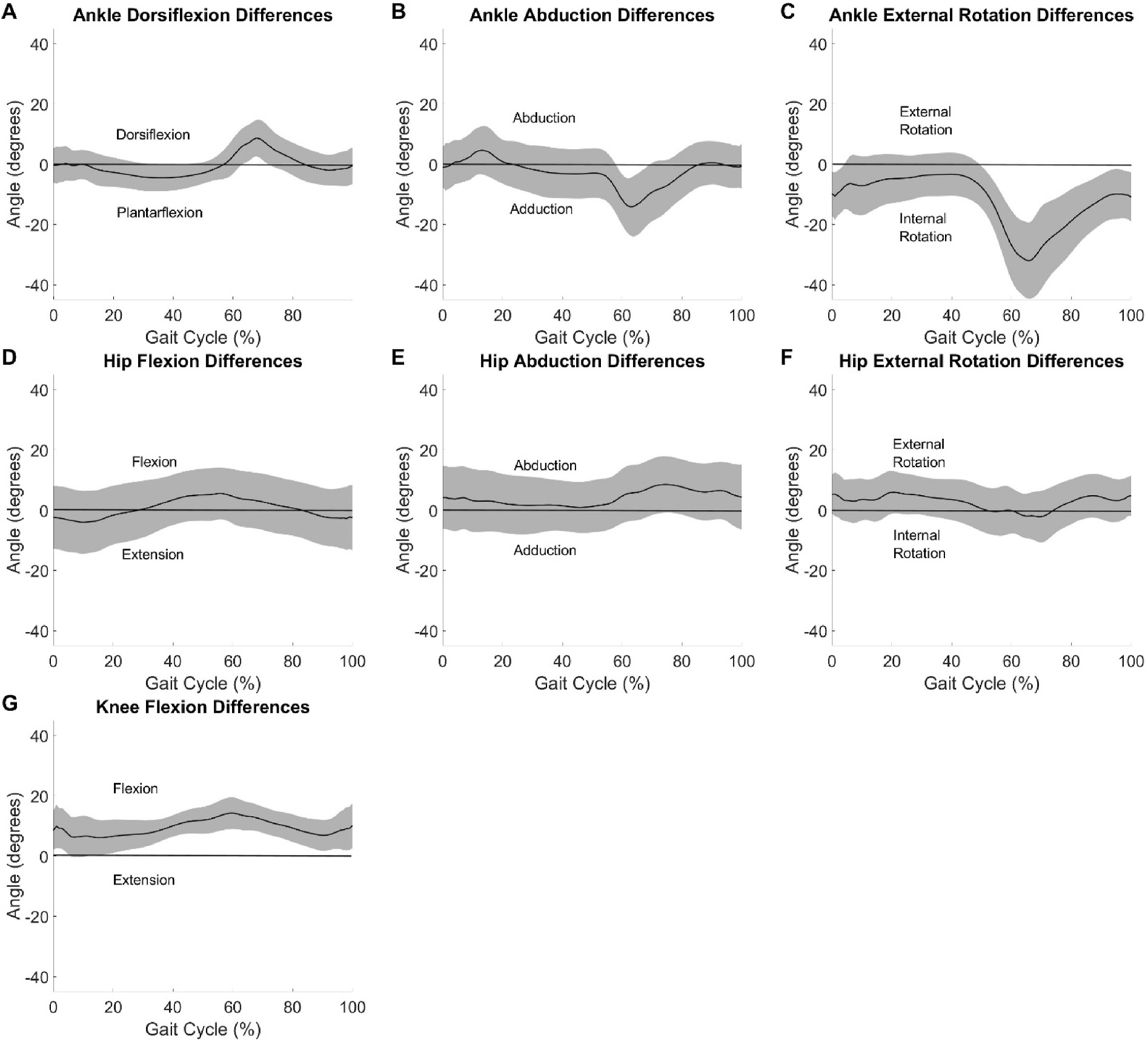
System differences between IMU and OMC averaged all participants with ± 1 standard deviation in the shaded area displayed.
Fig. 6.
Fig. 6.
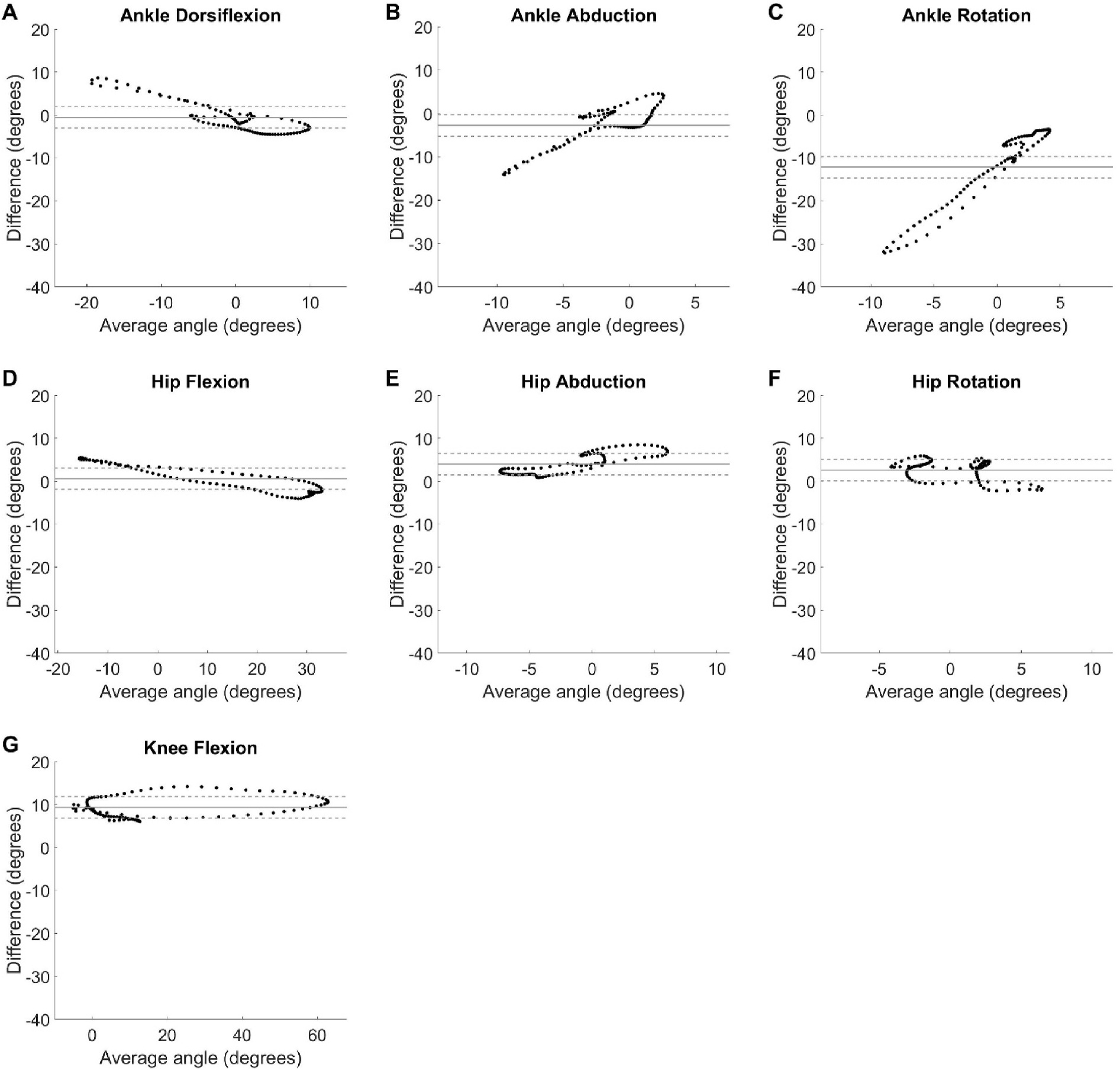
Bland Altman plots with average angle between the IMU and OMC systems on the x-axis and difference between the angles calculated by each system on the y-axis for each timepoint in the gait cycle, averaged across all participants for ankle dorsiflexion (A), abduction (B), and external rotation (C), hip flexion (D), abduction (E), and external rotation (F), and knee flexion (G). Agreement between the two systems was assessed by comparing the line of equality, represented with a solid horizontal line, to 0°. The measurements were considered acceptable if the differences fell within a 5° window, represented by dashed lines, around the line of equality for each motion measured.

References

    1. Cimolin V, Galli M, Summary measures for clinical gait analysis: a literature review, Gait Posture 39 (4) (2014) 1005–1010, 10.1016/j.gaitpost.2014.02.001. - DOI - PubMed
    1. Becker J, Nakajima M, Wu WFW, Factors contributing to medial tibial stress syndrome in runners: a prospective study, Med. Sci. Sports Exerc. 50 (10) (2018) 2092–2100, 10.1249/mss.0000000000001674. - DOI - PubMed
    1. Kuo AD, Donelan JM, Dynamic principles of gait and their clinical implications, Phys. Ther. 90 (2) (2010) 157–174, 10.2522/ptj.20090125. - DOI - PMC - PubMed
    1. Luc-Harkey BA, Harkey MS, Stanley LE, Blackburn JT, Padua DA, Pietrosimone B, Sagittal plane kinematics predict kinetics during walking gait in individuals with anterior cruciate ligament reconstruction, Clin. Biomech. 39 (2016) 9–13, 10.1016/j.clinbiomech.2016.08.011. - DOI - PubMed
    1. Fried LP, Bandeen-Roche K, Chaves PH, Johnson BA, Preclinical mobility disability predicts incident mobility disability in older women, J Gerontol A Biol Sci Med Sci 55 (1) (2000) M43–M52, 10.1093/gerona/55.1.m43. - DOI - PubMed

LinkOut - more resources