


Sex differences in allometry for phenotypic traits in mice indicate that females are not scaled males
- PMID: 36509767
- PMCID: PMC9744842
- DOI: 10.1038/s41467-022-35266-6
Sex differences in allometry for phenotypic traits in mice indicate that females are not scaled males
Abstract
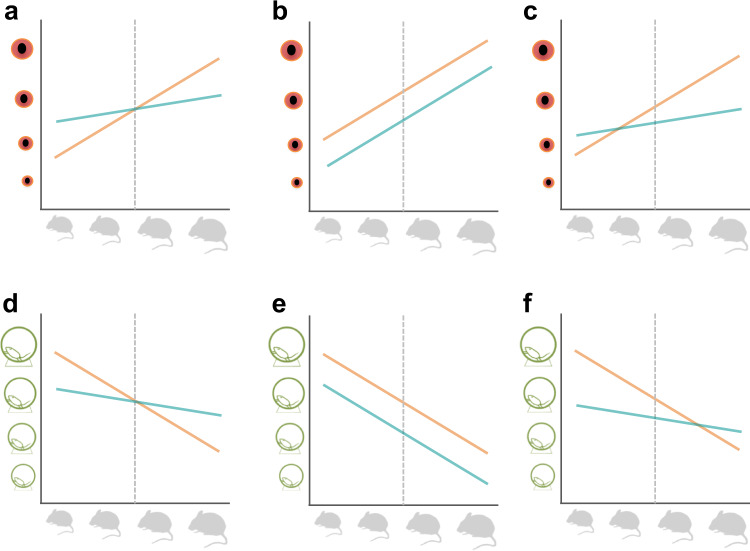
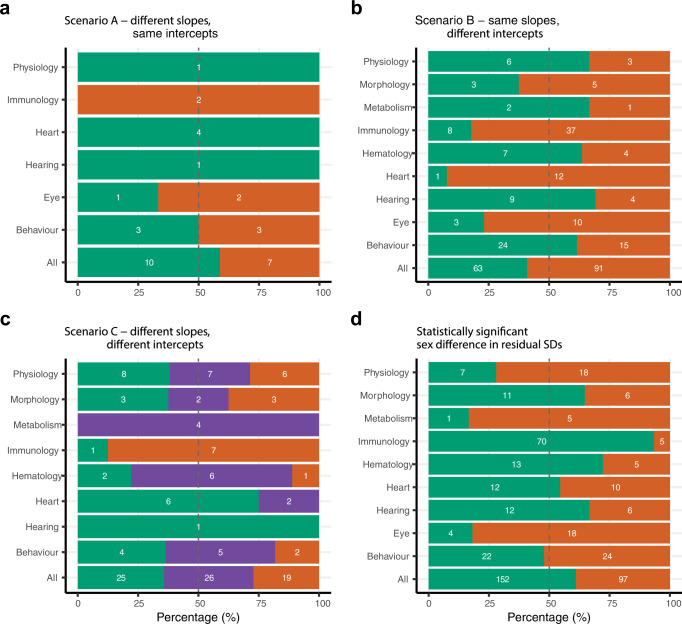
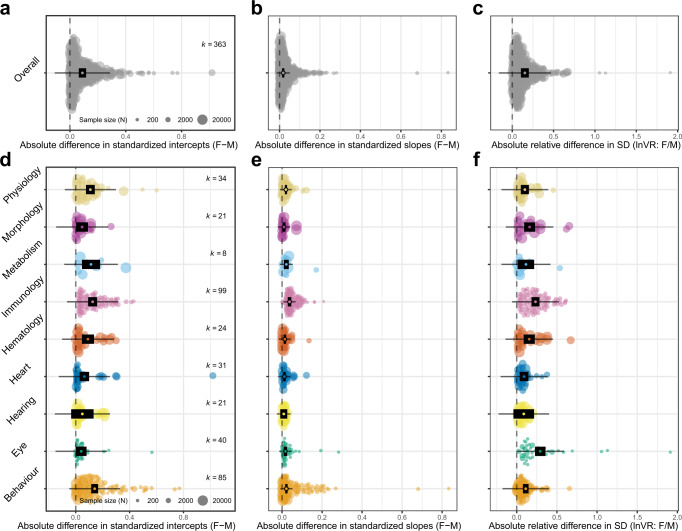
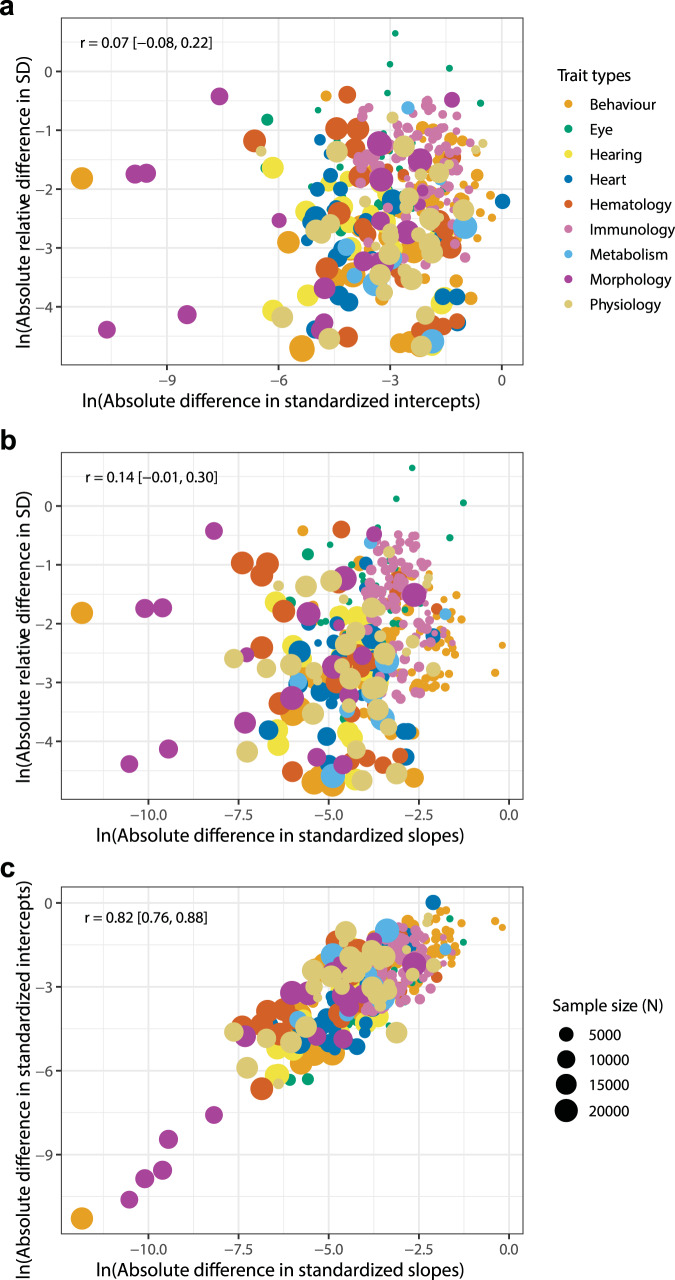
Sex differences in the lifetime risk and expression of disease are well-known. Preclinical research targeted at improving treatment, increasing health span, and reducing the financial burden of health care, has mostly been conducted on male animals and cells. The extent to which sex differences in phenotypic traits are explained by sex differences in body weight remains unclear. We quantify sex differences in the allometric relationship between trait value and body weight for 363 phenotypic traits in male and female mice, recorded in >2 million measurements from the International Mouse Phenotyping Consortium. We find sex differences in allometric parameters (slope, intercept, residual SD) are common (73% traits). Body weight differences do not explain all sex differences in trait values but scaling by weight may be useful for some traits. Our results show sex differences in phenotypic traits are trait-specific, promoting case-specific approaches to drug dosage scaled by body weight in mice.
© 2022. The Author(s).
Conflict of interest statement
The authors declare no competing interests.
Figures
References
-
- Mogil, J. S. & Chanda, M. L. The case for the inclusion of female subjects in basic science studies of pain. PAIN117, 1–5 (2005). - PubMed
Publication types
MeSH terms
Grants and funding
LinkOut - more resources
Full Text Sources
