


Technology-based interventions for health challenges older women face amid COVID-19: a systematic review protocol
- PMID: 36514147
- PMCID: PMC9746565
- DOI: 10.1186/s13643-022-02150-9
Technology-based interventions for health challenges older women face amid COVID-19: a systematic review protocol
Abstract
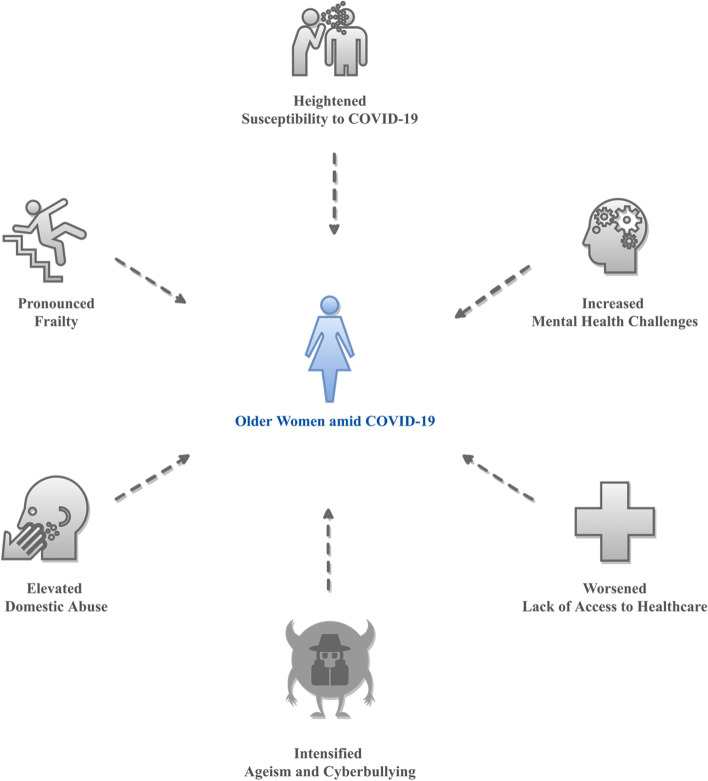
Background: Pandemics, such as COVID-19, are dangerous and socially disruptive. Though no one is immune to COVID-19, older persons often bear the brunt of its consequences. This is particularly true for older women, as they often face more pronounced health challenges relative to other segments in society, including complex care needs, insufficient care provisions, mental illness, neglect, and increased domestic abuse. To further compound the situation, because protective measures like lockdowns can result in unintended consequences, many health services older women depend on can become disrupted or discontinued amid pandemics. While technology-based interventions have the potential to provide near-time, location-free, and virtually accessible care, there is a dearth of systematic insights into this mode of care in the literature. To bridge the research gaps, this investigation aims to examine the characteristics and effectiveness of technology-based interventions that could address health challenges older women face amid COVID-19.
Methods: A systematic review of randomized trials reporting on technology-based interventions for older women (≥65 years) during COVID-19 will be conducted. The databases of Web of Science, ScienceDirect, PubMed/MEDLINE, PsycINFO, CINAHL, and Scopus will be searched. Retrieved citations will be screened independently by at least two reviewers against the eligibility criteria. Included studies will be assessed using the Cochrane ROB-2 tool. Data will be extracted independently by the reviewers. Where possible, meta-analyses will be performed on relevant study outcomes and analysed via odds ratios on the dichotomized outcomes. Where applicable, heterogeneity will be measured using the Cochrane Q test, and publication bias will be assessed via funnel plots and Egger's regression test.
Discussion: Technology has the potential to transform healthcare for the better. To help society better safeguard vulnerable populations' health and quality of life, this investigation sets out to gauge the state-of-the-art development of technology-based interventions tailored to the health challenges older women face amid COVID-19. In light of the growing prevalence of population ageing and the inevitability of infectious disease outbreaks, greater research efforts are needed to ensure the timely inception and effective implementation of technology-based health solutions for vulnerable populations like older women, amid public health crises like COVID-19 and beyond.
Systematic review registration: PROSPERO CRD42020194003.
Keywords: Ageing; COVID-19; Health disparities; Older people; Technology-based interventions; Women.
© 2022. The Author(s).
Conflict of interest statement
The authors declare no competing interests.
Figures
References
-
- The Economist . Tracking covid-19 excess deaths across countries. 2022.
-
- World Health Organization . The true death toll of COVID-19: estimating global excess mortality. 2022.
Publication types
MeSH terms
LinkOut - more resources
Full Text Sources
Medical
