


Risk factors of poor developmental outcome in children with tuberculous meningitis
- PMID: 36525135
- PMCID: PMC9756925
- DOI: 10.1007/s00381-022-05791-2
Risk factors of poor developmental outcome in children with tuberculous meningitis
Abstract
Background: Neurodevelopmental delay is a significant long-term complication of childhood tuberculous meningitis (TBM). The objective of this study was to assess risk factors for neurodevelopmental delay in children with TBM.
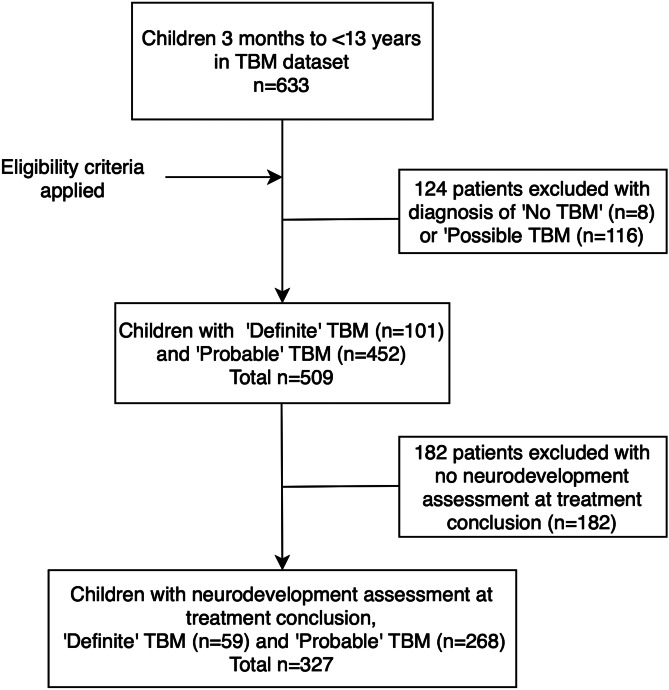
Methods: We conducted a retrospective cohort study of children diagnosed with TBM at Tygerberg Hospital, Cape Town, South Africa, over a 30-year period between 1985 and 2015. We assessed the relationship between demographic, clinical, laboratory and neuro-imaging characteristics, and cognitive impairment at the conclusion of anti-tuberculous treatment. Poor outcome was defined as moderate-to severe cognitive impairment.
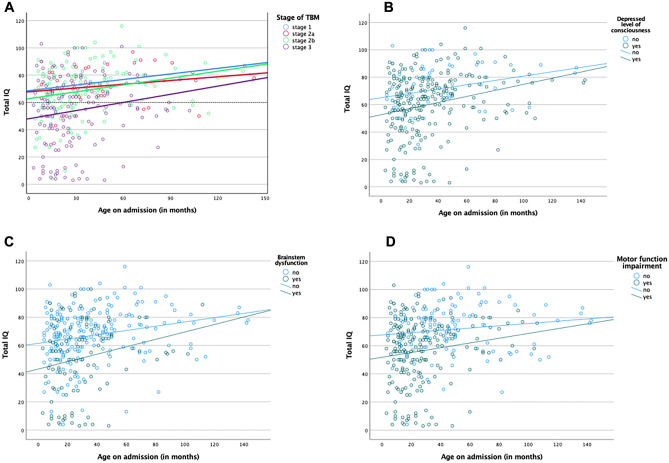
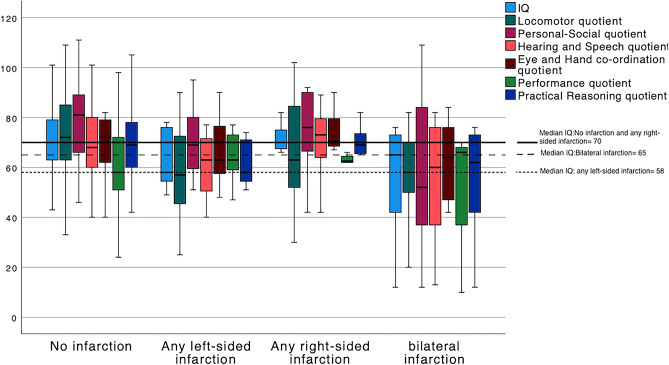
Results: A total of 327 TBM patients were included, 71 (21.7%) suffered a poor outcome. Multivariate analysis revealed that decreased level of consciousness (adjusted OR (aOR): 4.68; 95%CI: 2.43-13.88; p = 0.005), brainstem dysfunction (aOR: 3.20; 95%CI: 1.70-6.00; p < 0.001), and radiological infarction (aOR: 3.47; 95%CI: 1.87-6.45; p < 0.001) were associated with a poor developmental outcome. Left hemispherical (single and multiple) stroke and bilateral stroke were associated with poor developmental outcomes.
Conclusion: Certain neurological signs as well as radiological infarct characteristics are important predictors of poor developmental outcome. Anticipation of the likely level of cognitive impairment at diagnosis allows more accurate prognostication and prompt institution of supportive and rehabilitative measures, after the acute illness.
Keywords: Central nervous system; Neurodevelopmental delay; Risk factors; Tuberculosis.
© 2022. The Author(s), under exclusive licence to Springer-Verlag GmbH Germany, part of Springer Nature.
Conflict of interest statement
The authors declare no competing interests.
Figures
References
-
- Global Tuberculosis Report . World Health Organization. Geneva: Switzerland; 2020.
MeSH terms
Grants and funding
LinkOut - more resources
Full Text Sources
Medical
