


Protocol for Biospecimen Collection and Analysis Within the BACPAC Research Program
- PMID: 36525387
- PMCID: PMC10403310
- DOI: 10.1093/pm/pnac197
Protocol for Biospecimen Collection and Analysis Within the BACPAC Research Program
Abstract
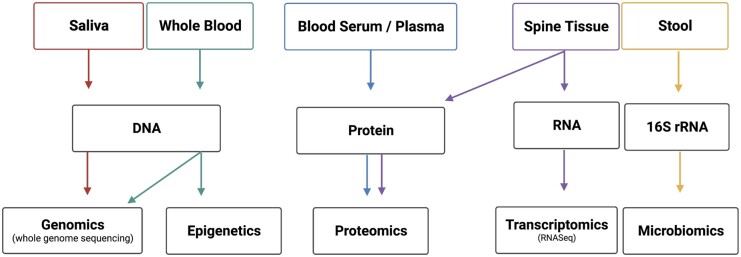
The Biospecimen Collection and Processing Working Group of the National Institutes of Health (NIH) HEAL Initiative BACPAC Research Program was charged with identifying molecular biomarkers of interest to chronic low back pain (cLBP). Having identified biomarkers of interest, the Working Group worked with the New York University Grossman School of Medicine, Center for Biospecimen Research and Development-funded by the Early Phase Pain Investigation Clinical Network Data Coordinating Center-to harmonize consortium-wide and site-specific efforts for biospecimen collection and analysis. Biospecimen collected are saliva, blood (whole, plasma, serum), urine, stool, and spine tissue (paraspinal muscle, ligamentum flavum, vertebral bone, facet cartilage, disc endplate, annulus fibrosus, or nucleus pulposus). The omics data acquisition and analyses derived from the biospecimen include genomics and epigenetics from DNA, proteomics from protein, transcriptomics from RNA, and microbiomics from 16S rRNA. These analyses contribute to the overarching goal of BACPAC to phenotype cLBP and will guide future efforts for precision medicine treatment.
Keywords: Biomarkers; Biospecimen; Chronic Low Back Pain; Omics.
© The Author(s) 2022. Published by Oxford University Press on behalf of the American Academy of Pain Medicine.
Figures
References
-
- Borenstein D. Epidemiology, etiology, diagnostic evaluation, and treatment of low back pain. Current Opin Rheumatol 1992;4(2):226–32. - PubMed
-
- National Institute of Neurological Disorders and Stroke. Back Pain Fact Sheet (NIH Publication No. 20-NS-5161). 2020. Available at: https://www.ninds.nih.gov/health-information/patient-caregiver-education... (accessed 3 January 2023).
