Review
. 2023 Mar:109:12-21.
doi: 10.1016/j.ejim.2022.12.004. Epub 2022 Dec 13.

The spike effect of acute respiratory syndrome coronavirus 2 and coronavirus disease 2019 vaccines on blood pressure

Affiliations
Review

The spike effect of acute respiratory syndrome coronavirus 2 and coronavirus disease 2019 vaccines on blood pressure

Fabio Angeli et al. Eur J Intern Med. 2023 Mar.

Abstract

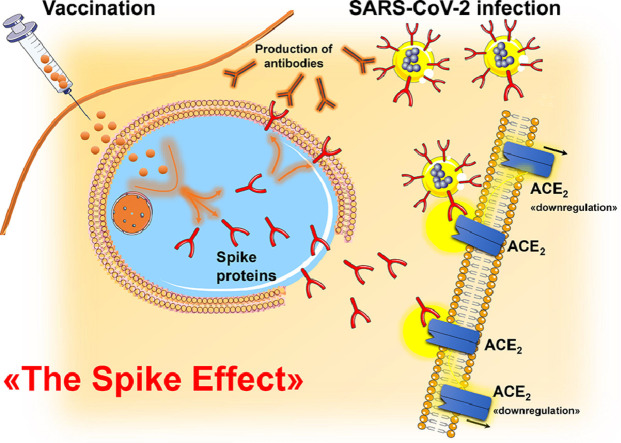
Among the various comorbidities potentially worsening the clinical outcome in patients hospitalized for the acute respiratory syndrome coronavirus-2 (SARS-CoV-2), hypertension is one of the most prevalent. However, the basic mechanisms underlying the development of severe forms of coronavirus disease 2019 (COVID-19) among hypertensive patients remain undefined and the direct association of hypertension with outcome in COVID-19 is still a field of debate. Experimental and clinical data suggest that SARS-CoV-2 infection promotes a rise in blood pressure (BP) during the acute phase of infection. Acute increase in BP and high in-hospital BP variability may be tied with acute organ damage and a worse outcome in patients hospitalized for COVID-19. In this context, the failure of the counter-regulatory renin-angiotensin-system (RAS) axis is a potentially relevant mechanism involved in the raise in BP. It is well recognized that the efficient binding of the Spike (S) protein to angiotensin converting enzyme 2 (ACE2) receptors mediates the virus entry into cells. Internalization of ACE2, downregulation and malfunction predominantly due to viral occupation, dysregulates the protective RAS axis with increased generation and activity of angiotensin (Ang) II and reduced formation of Ang1,7. Thus, the imbalance between Ang II and Ang1-7 can directly contribute to excessively rise BP in the acute phase of SARS-CoV-2 infection. A similar mechanism has been postulated to explain the raise in BP following COVID-19 vaccination ("Spike Effect" similar to that observed during the infection of SARS-CoV-2). S proteins produced upon vaccination have the native-like mimicry of SARS-CoV-2 S protein's receptor binding functionality and prefusion structure and free-floating S proteins released by the destroyed cells previously targeted by vaccines may interact with ACE2 of other cells, thereby promoting ACE2 internalization and degradation, and loss of ACE2 activities.

Keywords: ACE2; Blood pressure; COVID-19; COVID-19 vaccination; Hypertension; Renin-angiotensin system; SARS-CoV-2; Spike protein; Vaccines.


Figures

Image, graphical abstract
Graphical abstract
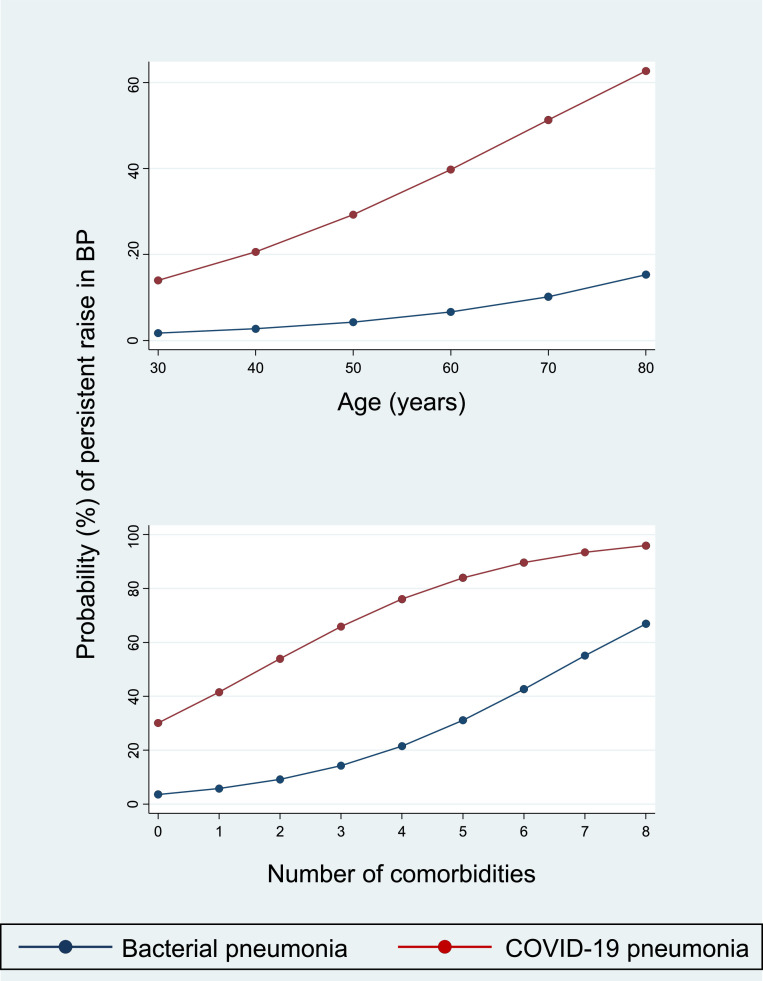
Fig 1
Fig. 1
Probability of persistent raise in BP during hospitalization for COVID-19 according to type of pneumonia, age, and number of comorbidities (see text for details). Legend: BP=blood pressure.
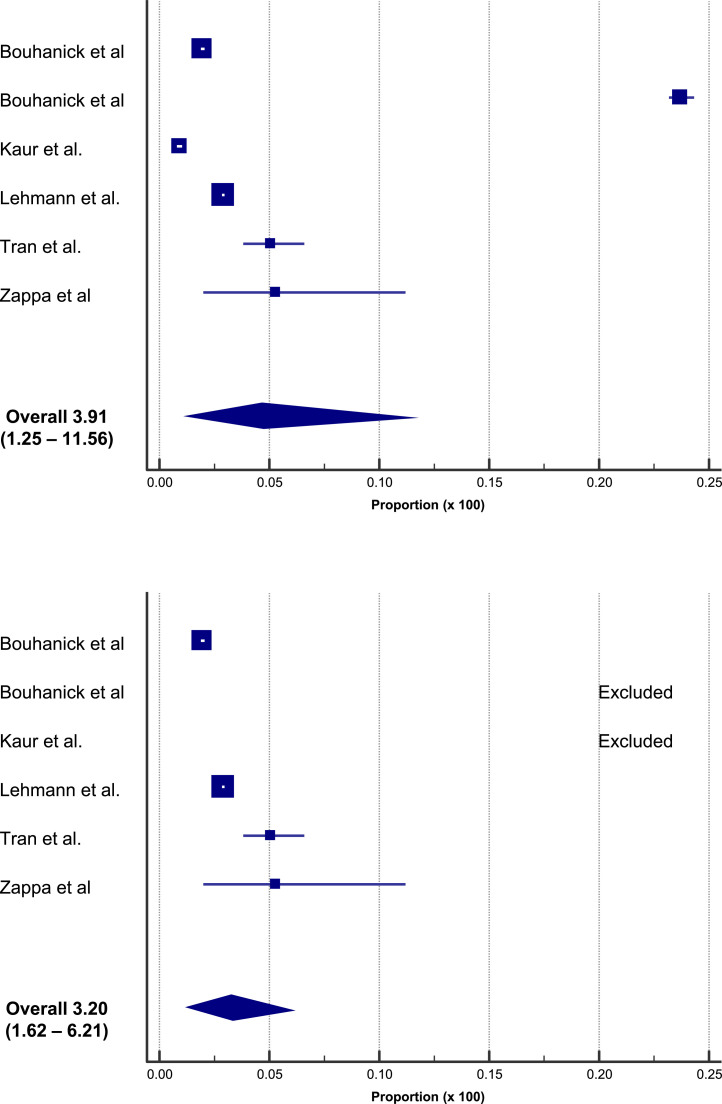
Fig 2
Fig. 2
Proportions of increased BP after vaccination in a meta-analysis of 6 studies, for a total of 357,387 subjects and 13,444 adverse events .
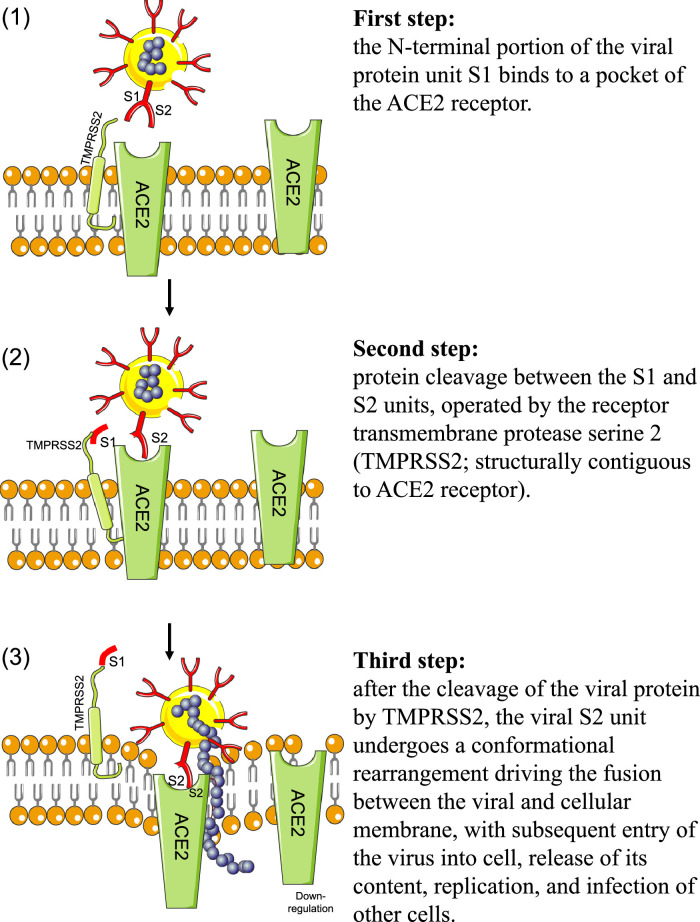
Fig 3
Fig. 3
Steps of SARS-CoV-2 entry process. The main step after the invasion of SARS-CoV-2 is binding to membranal ACE2 receptor; see text for details. Legend: ACE2=angiotensin-converting enzyme 2 receptor.
Fig 4
Fig. 4
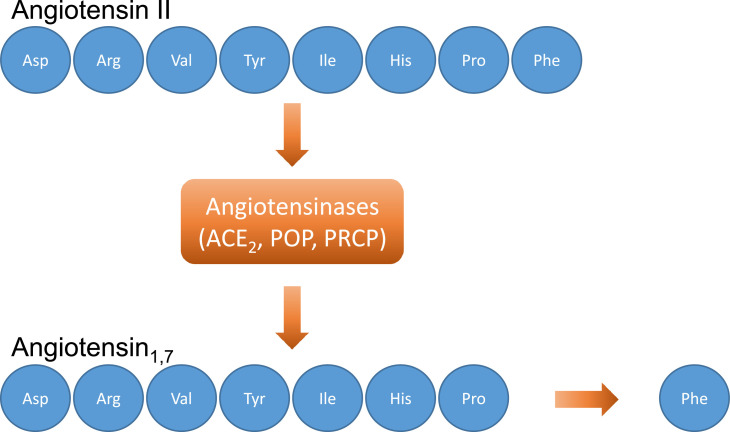
Angiotensin1,7 formation. Angiotensin1,7 is formed by the action of the angiotensin-converting enzyme 2 (and other angiotensinases, including POP and PRCP) by the cleavage of an amino acid from Angiotensin II. Legend: ACE2=angiotensin-converting enzyme 2 receptor; POP=prolyl oligopeptidase; PRCP=prolyl carboxypeptidases.
Fig 5
Fig. 5
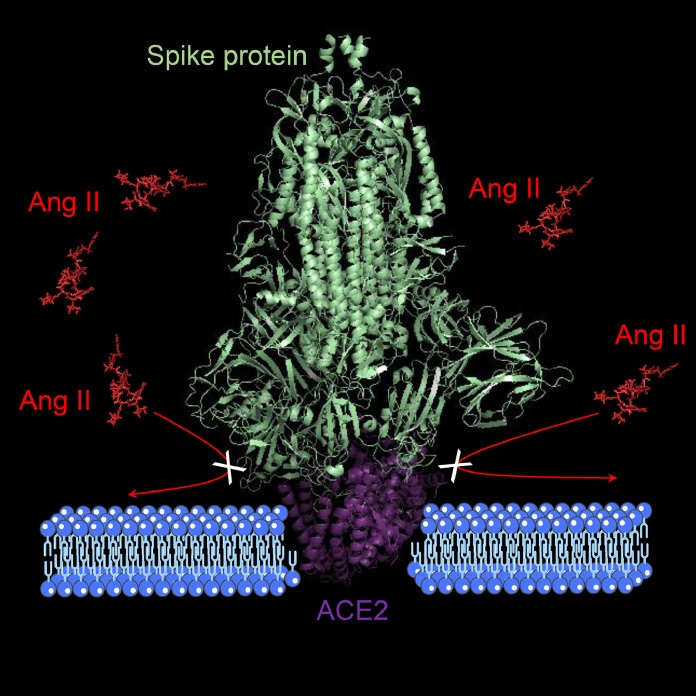
The effect of binding of the Spike protein to ACE2 on the dysregulation of the renin-angiotensin system with increased generation and activity of Ang II (loss of ACE2 activity). Legend: ACE2=angiotensin-converting enzyme 2 receptor; Ang=angiotensin.
Fig 6
Fig. 6
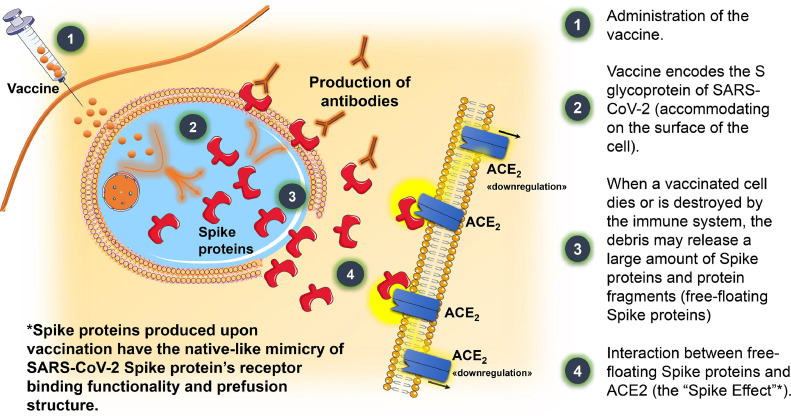
Schematic mechanism of action of COVID-19 vaccines and their potential cardiovascular effects throughout the interaction between free-floating Spike proteins and ACE2 receptors. Legend: ACE2=angiotensin-converting enzyme 2 receptor; SARS-CoV-2= severe acute respiratory syndrome coronavirus-2.
Fig 7
Fig. 7
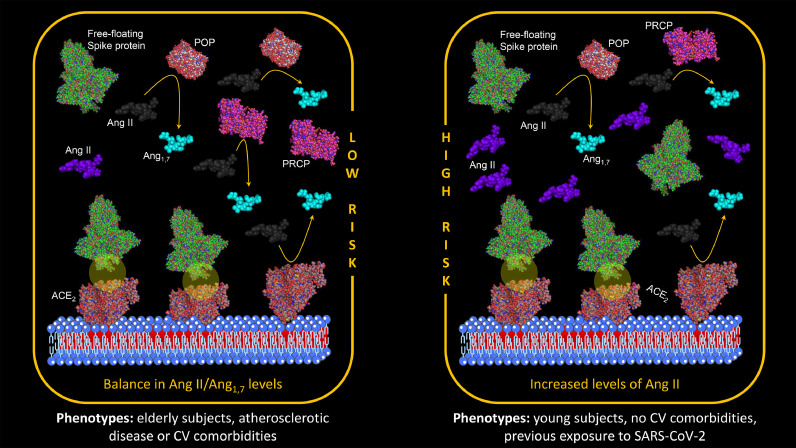
Adverse reactions to COVID-19 vaccination associated with Ang II accumulation. Older age, presence of comorbidities and previous cardiovascular events identify phenotypes at lower risk of adverse events (left panel).Younger and healthy subjects are phenotypes at increased risk of adverse events (right panel). Legend: ACE2=angiotensin-converting enzyme 2 receptor; Ang=angiotensin; CV=cardiovascular; POP=prolyl oligopeptidase; PRCP=prolyl carboxypeptidases; SARS-CoV-2= severe acute respiratory syndrome coronavirus-2.

References

    1. Wu C., Chen X., Cai Y., Xia J., Zhou X., Xu S., et al. Risk factors associated with acute respiratory distress syndrome and death in patients with coronavirus disease 2019 Pneumonia in Wuhan, China. JAMA Intern Med. 2020 180:934–43. 10.1001/jamainternmed.2020.0994. - DOI - PMC - PubMed
    1. Huang C., Wang Y., Li X., Ren L., Zhao J., Hu Y., et al. Clinical features of patients infected with 2019 novel coronavirus in Wuhan. China. Lancet. 2020;395:497–506. doi: 10.1016/S0140-6736(20)30183-5. - DOI - PMC - PubMed
    1. Schiffrin E.L., Flack J.M., Ito S., Muntner P., Webb R.C. Hypertension and COVID-19. Am J Hypertens. 2020;33:373–374. doi: 10.1093/ajh/hpaa057. - DOI - PMC - PubMed
    1. Fitero A., Bungau S.G., Tit D.M., Endres L., Khan S.A., Bungau A.F. et al. Comorbidities, associated diseases, and risk assessment in COVID-19-A Systematic Review. Int J Clin Pract. 2022, 2022:1571826. 10.1155/2022/1571826. - DOI - PMC - PubMed
    1. Justino D.C.P., Silva D.F.O., Costa K., de Morais T.N.B., de Andrade F.B. Prevalence of comorbidities in deceased patients with COVID-19: a systematic review. Medicine (Baltimore) 2022;101:e30246. doi: 10.1097/MD.0000000000030246. - DOI - PMC - PubMed