


Factors and Behaviors Related to Successful Transition of Care After Hospitalization for Ischemic Stroke
- PMID: 36533520
- PMCID: PMC9870934
- DOI: 10.1161/STROKEAHA.122.040891
Factors and Behaviors Related to Successful Transition of Care After Hospitalization for Ischemic Stroke
Abstract
Background: Our objective is to describe adoption of the posthospitalization behaviors associated with successful transition of care and related baseline characteristics.
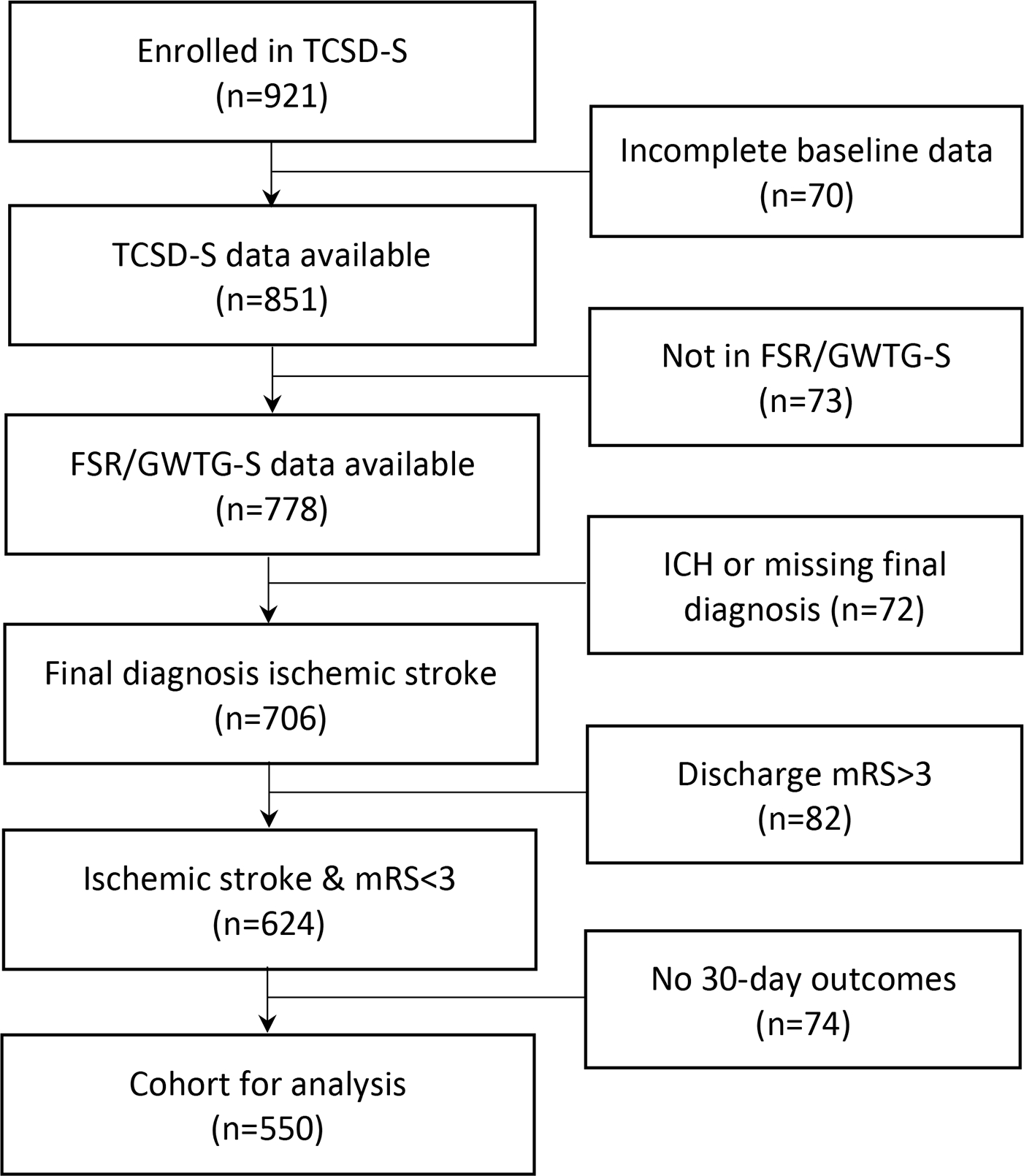
Methods: This study includes 550 participants in the Transition of Care Stroke Disparities Study, a prospective observational cohort derived from the Florida Stroke Registry. Participants had an ischemic stroke (2018-2021), discharged home or to rehabilitation, with modified Rankin Scale score=0-3 (44% women, 24% Black, 48% White, 26% Hispanic, 35% foreign-born). We collected baseline sociodemographic and clinical characteristics. A structured telephone interview at 30-day postdischarge evaluated outcomes including medication adherence, medical appointment attendance, outpatient therapy, exercise, diet modification, toxic habit cessation, and a calculated composite adequate transition of care measure. Multivariable analyses assessed the association of baseline characteristics with 30-day behaviors.
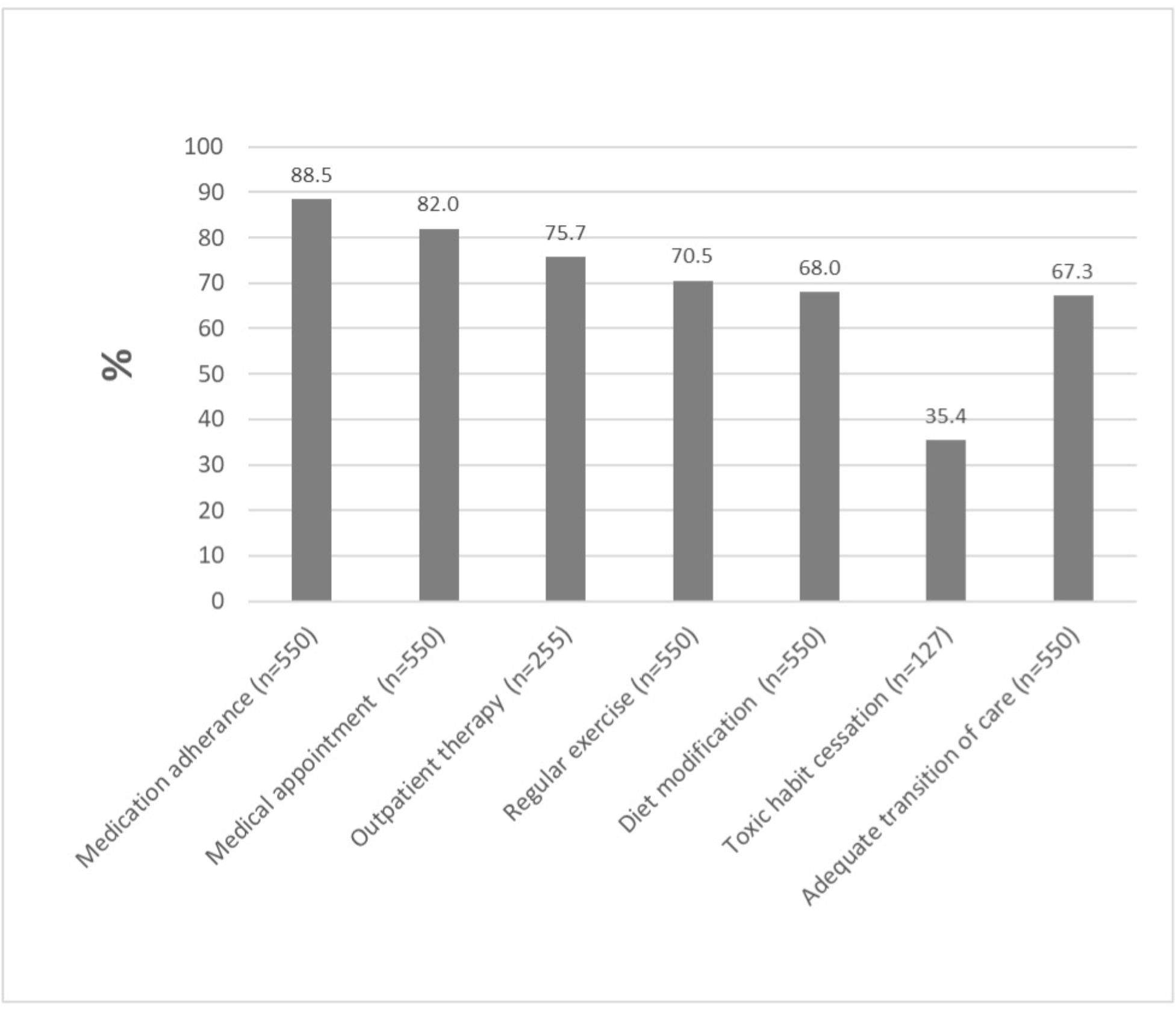
Results: At 30 days, medication adherence was achieved by 89%, medical appointments by 82%, outpatient therapy by 76%, exercise by 71%, diet modification by 68%, toxic habit cessation by 35%, and adequate transition of care measure by 67%. Successful adequate transition of care participants were more likely to be used full-time (42% versus 31%, P=0.02), live with a spouse (60% versus 47%, P=0.01), feel close to ≥3 individuals (84% versus 71%, P<0.01), have history of dyslipidemia (45 versus 34%, P=0.02), have thrombectomy (15% versus 8%, P=0.02), but less likely to have a history of smoking (17% versus 32%, P<0.001), coronary artery disease (14% versus 21%, P=0.04), and heart failure (3% versus 11%, P<0.01). Multivariable logistic regression analyses revealed that multiple socio-economic factors and prestroke comorbid diseases predicted fulfillment of transition of care measures. There was no difference in outcomes during the Covid-19 pandemic (2020-2021) compared with prepandemic years (2018-2019).
Conclusions: One in 3 patients did not attain adequate 30-day transition of care behaviors. Their achievement varied substantially among different measures and was influenced by multiple socioeconomic and clinical factors. Interventions aimed at facilitating transition of care from hospital after stroke are needed.
Registration: URL: https://clinicaltrials.gov/; Unique identifier: NCT03452813.
Keywords: continuity of care; hospital to home transition; ischemic stroke; patient compliance; stroke.
Conflict of interest statement
Conflicting Interests/Disclosures
Jose G. Romano receives research support from NIH grants.
Ralph L. Sacco receives research support from NIH grants and the Florida Department of Health, and personal compensation from the AHA for serving as Editor-In-Chief of Stroke.
All other authors have no relevant conflicting interests or disclosures.
Figures
References
-
- Zhong W, Geng N, Wang P, Li Z, Cao L. Prevalence, causes and risk factors of hospital readmissions after acute stroke and transient ischemic attack: A systematic review and meta-analysis. Neurol Sci. 2016;37:1195–1202 - PubMed
-
- Virani SS, Alonso A, Aparicio HJ, Benjamin EJ, Bittencourt MS, Callaway CW, Carson AP, Chamberlain AM, Cheng S, Delling FN, et al. Heart disease and stroke statistics-2021 update: A report from the american heart association. Circulation. 2021;143:e254–e743 - PubMed
-
- Coleman EA, Berenson RA. Lost in transition: Challenges and opportunities for improving the quality of transitional care. Ann Intern Med. 2004;141:533–536 - PubMed
