Review
. 2023 Jun;23(6):381-396.
doi: 10.1038/s41577-022-00813-1. Epub 2022 Dec 19.

Beyond neutralization: Fc-dependent antibody effector functions in SARS-CoV-2 infection

Affiliations
Review

Beyond neutralization: Fc-dependent antibody effector functions in SARS-CoV-2 infection

Ali Zhang et al. Nat Rev Immunol. 2023 Jun.

Abstract

Neutralizing antibodies are known to have a crucial role in protecting against SARS-CoV-2 infection and have been suggested to be a useful correlate of protection for vaccine clinical trials and for population-level surveys. In addition to neutralizing virus directly, antibodies can also engage immune effectors through their Fc domains, including Fc receptor-expressing immune cells and complement. The outcome of these interactions depends on a range of factors, including antibody isotype-Fc receptor combinations, Fc receptor-bearing cell types and antibody post-translational modifications. A growing body of evidence has shown roles for these Fc-dependent antibody effector functions in determining the outcome of SARS-CoV-2 infection. However, measuring these functions is more complicated than assays that measure antibody binding and virus neutralization. Here, we examine recent data illuminating the roles of Fc-dependent antibody effector functions in the context of SARS-CoV-2 infection, and we discuss the implications of these data for the development of next-generation SARS-CoV-2 vaccines and therapeutics.


Conflict of interest statement

The authors declare no competing interests.

Figures
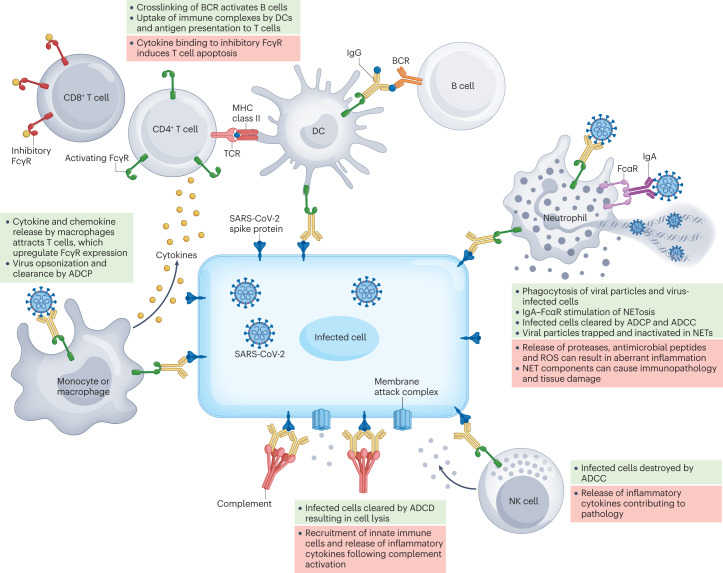
Fig. 1
Fig. 1. Fc-dependent antibody effector functions contribute to protection from and pathogenesis of SARS-CoV-2 infection.
Non-neutralizing antibodies can engage crystallizable fragment (Fc) receptors (FcRs) on multiple types of immune cell, including monocytes, macrophages, dendritic cells (DCs), neutrophils and natural killer (NK) cells, to stimulate effector functions that influence the outcome of infection. Antibodies that bind to the spike protein of severe acute respiratory syndrome coronavirus 2 (SARS-CoV-2) can also mediate complement fixation. Fc-dependent antibody responses tend to have antiviral functions that mediate disease resolution when properly regulated (green boxes) but may contribute to immunopathology and exacerbate disease when dysregulated (red boxes). ADCC, antibody-dependent cellular cytotoxicity; ADCD, antibody-dependent complement deposition; ADCP, antibody-dependent cellular phagocytosis; BCR, B cell receptor; NET, neutrophil extracellular trap; ROS, reactive oxygen species; TCR, T cell receptor.
Fig. 2
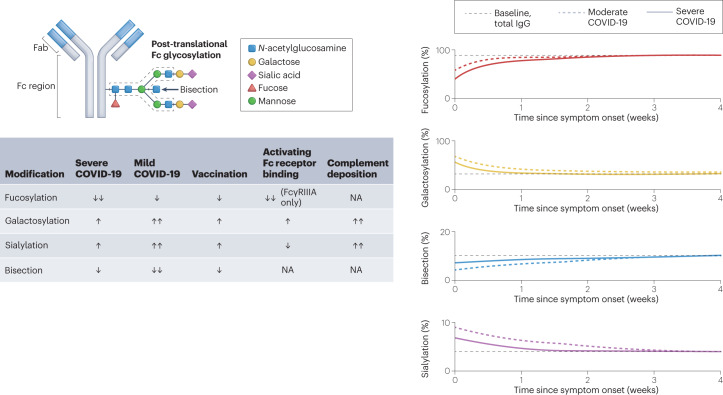
Fig. 2. Antibody glycoforms are shaped by infection and vaccination, and modulate Fc-dependent effector functions.
The crystallizable fragment (Fc) regions of antibodies are post-translationally modified with patterns of glycosylation that shape their function. The relative levels of fucosylation, galactosylation, sialylation and bisection of antibody Fc regions have all been reported to affect the outcome of severe acute respiratory syndrome coronavirus 2 (SARS-CoV-2) infection. Severe coronavirus disease 2019 (COVID-19) is associated with transient decreases in fucosylated antibodies that return to baseline levels of fucosylation 4–6 weeks after infection. Antibody afucosylation results in more potent Fc receptor (FcR) activation, specifically of FcγRIIIA. By contrast, galactosylation levels are increased in response to infection and vaccination. Antibody galactosylation enhances FcR activation, albeit to a lower level than does afucosylation, but is associated with more potent complement deposition. Antibody sialylation also increases upon vaccination or infection. Sialylation slightly reduces binding to activating FcRs, but enhances complement deposition. By contrast, levels of bisection slightly decrease with infection and vaccination, although the biological relevance of this is unclear as neither FcR binding nor complement deposition seem to be affected. The graphs in the right-hand panel depict the percentage of total or anti-spike IgG with specific glycosylation patterns in patients at baseline, with moderate COVID-19 (hospitalized, non-intensive care) or with severe COVID-19 (hospitalized, intensive care) following weeks after symptom onset. Fab, fragment antigen-binding. NA, no effect observed in response to changes in modification level.
Fig. 3
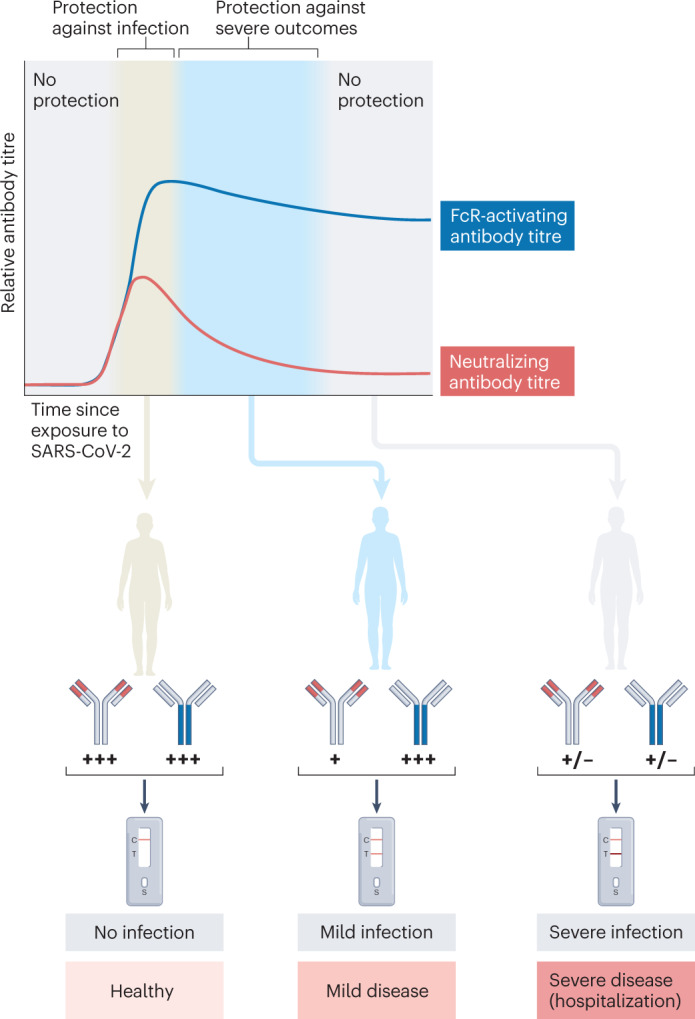
Fig. 3. Kinetics of Fc-dependent antibody effector functions after vaccination and association with outcome of SARS-CoV-2 infection.
Both neutralizing and crystallizable fragment (Fc) receptor (FcR)-activating antibodies (of which neutralizing antibodies are a subset) are elicited following exposure to severe acute respiratory syndrome coronavirus 2 (SARS-CoV-2). High titres of neutralizing antibodies are associated with protection against infection, but these titres wane relatively quickly after exposure. Titres of antibodies capable of engaging FcRs are more stable and durable after exposure. Maintenance of these antibodies may be associated with protection against severe outcomes of SARS-CoV-2 infection even as titres of neutralizing antibodies wane.

References

    1. Al-Awwal N, Dweik F, Mahdi S, El-Dweik M, Anderson SH. A review of SARS-CoV-2 disease (COVID-19): pandemic in our time. Pathogens. 2022;11:368. doi: 10.3390/pathogens11030368. - DOI - PMC - PubMed
    1. Harvey WT, et al. SARS-CoV-2 variants, spike mutations and immune escape. Nat. Rev. Microbiol. 2021;19:409–424. doi: 10.1038/s41579-021-00573-0. - DOI - PMC - PubMed
    1. Planas D, et al. Reduced sensitivity of SARS-CoV-2 variant Delta to antibody neutralization. Nature. 2021;596:276–280. doi: 10.1038/s41586-021-03777-9. - DOI - PubMed
    1. Caniels TG, et al. Emerging SARS-CoV-2 variants of concern evade humoral immune responses from infection and vaccination. Sci. Adv. 2021;7:eabj5365. doi: 10.1126/sciadv.abj5365. - DOI - PMC - PubMed
    1. Khoury DS, et al. Neutralizing antibody levels are highly predictive of immune protection from symptomatic SARS-CoV-2 infection. Nat. Med. 2021;27:1205–1211. doi: 10.1038/s41591-021-01377-8. - DOI - PubMed

Publication types