


Early and midterm outcomes of a bentall operation using an all-biological valved BioConduit™
- PMID: 36536442
- PMCID: PMC9761648
- DOI: 10.1186/s13019-022-02073-5
Early and midterm outcomes of a bentall operation using an all-biological valved BioConduit™
Abstract
Objectives: To analyze the midterm results of aortic root replacement using the valved, all biological, No React®, BioConduit™.
Methods: From 2017 to 2020, we prospectively followed 91 consecutive patients who underwent a Bentall procedure with a BioConduit™ valved graft in our institution. The primary outcomes were aortic bioprosthetic valve dysfunction and mortality according to Valve Academic Research Consortium 3 (VARC3).
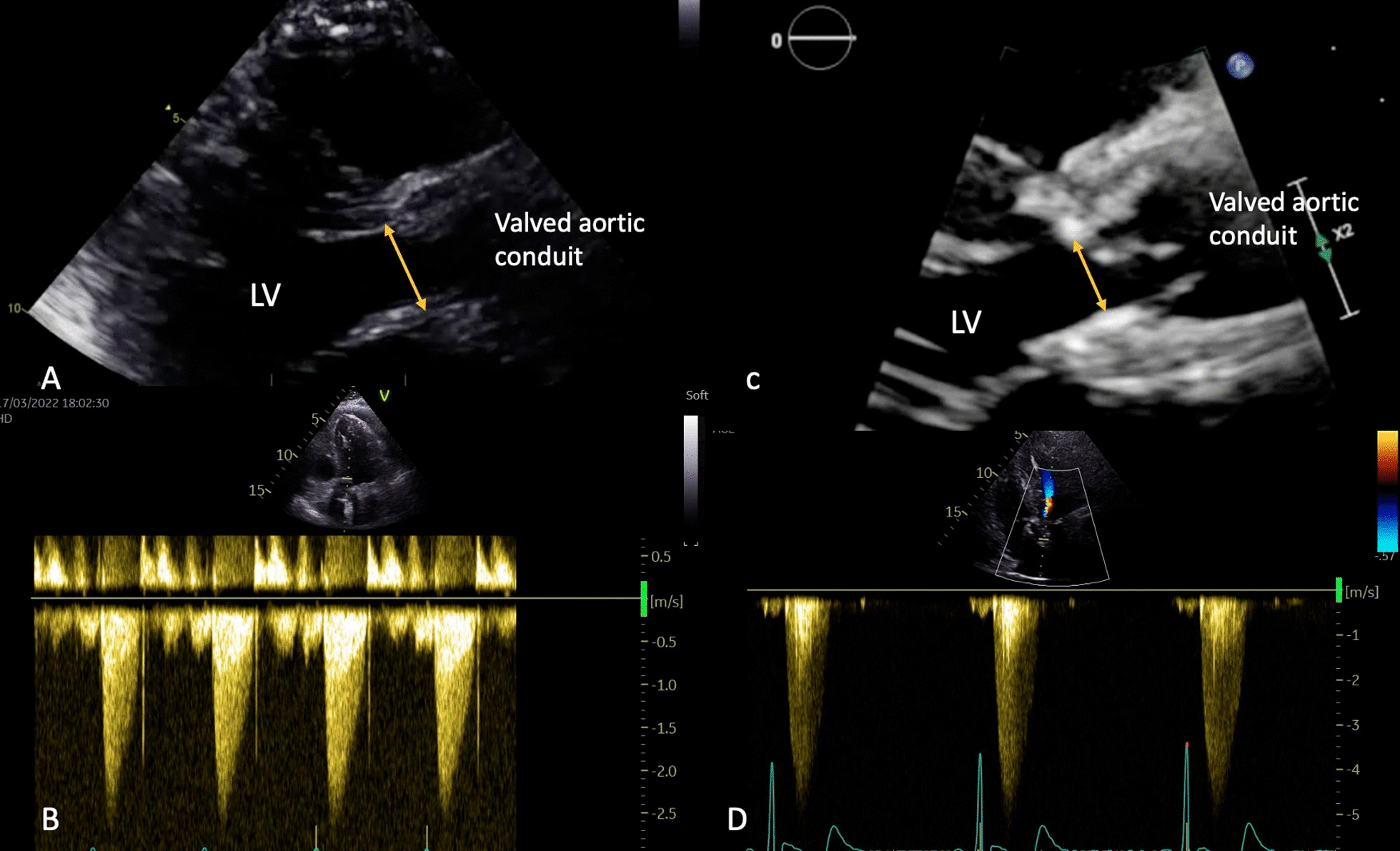
Results: Mean age was 70 ± 10 years and 67 patients (74%) were men. Ascending aortic aneurysm (72%), aortic valve regurgitation (51%) or stenosis (20%) and acute endocarditis (14%) were the main indications for surgery. Seventy-four patients (81.3%) were followed up at 1 year. The perioperative mortality was 8% (n = 8), the early, 1 year, mortality was 2% (n = 2) and the midterm mortality, at 4 years of follow up, was 4% (n = 3). Ten patients fulfilled the criteria for hemodynamic valve deterioration at 1 year (13%) and 14 for a bioprosthetic valve failure during the entire follow-up (17%).
Conclusions: We are reporting early and midterm results of Bentall procedures with the all-biological, valved, No-React® BioConduit™. To our knowledge, this is the first study reporting an early and midterm unexpectedly high rate of non-structural prosthetic hemodynamic deterioration. The rate of endocarditis and atrioventricular disconnections remain similar to previous studies.
© 2022. The Author(s).
Conflict of interest statement
None of the authors have any conflict of interest to declare.
Figures

References
-
- Cherry C, DeBord S, Hickey C. The modified Bentall procedure for aortic root replacement. AORN J. 2006;84(1):52–5, 58–70; quiz 71–4. - PubMed
MeSH terms
LinkOut - more resources
Full Text Sources
Medical
