


Brainstem white matter microstructure is associated with hyporesponsiveness and overall sensory features in autistic children
- PMID: 36536467
- PMCID: PMC9762648
- DOI: 10.1186/s13229-022-00524-3
Brainstem white matter microstructure is associated with hyporesponsiveness and overall sensory features in autistic children
Abstract
Background: Elevated or reduced responses to sensory stimuli, known as sensory features, are common in autistic individuals and often impact quality of life. Little is known about the neurobiological basis of sensory features in autistic children. However, the brainstem may offer critical insights as it has been associated with both basic sensory processing and core features of autism.
Methods: Diffusion-weighted imaging (DWI) and parent-report of sensory features were acquired from 133 children (61 autistic children with and 72 non-autistic children, 6-11 years-old). Leveraging novel DWI processing techniques, we investigated the relationship between sensory features and white matter microstructure properties (free-water-elimination-corrected fractional anisotropy [FA] and mean diffusivity [MD]) in precisely delineated brainstem white matter tracts. Follow-up analyses assessed relationships between microstructure and sensory response patterns/modalities and analyzed whole brain white matter using voxel-based analysis.
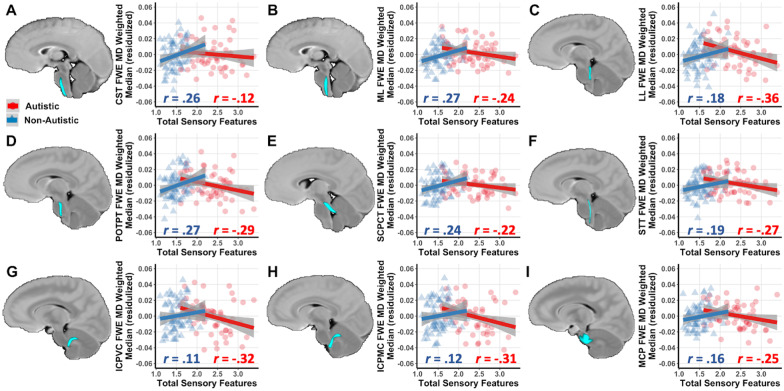
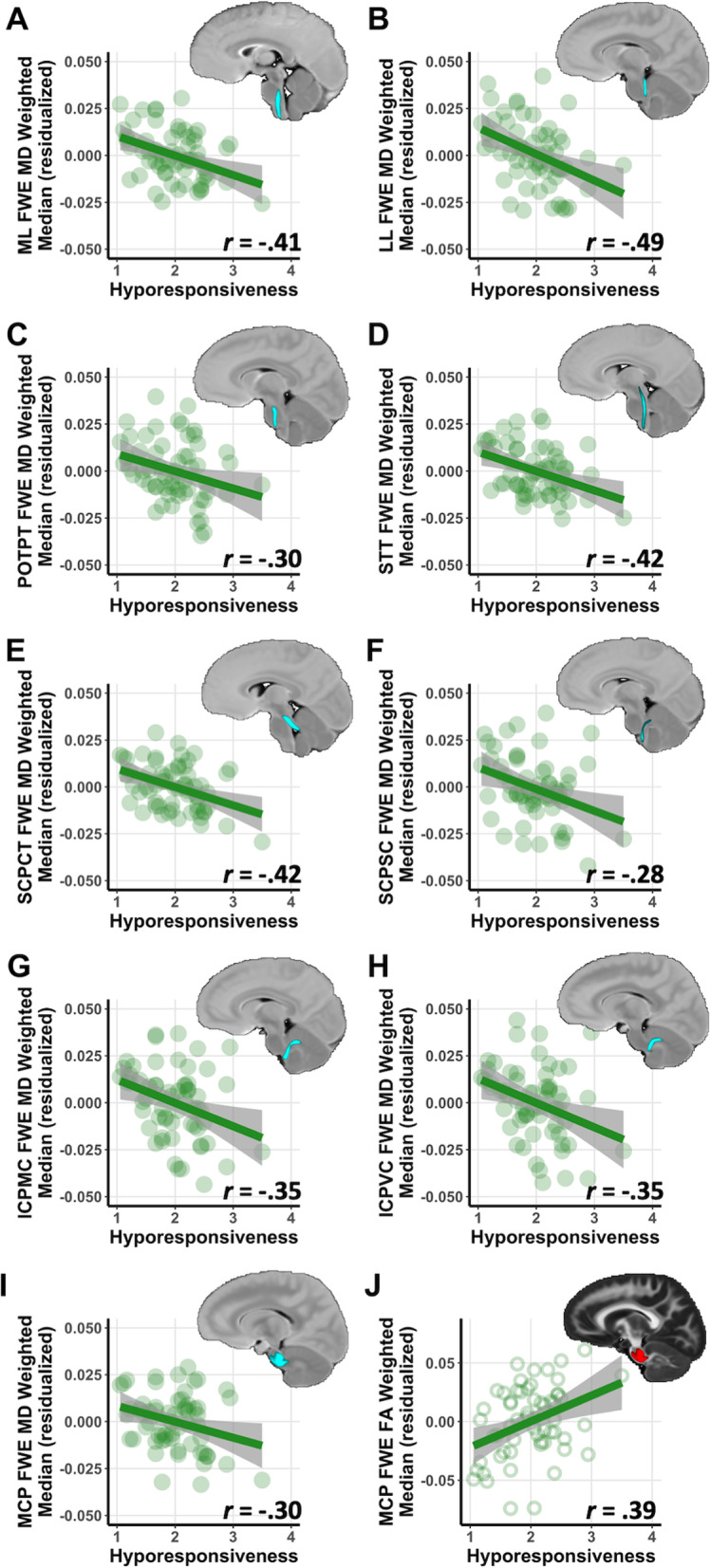
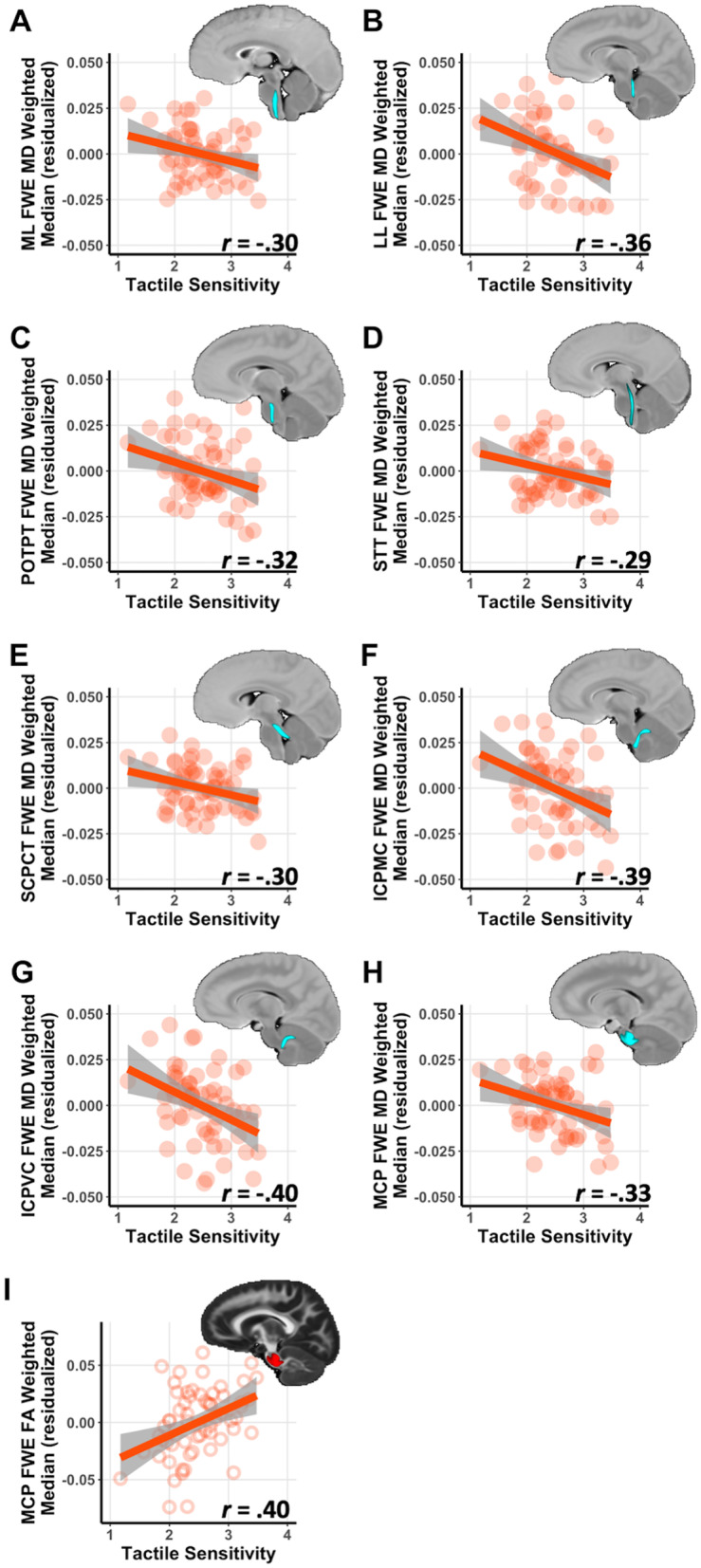
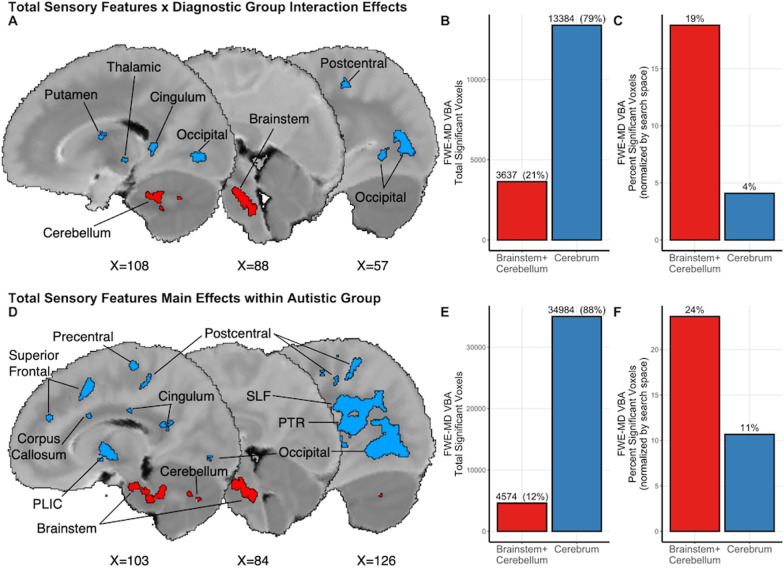
Results: Results revealed distinct relationships between brainstem microstructure and sensory features in autistic children compared to non-autistic children. In autistic children, more prominent sensory features were generally associated with lower MD. Further, in autistic children, sensory hyporesponsiveness and tactile responsivity were strongly associated with white matter microstructure in nearly all brainstem tracts. Follow-up voxel-based analyses confirmed that these relationships were more prominent in the brainstem/cerebellum, with additional sensory-brain findings in the autistic group in the white matter of the primary motor and somatosensory cortices, the occipital lobe, the inferior parietal lobe, and the thalamic projections.
Limitations: All participants communicated via spoken language and acclimated to the sensory environment of an MRI session, which should be considered when assessing the generalizability of this work to the whole of the autism spectrum.
Conclusions: These findings suggest unique brainstem white matter contributions to sensory features in autistic children compared to non-autistic children. The brainstem correlates of sensory features underscore the potential reflex-like nature of behavioral responses to sensory stimuli in autism and have implications for how we conceptualize and address sensory features in autistic populations.
Keywords: Autism; Brainstem; DTI; Sensory features; Voxel-based analysis; White matter.
© 2022. The Author(s).
Conflict of interest statement
ALA is part owner of ImgGyd, LLC and inseRT MRI, Inc. (also listed as TherVoyant). While both companies are involved in developing MRI-based surgery techniques, neither are associated with any current areas of his research, including the present publication. All other authors report no biomedical financial interests of potential conflicts of interest.
Figures
References
Publication types
MeSH terms
Grants and funding
- R00 MH110596/MH/NIMH NIH HHS/United States
- R01 NS117568/NS/NINDS NIH HHS/United States
- R01 NS111022/NS/NINDS NIH HHS/United States
- P01 AI132132/AI/NIAID NIH HHS/United States
- T32 NS105602/NS/NINDS NIH HHS/United States
- R01 NS105646/NS/NINDS NIH HHS/United States
- P50 HD105353/HD/NICHD NIH HHS/United States
- T32 NS076067/NS/NINDS NIH HHS/United States
- U54 HD090256/HD/NICHD NIH HHS/United States
- R01 HD094715/HD/NICHD NIH HHS/United States
- R01 AG037639/AG/NIA NIH HHS/United States
- P30 HD003352/HD/NICHD NIH HHS/United States
- R01 AI138647/AI/NIAID NIH HHS/United States
- T32 CA009206/CA/NCI NIH HHS/United States
LinkOut - more resources
Full Text Sources
