Multiple System Atrophy: Advances in Diagnosis and Therapy
- PMID: 36537066
- PMCID: PMC9978260
- DOI: 10.14802/jmd.22082
Multiple System Atrophy: Advances in Diagnosis and Therapy
Abstract
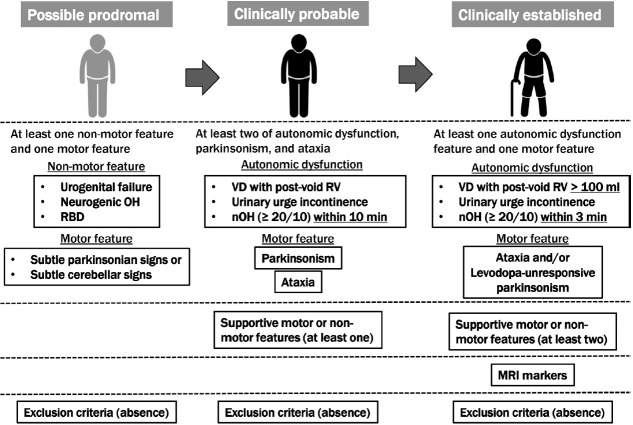
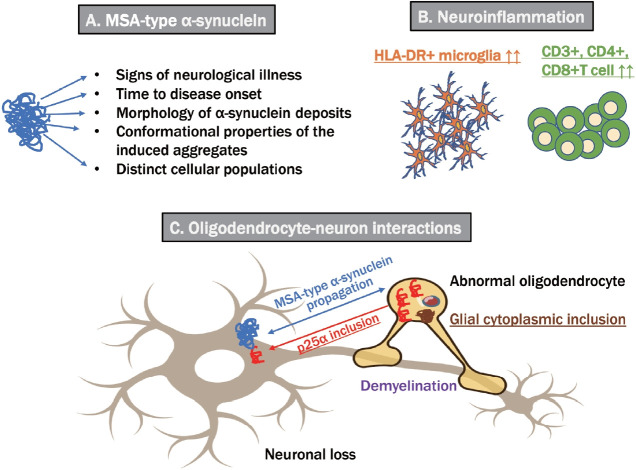
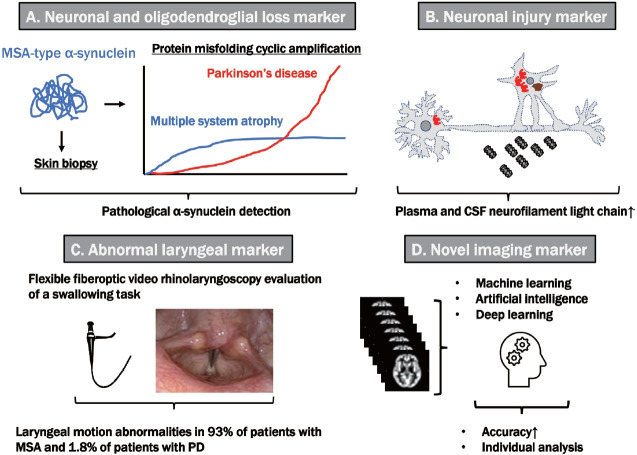
This review summarizes improvements in understanding the pathophysiology and early clinical symptoms of multiple system atrophy (MSA) and advancements in diagnostic methods and disease-modifying therapies for the condition. In 2022, the Movement Disorder Society proposed new diagnostic criteria to develop disease-modifying therapies and promote clinical trials of MSA since the second consensus was proposed in 2008. Regarding pathogenesis, cutting-edge findings have accumulated on the interactions of α-synuclein, neuroinflammation, and oligodendroglia with neurons. In neuroimaging, introducing artificial intelligence, machine learning, and deep learning has notably improved diagnostic accuracy and individual analyses. Advancements in treatment have also been achieved, including immunotherapy therapy against α-synuclein and serotonin-targeted and mesenchymal stem cell therapies, which are thought to affect several aspects of the disease, including neuroinflammation. The accelerated progress in clarifying the pathogenesis of MSA over the past few years and the development of diagnostic techniques for detecting early-stage MSA are expected to facilitate the development of disease-modifying therapies for one of the most intractable neurodegenerative diseases.
Keywords: KeywordsaaDisease-modifying therapy; Multiple system atrophy; Neuroinflammation; Oligodendrocyte; α-synuclein.
Conflict of interest statement
The authors have no financial conflicts of interest.
Figures
References
-
- Jucaite A, Cselényi Z, Kreisl WC, Rabiner EA, Varrone A, Carson RE, et al. Glia imaging differentiates multiple system atrophy from Parkinson’s disease: a positron emission tomography study with [11C]PBR28 and machine learning analysis. Mov Disord. 2022;37:119–129. - PubMed
Grants and funding
LinkOut - more resources
Full Text Sources
Miscellaneous