Review
. 2022 Dec 7;12(54):34965-34983.
doi: 10.1039/d2ra07056a. eCollection 2022 Dec 6.

Bioactive 2-pyridone-containing heterocycle syntheses using multicomponent reactions

Affiliations
Review

Bioactive 2-pyridone-containing heterocycle syntheses using multicomponent reactions

Diana Hurtado-Rodríguez et al. RSC Adv. .

Abstract

2-Pyridone-containing heterocycles are considered privileged scaffolds in drug discovery due to their behavior as hydrogen bond donors and/or acceptors and nonpeptidic mimics, and remarkable physicochemical properties such as metabolic stability, solubility in water, and lipophilicity. This review provides a comprehensive overview of multicomponent reactions (MCRs) for the synthesis of 2-pyridone-containing heterocycles. In particular, it covers the articles published from 1999 to date related to anticancer, antibacterial, antifungal, anti-inflammatory, α-glucosidase inhibitor, and cardiotonic activities of 2-pyridone-containing heterocycles obtained exclusively by an MCR. The discussion focuses on bioactivity data, synthetic approaches, plausible reaction mechanisms, and molecular docking simulations to facilitate comparison and underscore the applications of the 2-pyridone motif in drug discovery and medicinal chemistry. We also present our conclusions and outlook for the future.


Conflict of interest statement

There are no conflicts to declare.

Figures
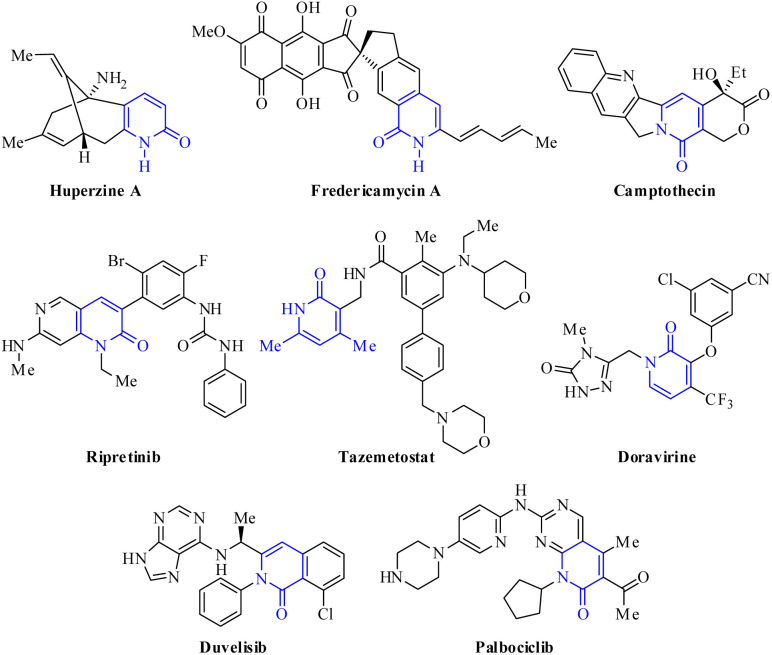
Fig. 1
Fig. 1. Bioactive natural products and selected examples of FDA-approved drugs containing 2-pyridone core.
Fig. 2
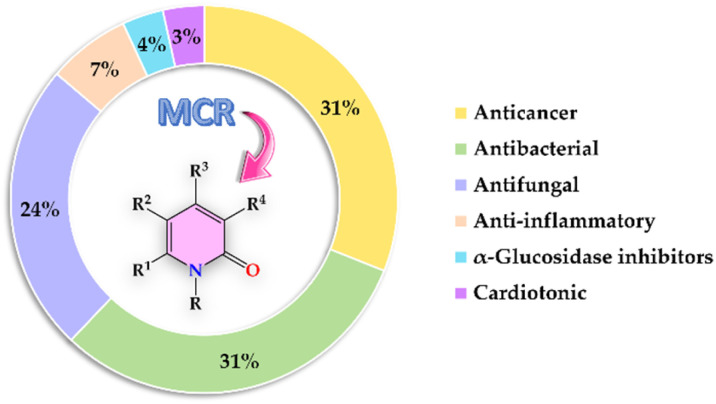
Fig. 2. Bibliometric graphic depicting the percentage of articles associated with each biological activity screened from 1999 to date [data were collected searching in Scopus for the keywords: “2-pyridones”, “biological activity”, and “multicomponent reactions”].
Scheme 1
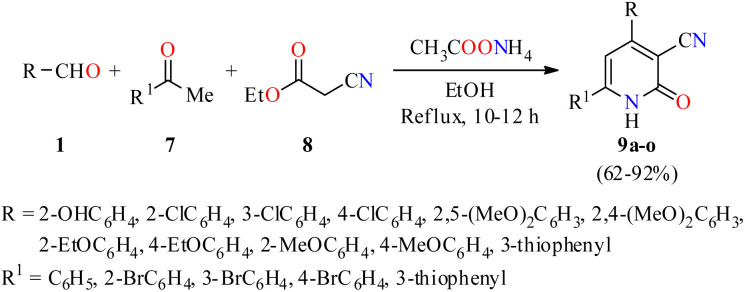
Scheme 1. Four-component synthesis and anticancer evaluation of 4,6-diaryl-2-oxo-1,2-dihydropyridine-3-carbonitriles 9.
Fig. 3
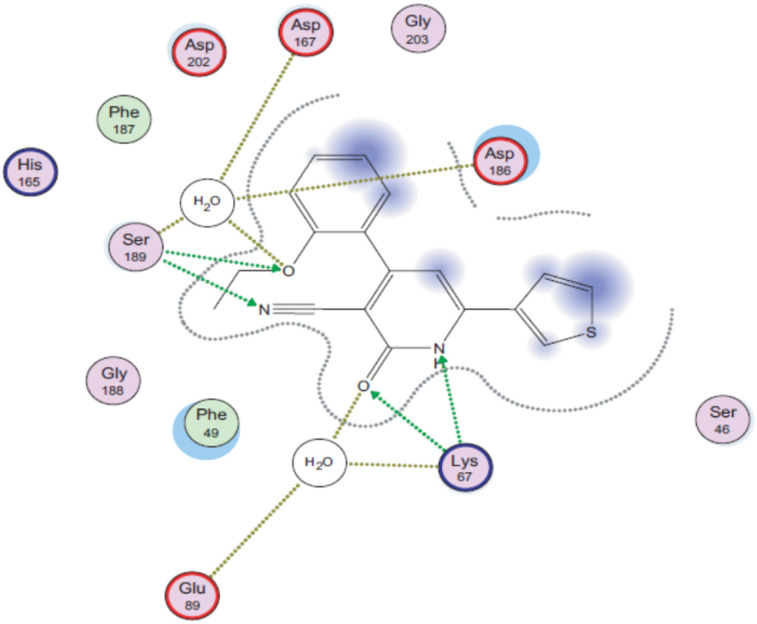
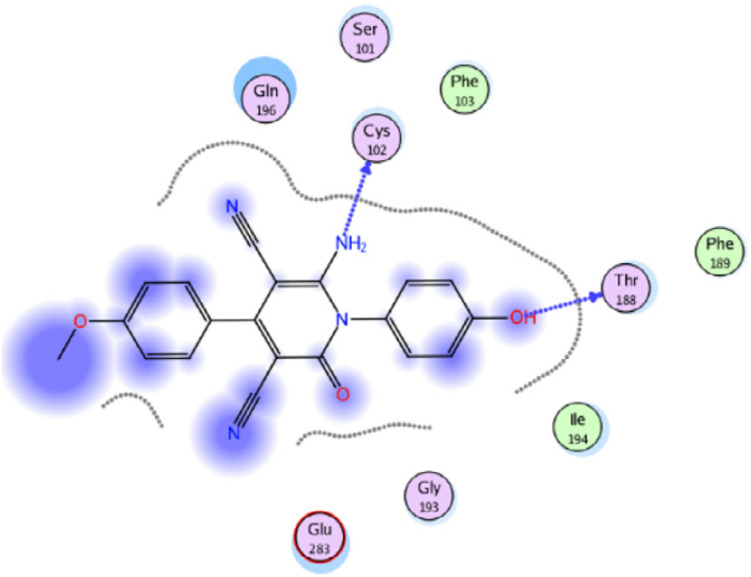
Fig. 3. 2D interactions of compound 9d with Pim-1 kinase (PDB ID code: 2OBJ). Reproduced with permission from ref. . Copyright Elsevier Inc., 2022.
Scheme 2
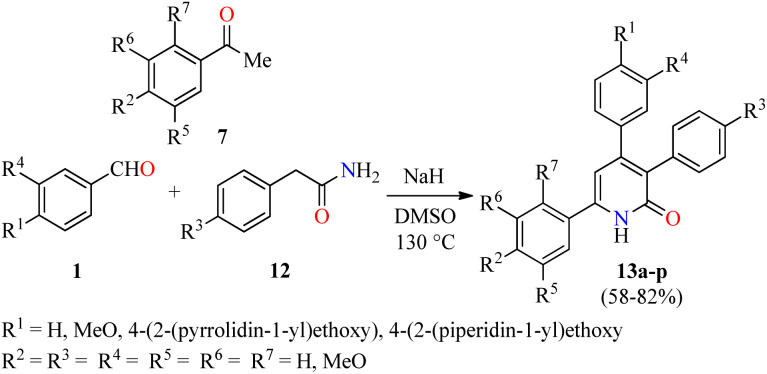
Scheme 2. One-pot three-component synthesis and anticancer evaluation of 3,4,6-triaryl-2(1H)-pyridones 13.
Scheme 3
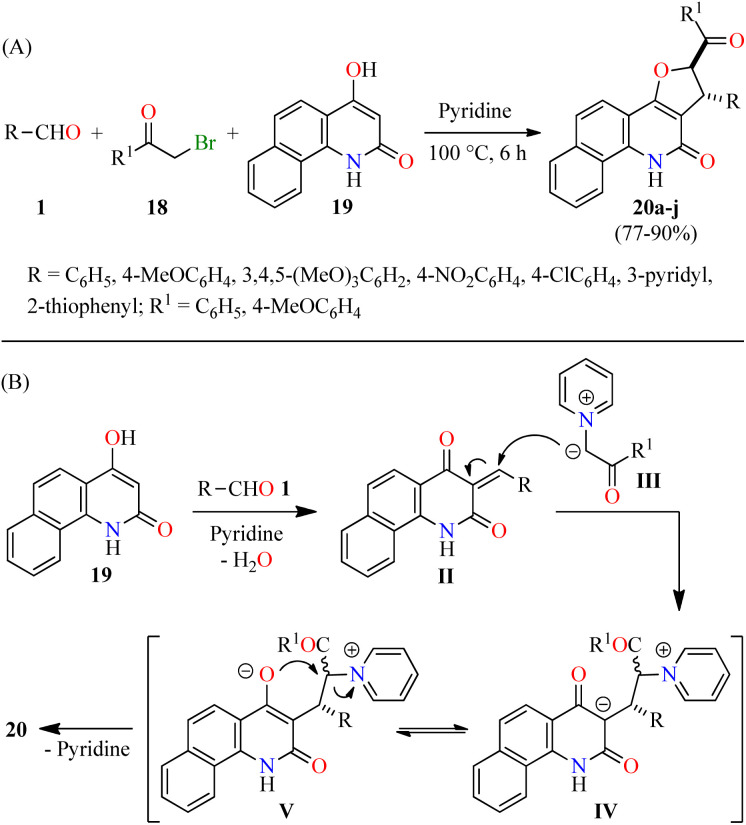
Scheme 3. (A) Three-component synthesis and anticancer evaluation of trans-2,3-dihydrofuran derivatives 20. (B) Plausible reaction mechanism for the formation of 20.
Scheme 4
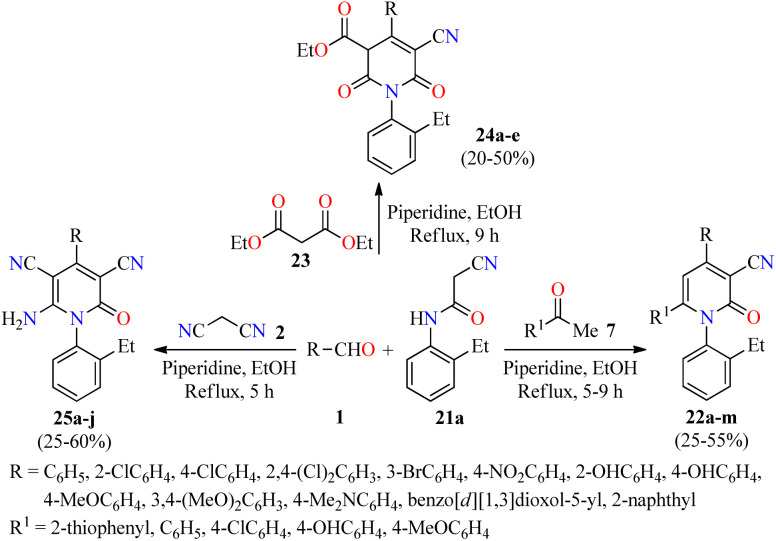
Scheme 4. Three-component synthesis and anticancer evaluation of highly substituted 2-pyridone derivatives 22, 24, and 25.
Fig. 4
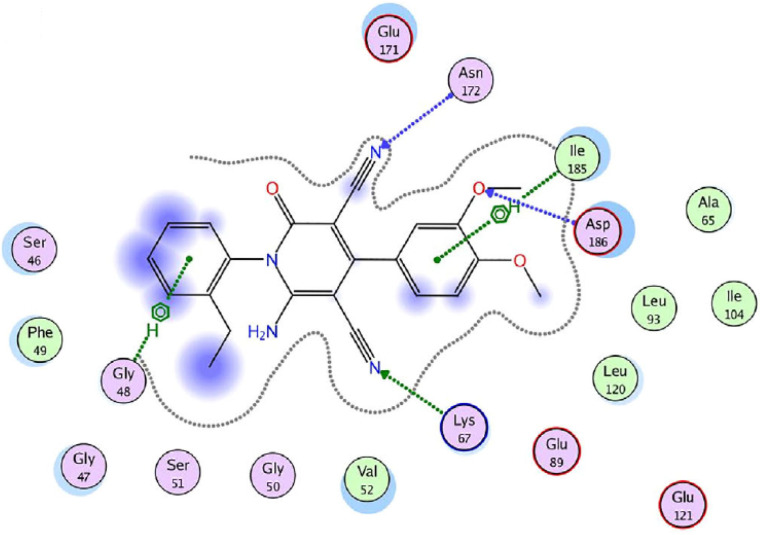
Fig. 4. 2D interactions of compound 25g with Pim-1 kinase (PDB ID code: 2OBJ). Reproduced with permission from ref. . Copyright John Wiley & Sons Inc., 2022.
Scheme 5
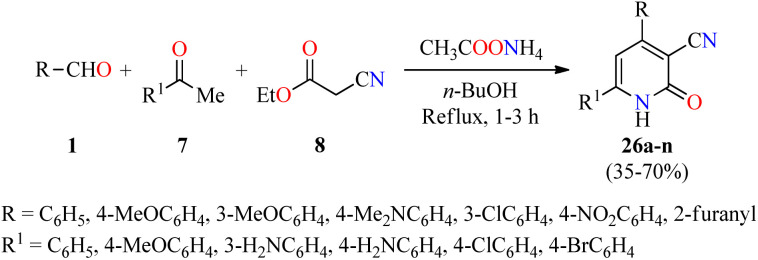
Scheme 5. Four-component synthesis and anticancer evaluation of 2(1H)-pyridone derivatives 26.
Scheme 6
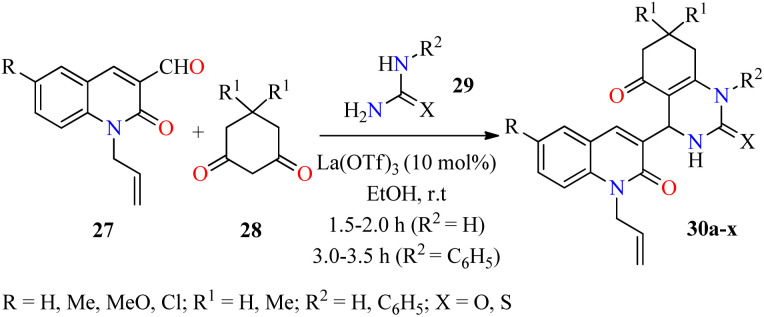
Scheme 6. La(OTf)3-catalyzed three-component synthesis and antibacterial evaluation of N-allylquinolone derivatives 30.
Scheme 7
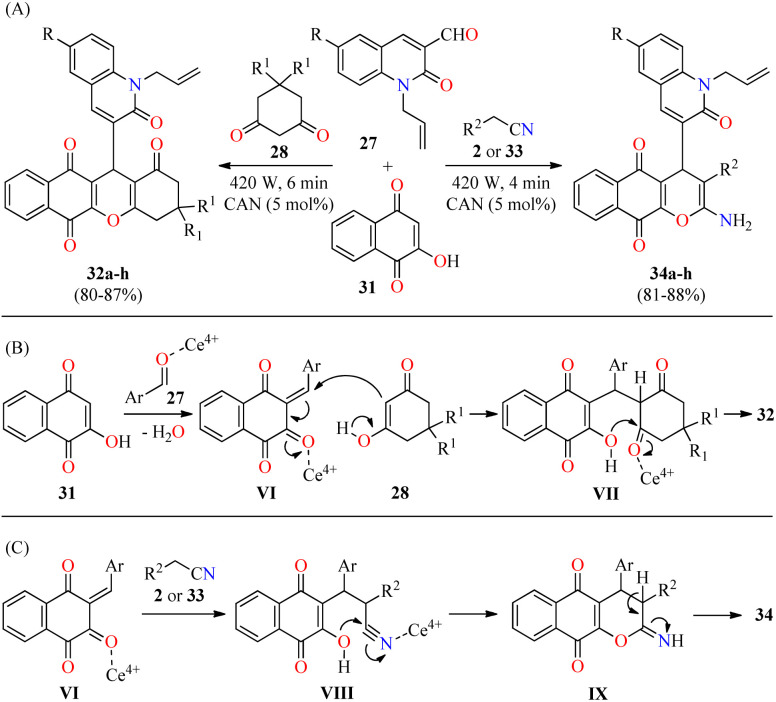
Scheme 7. (A) CAN-catalyzed three-component synthesis of N-allylquinolone derivatives 32 and 34 and their in vitro antibacterial activity against four bacterial strains. (B) Plausible reaction mechanism for the formation of 32. (C) Plausible reaction mechanism for the formation of 34.
Scheme 8
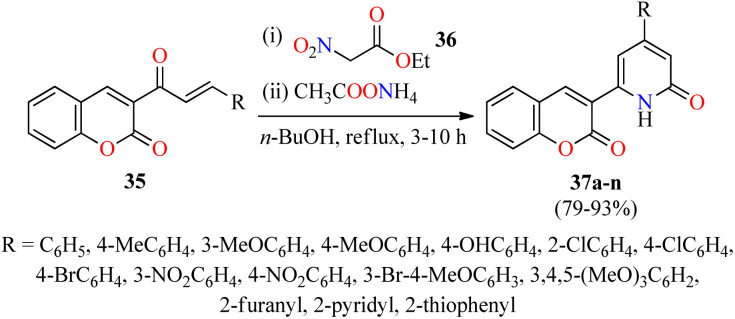
Scheme 8. One-pot three-component synthesis of coumarin-pyridone hybrids 37 for evaluation of their antibacterial activity.
Scheme 9
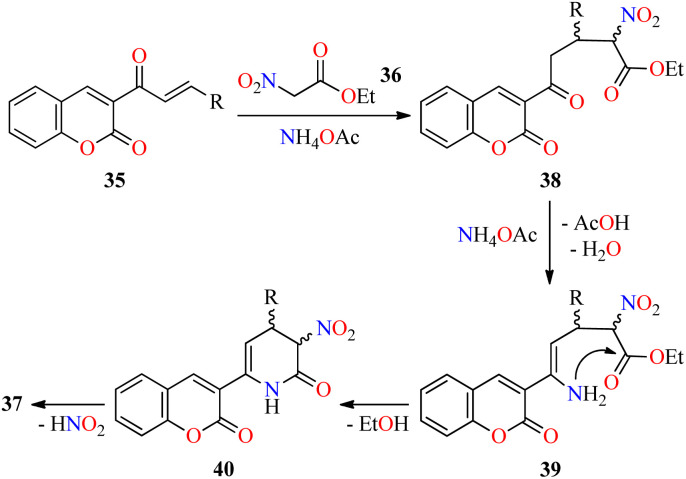
Scheme 9. Plausible mechanism for the synthesis of coumarin–pyridone hybrids 37.
Scheme 10
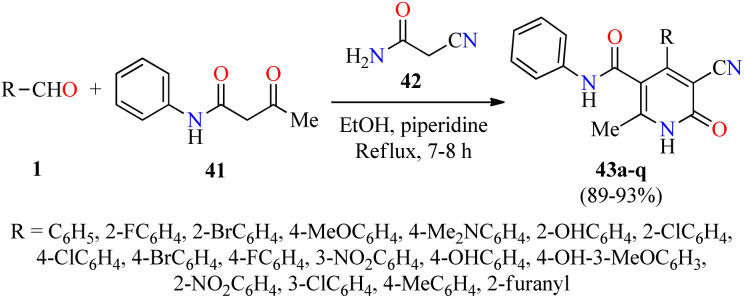
Scheme 10. Piperidine-catalyzed three-component synthesis of 2(1H)-pyridone derivatives 43 for evaluation of their antibacterial activity.
Scheme 11
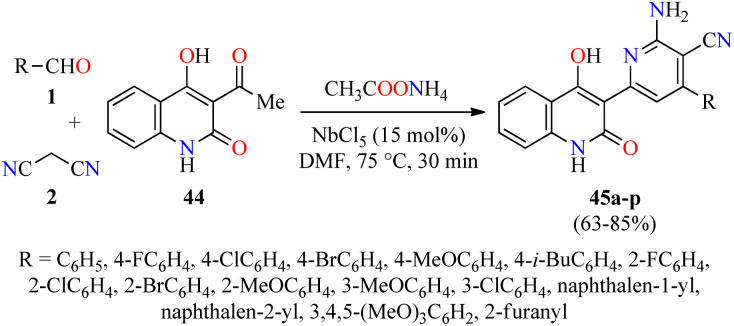
Scheme 11. NbCl5-catalyzed four-component synthesis of quinolone–pyridine hybrids 45 for evaluation of their antibacterial activity.
Scheme 12
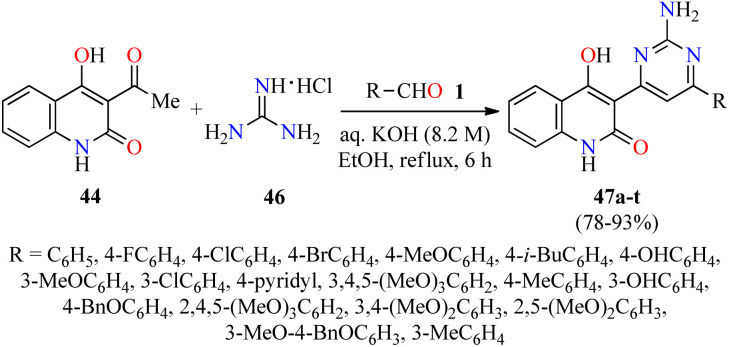
Scheme 12. Three-component synthesis of quinolone–pyrimidine hybrids 47 for evaluation of their antibacterial activity.
Scheme 13
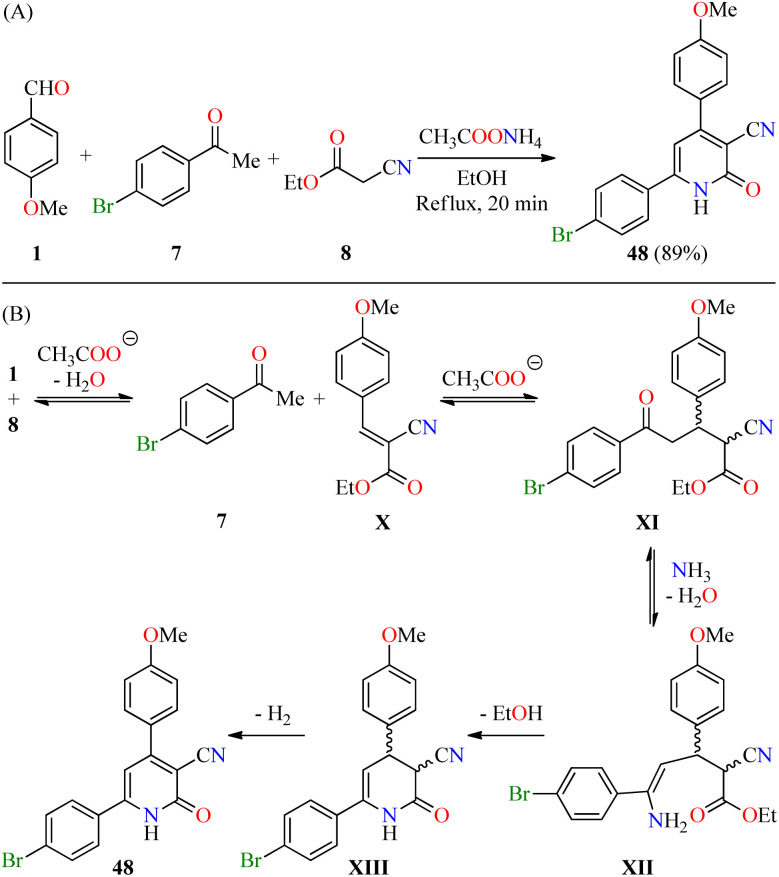
Scheme 13. (A) Four-component synthesis of the 4,6-diaryl-3-cyano-2(1H)-pyridone 48 and its in vitro antibacterial activity against two bacterial strains. (B) Plausible reaction mechanism for the formation of 48.
Scheme 14
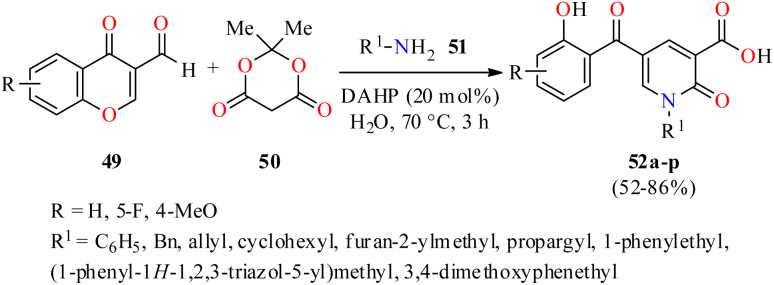
Scheme 14. DAHP-catalyzed three-component synthesis of 2-pyridone-3-carboxylic acids 52 and their in vitro antibacterial activity against four bacterial strains.
Fig. 5
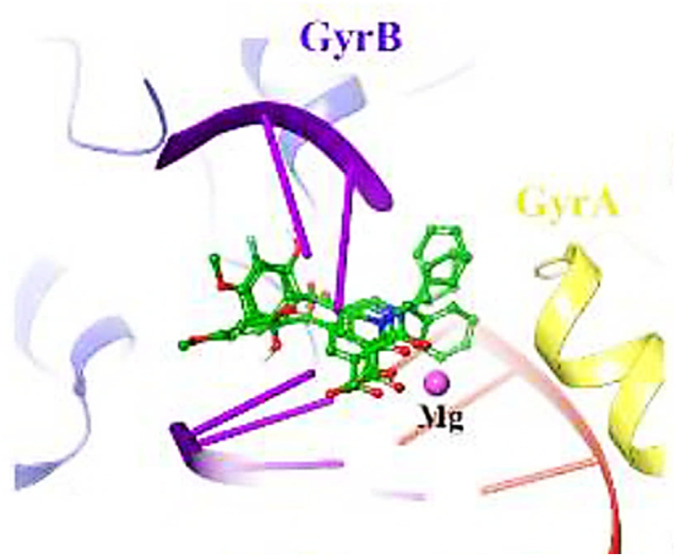
Fig. 5. 3D Interactions of compound 52p with Staphylococcus aureus DNA gyrase (PDB ID code: 5CDQ). GyrA and GyrB subunit of DNA gyrase are in yellow and blue, respectively.
Scheme 15
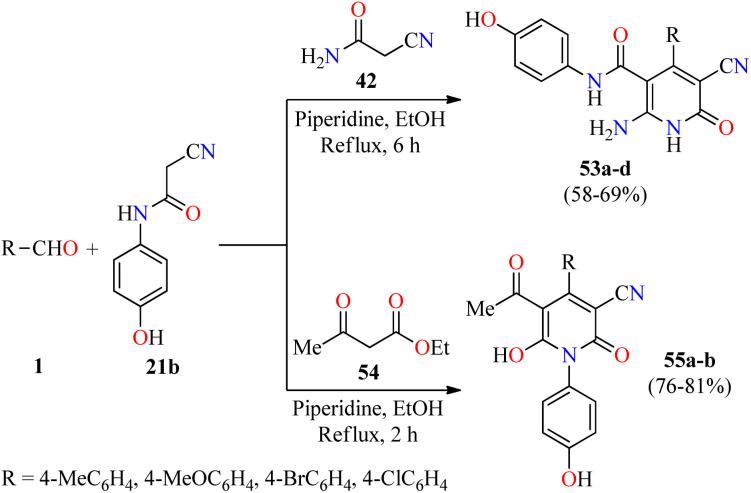
Scheme 15. Piperidine-catalyzed three-component synthesis of fully substituted 2-pyridone derivatives 53 and 55 with anti-inflammatory activity.
Scheme 16
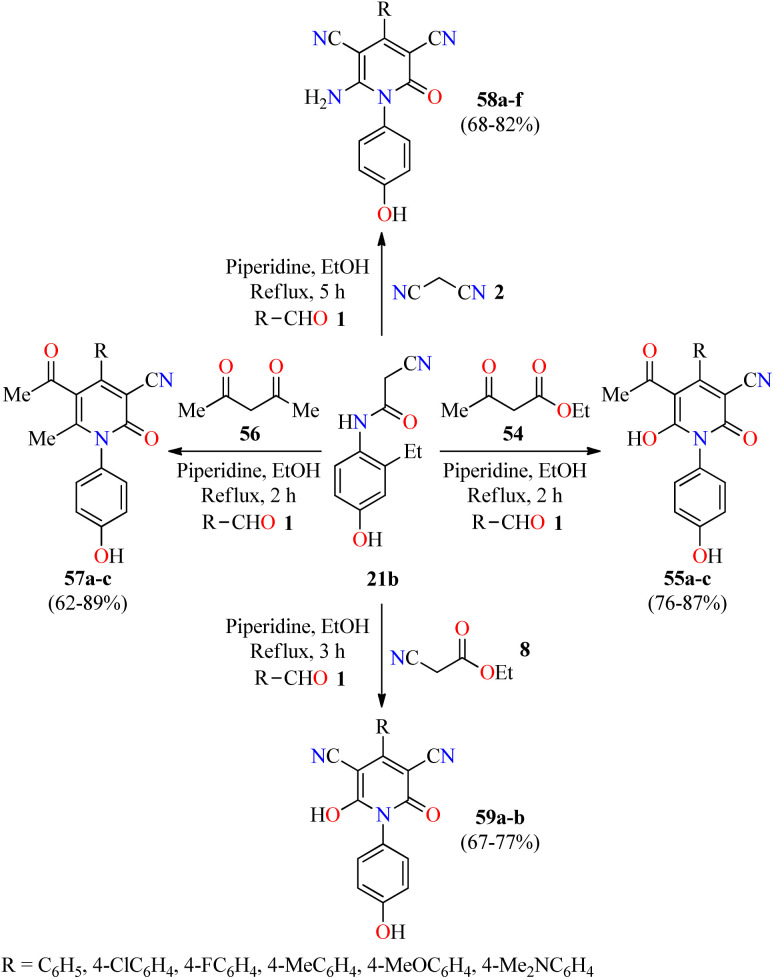
Scheme 16. Three-component synthesis and anti-inflammatory evaluation of 2-pyridone derivatives 55, 57, 58, and 59.
Fig. 6
Fig. 6. 2D Interactions of compound 58f with the active site of IL-6 (PDB ID code: 1N26). Reproduced with permission from ref. . Copyright Elsevier Inc., 2022.
Scheme 17
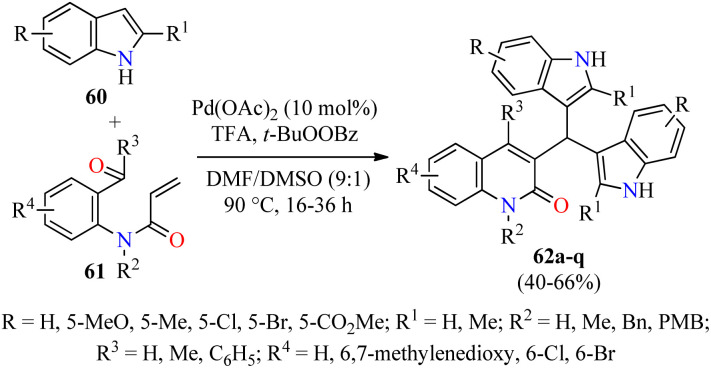
Scheme 17. Pd(OAc)2-Catalyzed pseudo-three-component synthesis of 3-bis(indol-3-yl)methylquinoline-2(1H)-ones 62 as α-glucosidase inhibitors.
Scheme 18
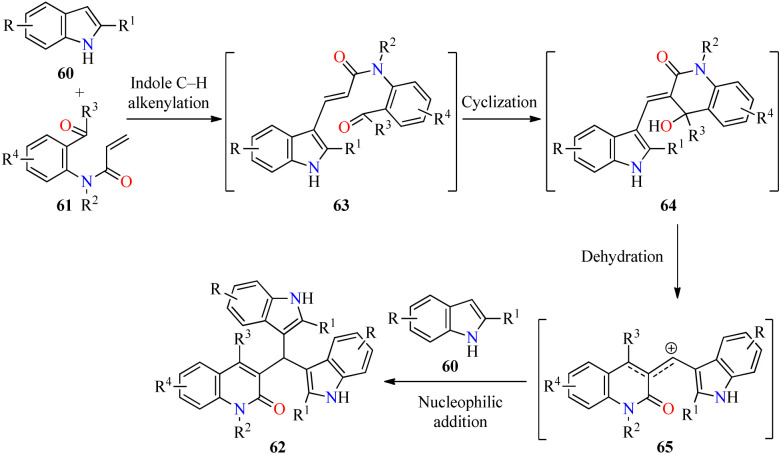
Scheme 18. Plausible mechanism for the synthesis of 3-bis(indol-3-yl)methylquinoline-2(1H)-ones 62.
Scheme 19
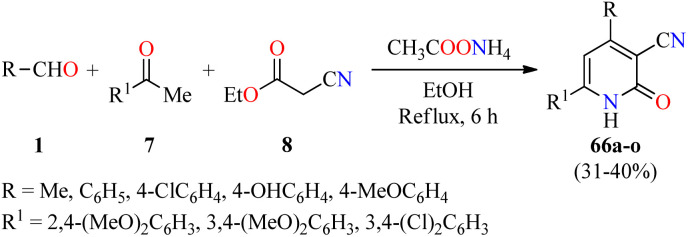
Scheme 19. Four-component synthesis of 2(1H)-pyridone derivatives 66 as nonsteroidal cardiotonic agents.
None
Diana Hurtado-Rodríguez
None
Angélica Salinas-Torres
None
Hugo Rojas
None
Diana Becerra
None
Juan-Carlos Castillo

References

    1. Dömling A. Wang W. Wang K. Chemistry and biology of multicomponent reactions. Chem. Rev. 2012;112:3083–3135. - PMC - PubMed
    1. Neochoritis C. G. Zhao T. Dömling A. Tetrazoles via multicomponent reactions. Chem. Rev. 2019;119:1970–2042. - PMC - PubMed
    1. Insuasty D. Castillo J. Becerra D. Rojas H. Abonia R. Synthesis of biologically active molecules through multicomponent reactions. Molecules. 2020;25:505. - PMC - PubMed
    1. Kakuchi R. Multicomponent reactions in polymer synthesis. Angew. Chem., Int. Ed. 2014;53:46–48. - PubMed
    1. Abonia R. Castillo J. Insuasty B. Quiroga J. Nogueras M. Cobo J. Efficient catalyst-free four-component synthesis of novel γ-aminoethers mediated by a Mannich type reaction. ACS Comb. Sci. 2013;15:2–9. - PubMed