


Virtual audiometric testing using smartphone mobile applications to detect hearing loss
- PMID: 36544936
- PMCID: PMC9764761
- DOI: 10.1002/lio2.928
Virtual audiometric testing using smartphone mobile applications to detect hearing loss
Abstract
Objective: The COVID-19 pandemic drove the need for remote audiometric testing in the form of mobile applications for hearing assessment. This study sought to determine the accuracy of two smartphone-based hearing assessment applications, Mimi and uHear, against the gold standard of in-clinic audiometric testing.
Methods: One hundred patients that presented to clinic for hearing assessment were randomly assigned to take either the Mimi or uHear hearing test alongside standard audiometric testing. Hearing thresholds measured using mobile applications were compared to those from audiometric testing to assess validity. Patient satisfaction was measured using a questionnaire that queried if the app met the user's need, if they would recommend the app to others, and how likely they were to use the app again.
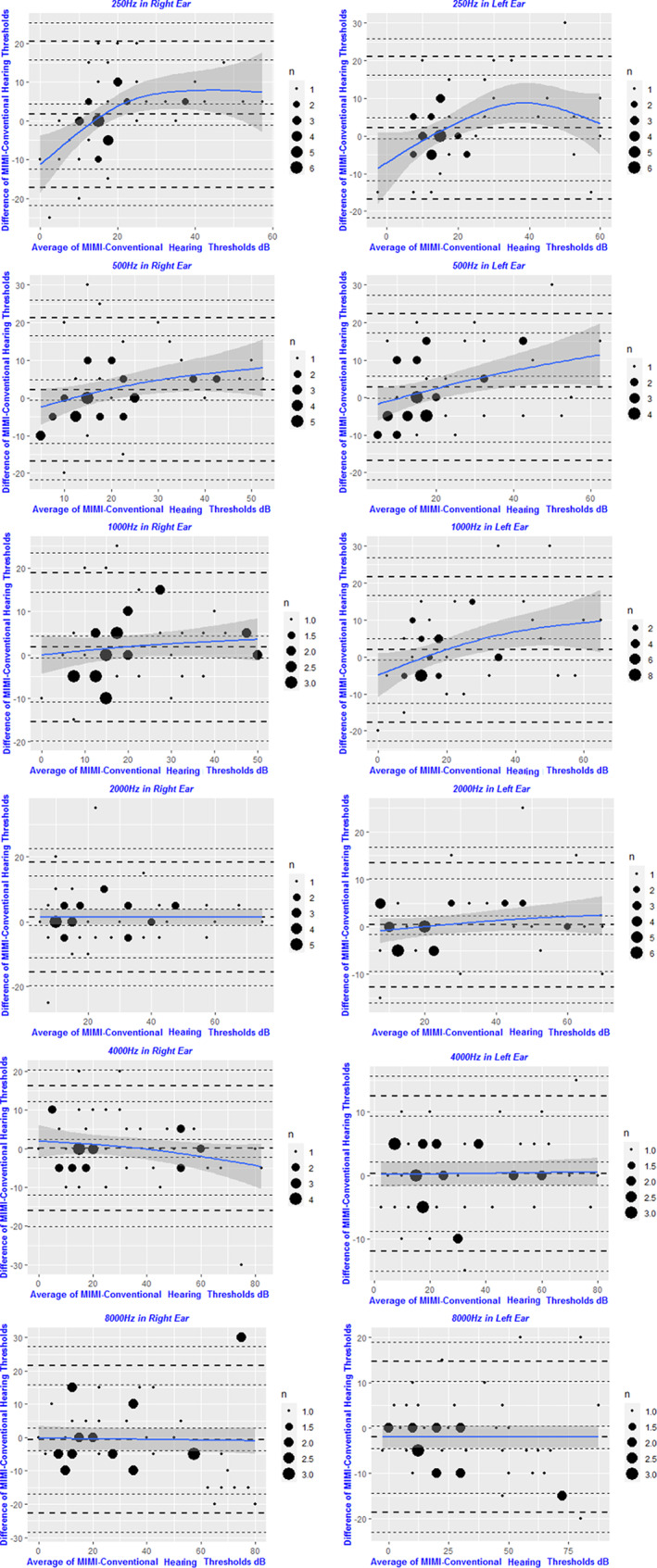
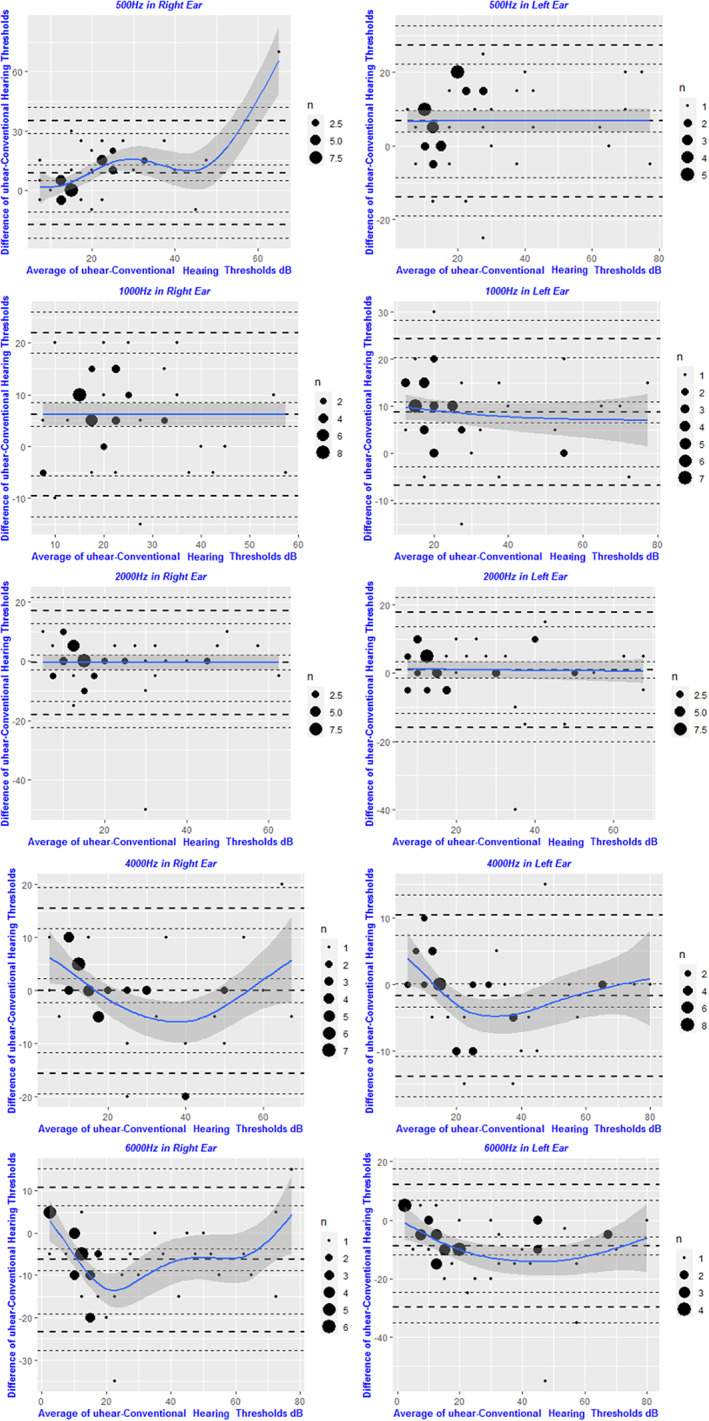
Results: Using Mimi, there were no differences in average hearing levels measured at any frequency when compared to standard audiometric testing. uHear overestimated hearing loss at 500 and 1000 Hz (p < .001 for both) by 5-10 Hz, and underestimated hearing loss at 6000 Hz (p < .001) by 5-10 Hz compared to standard audiometric testing. When stratified by level of hearing impairment, uHear overestimated impairment in those with normal hearing (p < .001). Mimi had higher sensitivity (0.971) and specificity (0.912) for hearing loss (defined as a pure tone average for 500, 1000, 2000, and 4000 Hz greater than 25 dB) than uHear (0.914 and 0.780, respectively). However, uHear outranked Mimi on all three questions in the satisfaction questionnaire (p = .01, p = .03, and p = .02, respectively).
Conclusion: Mimi appears to be a reasonable substitute for standard audiometric testing when individuals cannot present to clinic for gold standard testing; however, the Mimi user experience can be improved.
Level of evidence: Level II.
Keywords: audiometry; hearing loss; hearing test; mobile applications; validation.
© 2022 The Authors. Laryngoscope Investigative Otolaryngology published by Wiley Periodicals LLC on behalf of The Triological Society.
Conflict of interest statement
None.
Figures
References
-
- World Health Organization . World Report on Hearing. 2021. Accessed June 20, 2022. https://apps.who.int/iris/bitstream/handle/10665/339913/9789240020481-en...
LinkOut - more resources
Full Text Sources
Research Materials
Miscellaneous