


Epidemiologic Aspects of Mycetoma in Africa
- PMID: 36547591
- PMCID: PMC9781793
- DOI: 10.3390/jof8121258
Epidemiologic Aspects of Mycetoma in Africa
Abstract
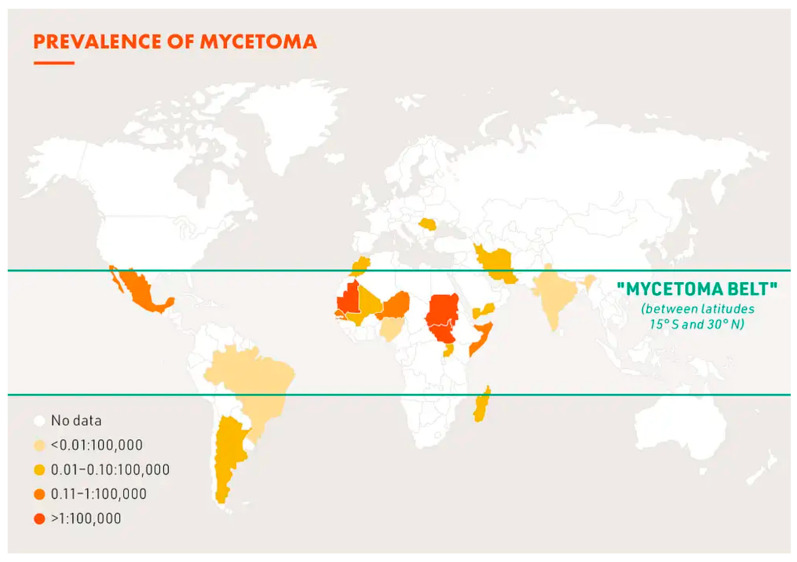
Mycetoma is a chronic, disabling infection caused by fungi or actinomycetes that affects the disadvantaged rural populations of arid tropical regions. The identification of etiological agents is long, difficult, and often imprecise or unsuccessful. Recently developed molecular methods can be used to identify causal agents at the species level. However, diagnosis can only be implemented in specialized laboratories. For these reasons, the distribution of causal agents in endemic African countries remains approximate. It is known that the pathogenic organisms of mycetoma are present in the environment, introduced as a result of injuries or trauma. There are still unknowns concerning the natural habitats of agents and the mode of infection. A potential association between mycetoma and acacia was uncovered in Sudan, allowing the elaboration of a risk map of the country. A new hypothesis for the mode of contamination involves the intervention of an intermediate host. The first surveys in Sudanese endemic villages gave a higher prevalence than the previous estimates, indicating that the prevalence of mycetoma in endemic African countries has previously been underestimated.
Keywords: Africa; epidemiology; etiological agents; geographical distribution; mode of infection; mycetoma; prevalence.
Conflict of interest statement
The author declares no conflict of interest.
Figures

References
-
- Siddig E.E., Ahmed A., Ali Y., Bakhert S.M., Mohamed N.S., Ahmed E.S., Fahal A.H. Eumycetoma medical treatment: Past, current practice, latest advances and perspectives. Microbiol. Res. 2021;12:899–906. doi: 10.3390/microbiolres12040066. - DOI
Publication types
LinkOut - more resources
Full Text Sources
