


Protocol for a randomized study assessing the feasibility of home-based albuminuria screening among the general population: The THOMAS study
- PMID: 36548281
- PMCID: PMC9778938
- DOI: 10.1371/journal.pone.0279321
Protocol for a randomized study assessing the feasibility of home-based albuminuria screening among the general population: The THOMAS study
Abstract
Background: Chronic kidney disease (CKD) is a rising public health problem that may progress to kidney failure, requiring kidney replacement therapy. It is also associated with an increased incidence of cardiovascular disease (CVD). Because of its asymptomatic nature, CKD is often detected in a late stage. Population screening for albuminuria could allow early detection of people with CKD who may benefit from preventive treatment. In case such screening is performed in a general practitioner (GP) setting, this will result in relatively high costs. Home-based screening might be an effective and cost-effective alternative.
Aim: The THOMAS study (Towards HOMe-based Albuminuria Screening) is designed to prospectively investigate two methods for home-based population screening for increased albuminuria to detect yet undiagnosed CKD and risk factors for progression and CVD.
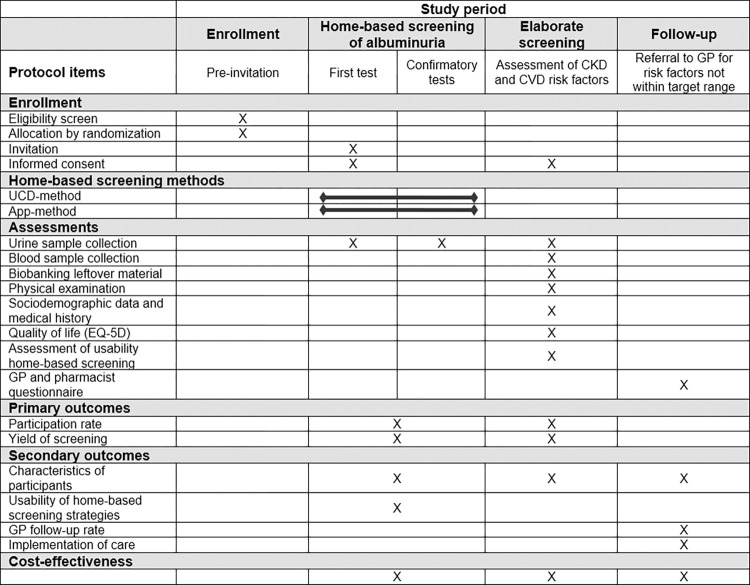
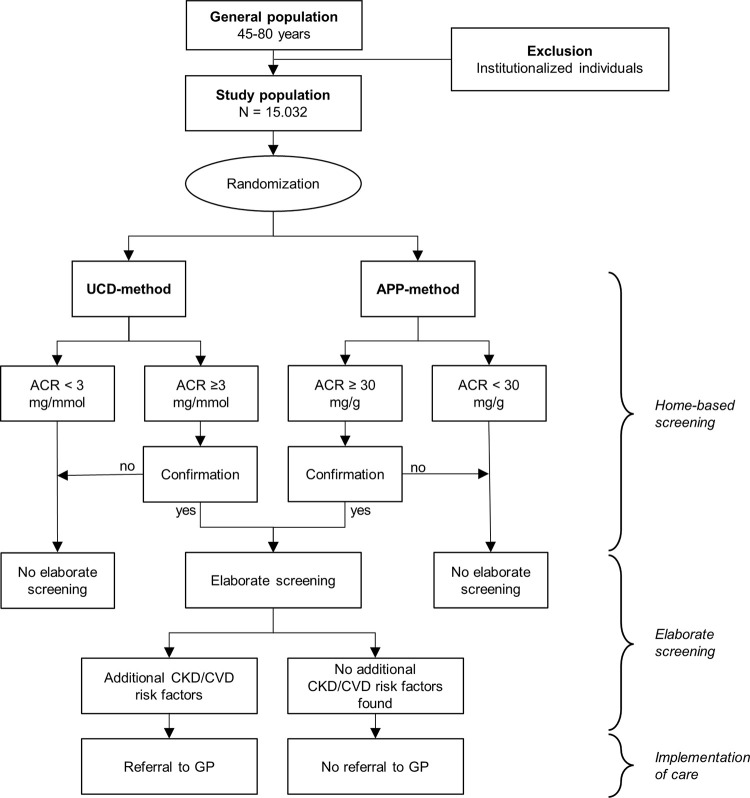
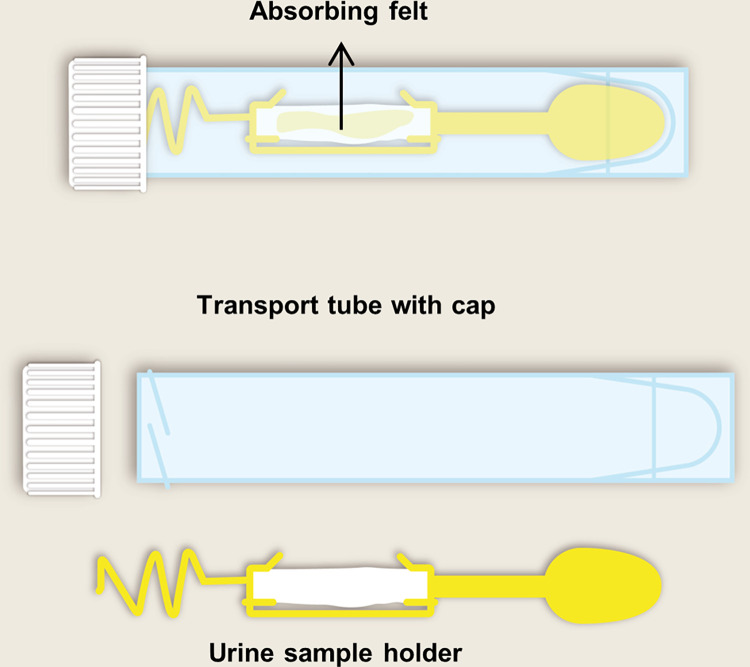
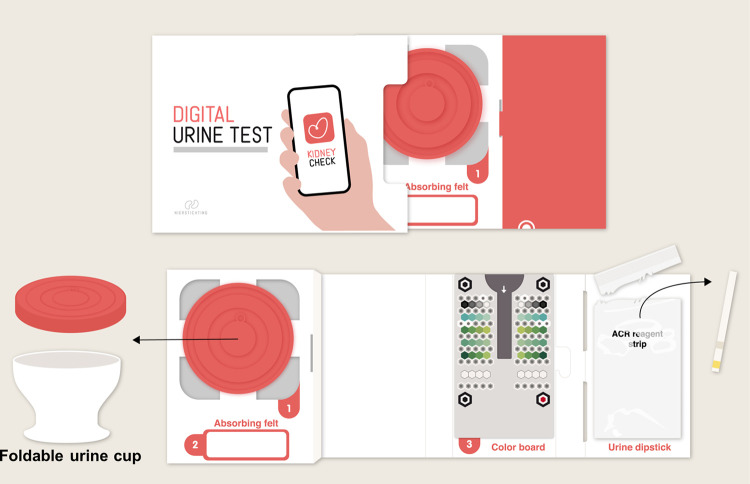
Methods: This investigator initiated, randomized population-based study will include 15.000 individuals aged 45-80 years, who will be randomly assigned to be invited for a home-based screening test for albuminuria with a more conventional urine collection device or an innovative smartphone application. If the test result is positive upon confirmation (i.e., elevated albuminuria), participants are invited to a central screening facility for an elaborate screening for CKD and CVD risk factors. Participants are referred to their GP for appropriate treatment, if abnormalities are found. Primary endpoints are the participation rate, yield, and cost-effectiveness of the home-based screening and elaborate screening.
Conclusions: The THOMAS study will evaluate the effectiveness and cost-effectiveness of home-based albuminuria screening in the general population for the early detection of CKD and CVD risk factors. It will provide insight into the willingness to participate in population screening for CKD and into the compliance of the general population to a corresponding screening protocol and compliance to participate. Thus, it may help to develop an attractive novel screening strategy for the early detection of CKD.
Trial registration: ClinicalTrials.gov, registration number NCT04295889, registered 05 March 2020. https://www.google.com/search?client=firefox-b-d&q=NCT04295889.
Copyright: © 2022 van Mil et al. This is an open access article distributed under the terms of the Creative Commons Attribution License, which permits unrestricted use, distribution, and reproduction in any medium, provided the original author and source are credited.
Conflict of interest statement
This project is financed by the PPP Allowance made available by the Top Sector Life Sciences & Health of the Dutch Ministry of Economic Affairs (Health~Holland) to stimulate public-private partnerships (Grant number: LSHM17076) (https://eur03.safelinks.protection.outlook.com/?url=https%3A%2F%2Fwww.health-holland.com%2F&data=05%7C01%7Cd.van.mil%40umcg.nl%7C93898f84c47a40aaa47b08dad7eee2b6%7C335122f9d4f44d67a2fccd6dc20dde70%7C0%7C0%7C638059719042497013%7CUnknown%7CTWFpbGZsb3d8eyJWIjoiMC4wLjAwMDAiLCJQIjoiV2luMzIiLCJBTiI6Ik1haWwiLCJXVCI6Mn0%3D%7C3000%7C%7C%7C&sdata=Yw0N%2BDBVR49aMCtkrToYMXdqzSdQZze%2BX2rBAqtxDKk%3D&reserved=0) and by a grant of the Dutch Kidney Foundation (Grant Number: KF1P03) (https://eur03.safelinks.protection.outlook.com/?url=https%3A%2F%2Fnierstichting.nl%2F&data=05%7C01%7Cd.van.mil%40umcg.nl%7C93898f84c47a40aaa47b08dad7eee2b6%7C335122f9d4f44d67a2fccd6dc20dde70%7C0%7C0%7C638059719042497013%7CUnknown%7CTWFpbGZsb3d8eyJWIjoiMC4wLjAwMDAiLCJQIjoiV2luMzIiLCJBTiI6Ik1haWwiLCJXVCI6Mn0%3D%7C3000%7C%7C%7C&sdata=lpgEcOYE32nFTqVTQlpF20U4hO3g%2FfksUBr9r5hecZA%3D&reserved=0). Grants were received by RTG. Screening material is made available at production costs by Hessels & Grob B.V., Deventer, The Netherlands (manufacturer of the PeeSpot UCD), and Healthy.io Ltd, Tel Aviv-Yafo, Israel (manufacturer of ACR | EU test kit). The funders had and will not have a role in study design, data collection and analysis, decision to publish, or preparation of the manuscript.
Figures
References
-
- Brantsma AH, Bakker SJL, Hillege HL, de Zeeuw D, de Jong PE, Gansevoort RT, et al. Cardiovascular and renal outcome in subjects with K/DOQI stage 1–3 chronic kidney disease: the importance of urinary albumin excretion. Nephrol Dial Transplant. 2008. Dec;23(12):3851–8. doi: 10.1093/ndt/gfn356 - DOI - PubMed
Publication types
MeSH terms
Associated data
LinkOut - more resources
Full Text Sources
Medical
