. 2022 Dec 1;14(12):843.
doi: 10.3390/toxins14120843.

The Preferential Therapeutic Potential of Chlorella vulgaris against Aflatoxin-Induced Hepatic Injury in Quail

Affiliations

The Preferential Therapeutic Potential of Chlorella vulgaris against Aflatoxin-Induced Hepatic Injury in Quail

Sawsan S Elbasuni et al. Toxins (Basel). .

Abstract

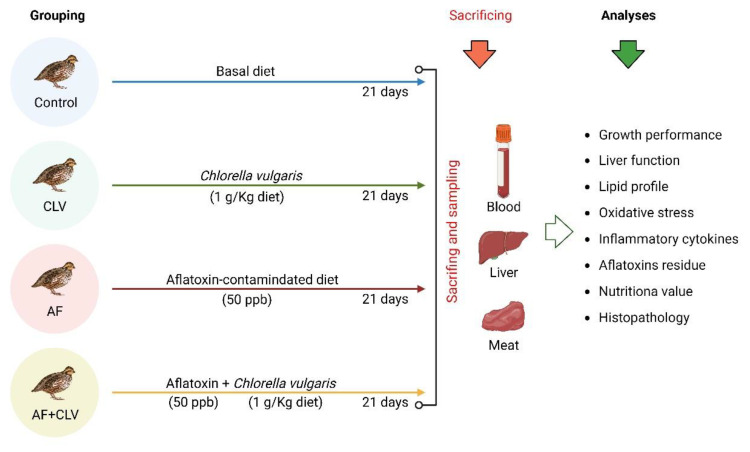
Aflatoxins (AFs) are the most detrimental mycotoxin, potentially hazardous to animals and humans. AFs in food threaten the health of consumers and cause liver cancer. Therefore, a safe, efficient, and friendly approach is attributed to the control of aflatoxicosis. Therefore, this study aimed to evaluate the impacts of Chlorella vulgaris (CLV) on hepatic aflatoxicosis, aflatoxin residues, and meat quality in quails. Quails were allocated into a control group; the CLV group received CLV (1 g/kg diet); the AF group received an AF-contaminated diet (50 ppb); and the AF+CLV group received both treatments. The results revealed that AF decreased the growth performance and caused a hepatic injury, exhibited as an increase in liver enzymes and disrupted lipid metabolism. In addition, AF induced oxidative stress, exhibited by a dramatic increase in the malondialdehyde (MDA) level and decreases in glutathione (GSH) level, superoxide dismutase (SOD), and glutathione peroxidase (GPx) activities. Significant up-regulation in the inflammatory cytokine (TNF-α, IL-1β, and IL-6) mRNA expression was also documented. Moreover, aflatoxin residues were detected in the liver and meat with an elevation of fat% alongside a decrease in meat protein%. On the other hand, CLV supplementation ameliorated AF-induced oxidative stress and inflammatory condition in addition to improving the nutritional value of meat and significantly reducing AF residues. CLV mitigated AF-induced hepatic damage, decreased growth performance, and lowered meat quality via its antioxidant and nutritional constituents.

Keywords: Chlorella vulgaris; inflammatory cytokines; meat quality; mycotoxins; oxidative stress; residues.


Conflict of interest statement

The authors declare no conflict of interest.

Figures
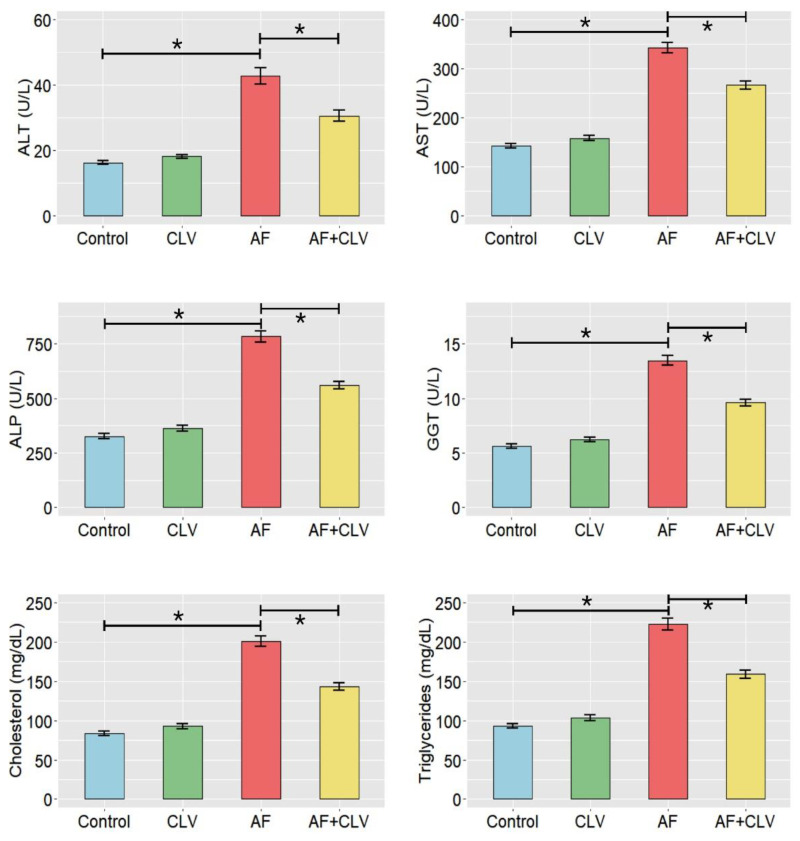
Figure 1
Figure 1
Bar plots of serum biochemical tests following Chlorella vulgaris and/or aflatoxin treatment. AF, aflatoxins; ALP, alkaline phosphatase; ALT, alanine aminotransferase; AST, aspartate aminotransferase; CLV, Chlorella vulgaris; GGT, gamma-glutamyl transpeptidase. Data are exhibited as mean ± SE (* p < 0.05).
Figure 2
Figure 2
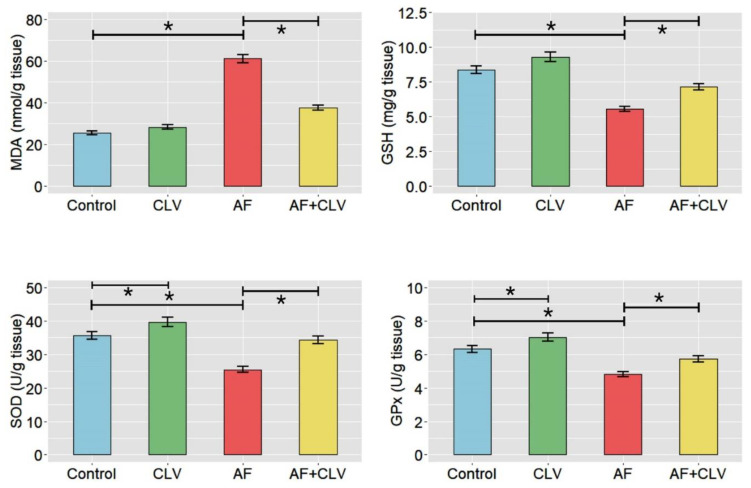
Bar plots of oxidant/antioxidant indices following Chlorella vulgaris and/or aflatoxin treatment in liver tissue. AF, aflatoxins; CLV, Chlorella vulgaris; GPx, glutathione peroxidase; GSH, reduced glutathione; MDA, malondialdehyde; SOD, superoxide dismutase. Data are exhibited as mean ± SE (* p < 0.05).
Figure 3
Figure 3
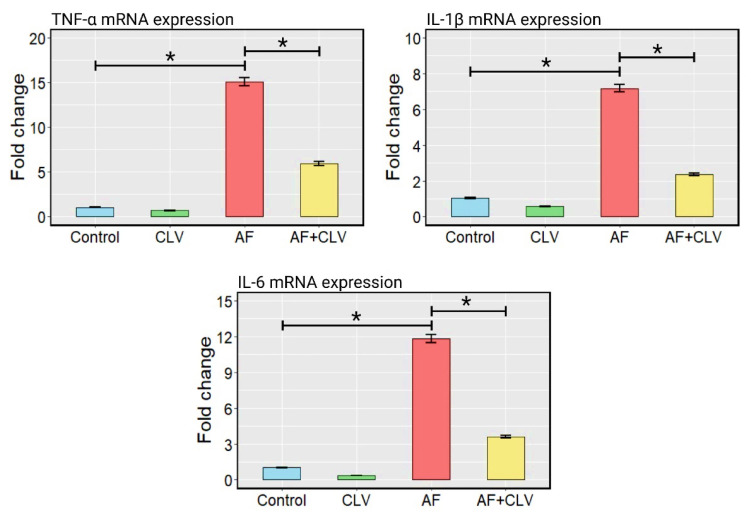
Bar plots of inflammatory cytokine mRNA expressions following Chlorella vulgaris and/or aflatoxin treatment in liver tissue. AF, aflatoxins; CLV, Chlorella vulgaris. Data are exhibited as mean ± SE (* p < 0.05).
Figure 4
Figure 4
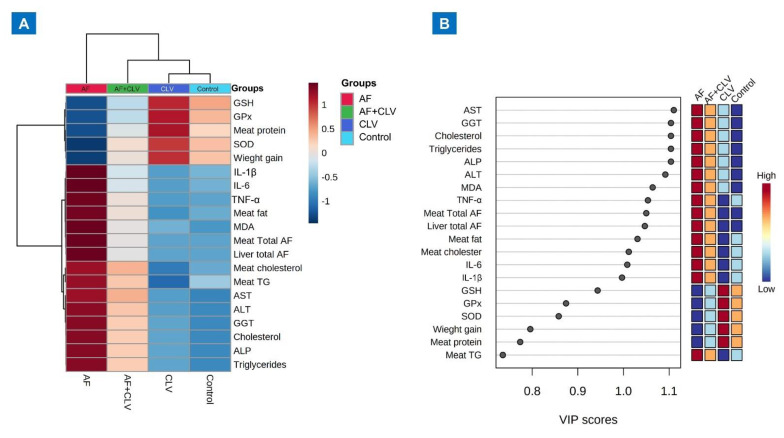
Multivariate analyses of all data sets following Chlorella vulgaris and/or aflatoxin treatment. (A) Hierarchical clustering heatmap summarizes all the data via an intuitive visualization. The concentration values are represented by each colored cell on the map, with varied averages in the rows and various treatment sets in the columns. On the gradation scale, dark red is the highest value and blue is the lowest. (B) Variable importance in projection (VIP) score, the relative concentrations of the pertinent measured parameters are shown in colored boxes on the right for each study group, and a colored scale from highest (red) to lowest (blue) indicates the contribution intensity (blue).
Figure 5
Figure 5
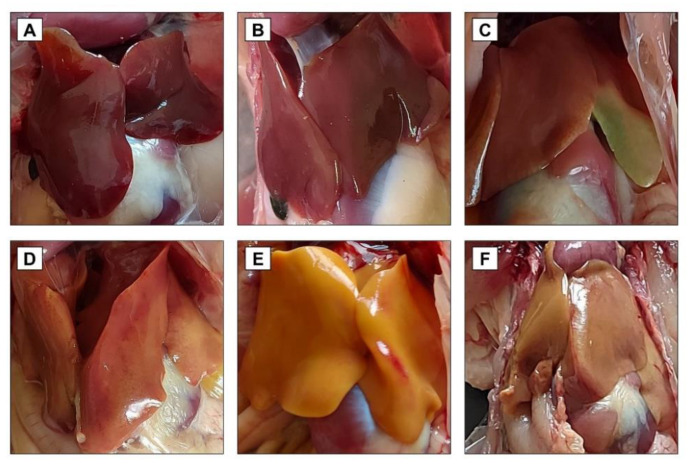
Macroscopic examination of liver following Chlorella vulgaris and/or aflatoxin treatment. (A) Control group; (B) CLV group; (CE) AF group; and (F) AF+CLV group. AF, aflatoxins; CLV, Chlorella vulgaris.
Figure 6
Figure 6
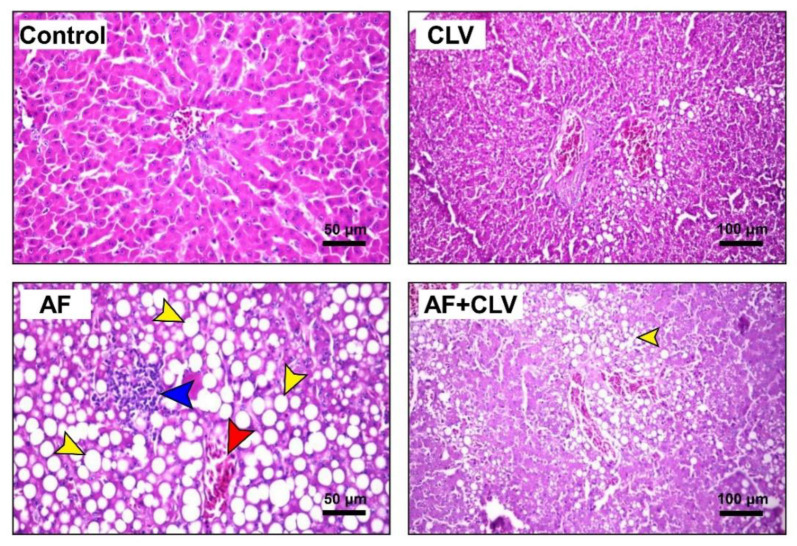
Microscopic examination of liver following Chlorella vulgaris and/or aflatoxin treatment. Sections from control (bar = 50 µm) and CLV (bar = 100 µm) groups displayed normal hepatocytes and central vein. Sections from AF group showed massive diffuse fatty degeneration with circumscribed vacuolated hepatocytes (yellow arrow), together with congestion in the central vein (red arrow), and mononuclear cell infiltration (blue arrow) (bar = 50 µm). Liver of AF+CLV group showed focal fatty degeneration (bar = 100 µm). AF, aflatoxins; CLV, Chlorella vulgaris (H & E stain).
Figure 7
Figure 7
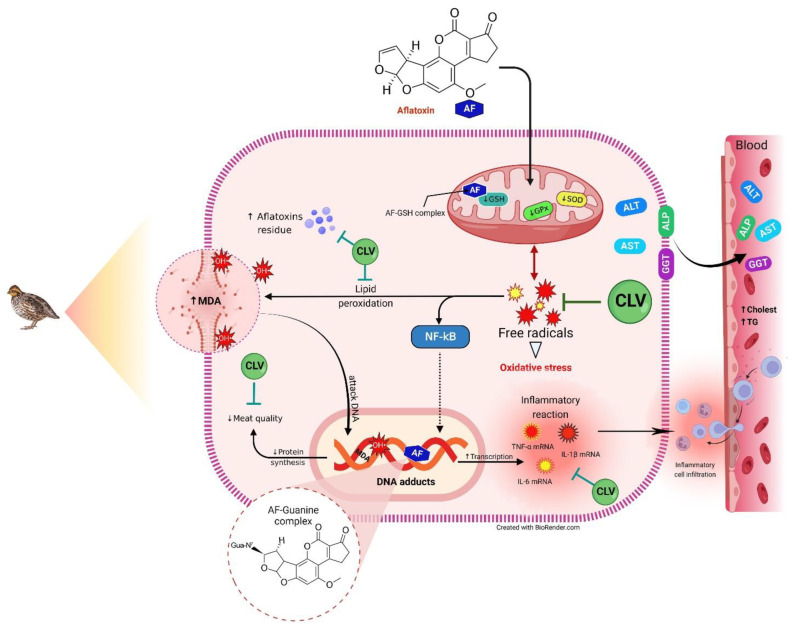
Molecular mechanisms behind the protective effect of CLV against AF-induced liver injury. AF, aflatoxins; ALP, alkaline phosphatase; ALT, alanine aminotransferase; AST, aspartate aminotransferase; CLV, Chlorella vulgaris; GGT, gamma-glutamyl transpeptidase GPx, glutathione peroxidase; GSH, reduced-glutathione; OH, hydroxyl radical; IL-1β, interleukin-1β; IL-6, interleukin-6; MDA, malondialdehyde; NF-κB, nuclear factor kappa-B transcription factor; ROS, reactive oxygen species; SOD, superoxide dismutase; TNF-α, tumor necrosis factor-α.
Figure 8
Figure 8
Experimental design.

References

    1. Zhang M., Jiao P., Wang X., Sun Y., Liang G., Xie X., Zhang Y. Evaluation of Growth Performance, Nitrogen Balance and Blood Metabolites of Mutton Sheep Fed an Ammonia-Treated Aflatoxin B1-Contaminated Diet. Toxins. 2022;14:361. doi: 10.3390/toxins14050361. - DOI - PMC - PubMed
    1. Ahmed N., El-Rayes S.M., Khalil W.F., Abdeen A., Abdelkader A., Youssef M., Maher Z.M., Ibrahim A.N., Abdelrahman S.M., Ibrahim S.F., et al. Arabic Gum Could Alleviate the Aflatoxin B1-Provoked Hepatic Injury in Rat: The Involvement of Oxidative Stress, Inflammatory, and Apoptotic Pathways. Toxins. 2022;14:605. doi: 10.3390/toxins14090605. - DOI - PMC - PubMed
    1. Medina Á., González-Jartín J.M., Sainz M.J. Impact of Global Warming on Mycotoxins. Curr. Opin. Food Sci. 2017;18:76–81. doi: 10.1016/j.cofs.2017.11.009. - DOI
    1. Saleemi M.K., Ashraf K., Gul S.T., Naseem M.N., Sajid M.S., Mohsin M., He C., Zubair M., Khan A. Toxicopathological Effects of Feeding Aflatoxins B1 in Broilers and Its Ameliosration with Indigenous Mycotoxin Binder. Ecotoxicol. Environ. Saf. 2020;187:109712. doi: 10.1016/j.ecoenv.2019.109712. - DOI - PubMed
    1. Williams J.H., Phillips T.D., Jolly P.E., Stiles J.K., Jolly C.M., Aggarwal D. Human Aflatoxicosis in Developing Countries: A Review of Toxicology, Exposure, Potential Health Consequences, and Interventions. Am. J. Clin. Nutr. 2004;80:1106–1122. doi: 10.1093/ajcn/80.5.1106. - DOI - PubMed

Publication types

LinkOut - more resources