


Overexpressed c-Myc Sensitizes Cells to TH1579, a Mitotic Arrest and Oxidative DNA Damage Inducer
- PMID: 36551206
- PMCID: PMC9775511
- DOI: 10.3390/biom12121777
Overexpressed c-Myc Sensitizes Cells to TH1579, a Mitotic Arrest and Oxidative DNA Damage Inducer
Abstract
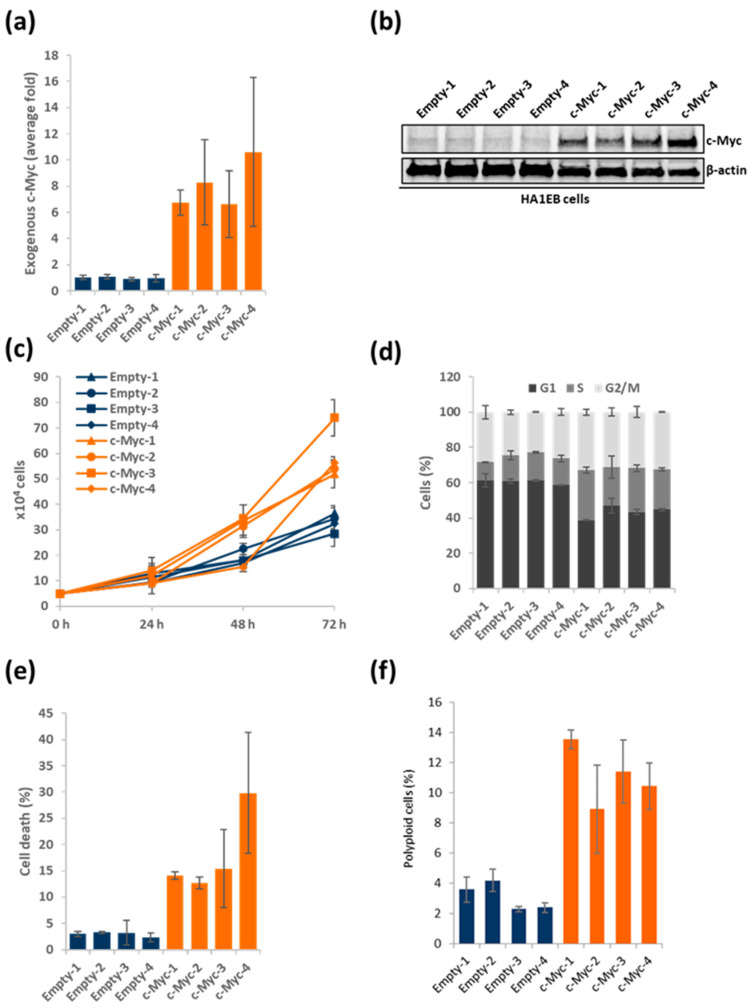
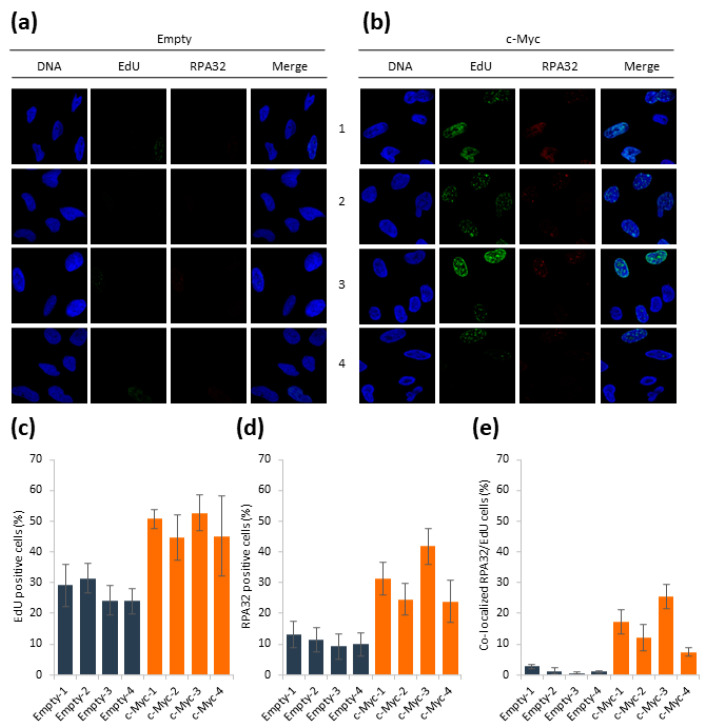
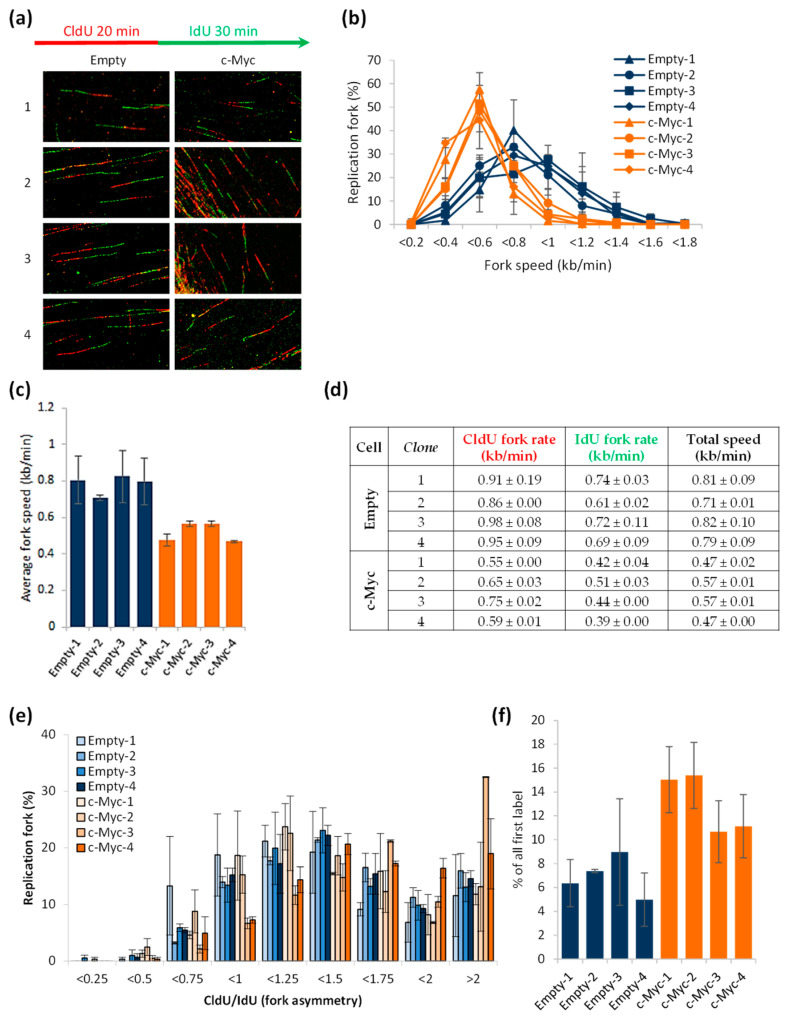
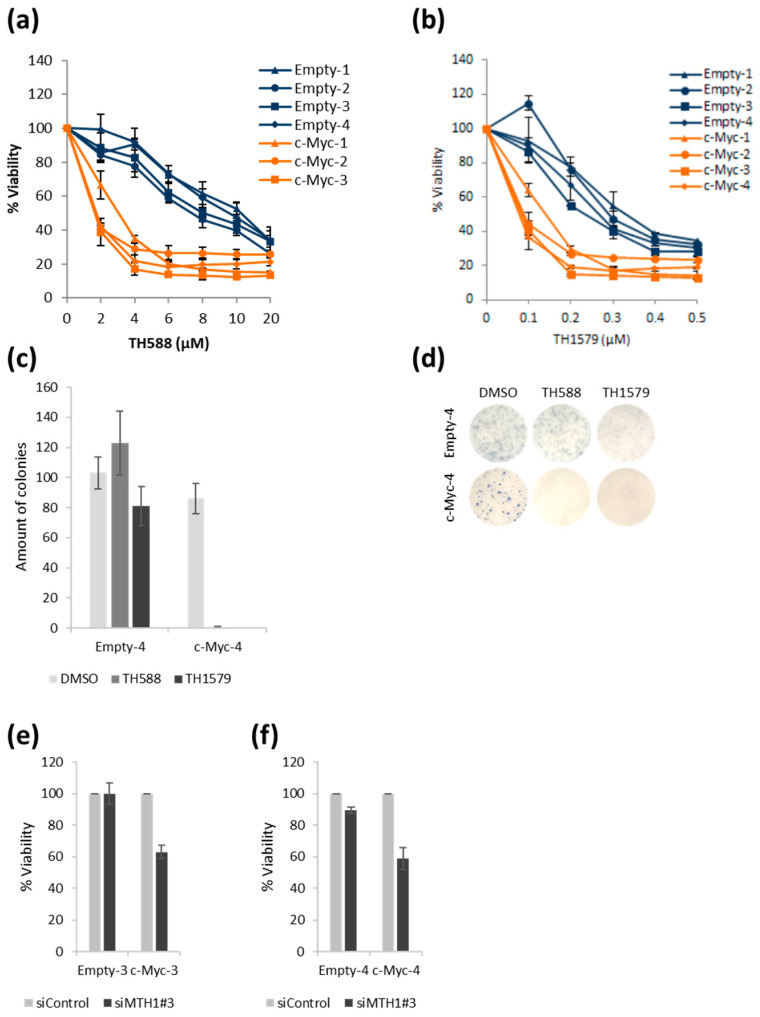
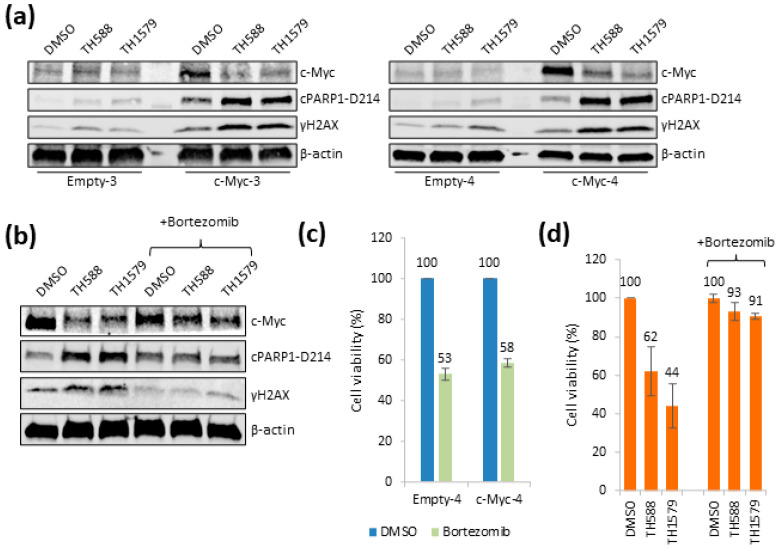
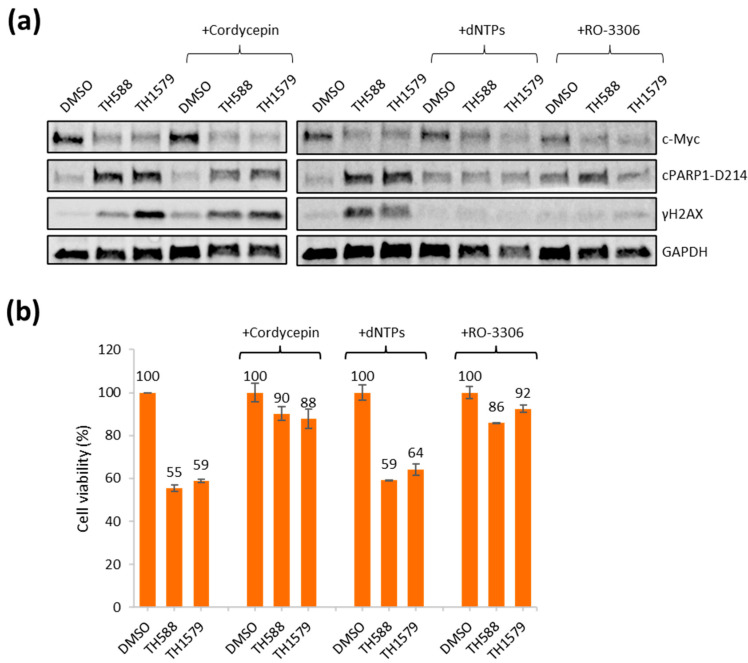
Previously, we reported that MTH1 inhibitors TH588 and TH1579 selectively induce oxidative damage and kill Ras-expressing or -transforming cancer cells, as compared to non-transforming immortalized or primary cells. While this explains the impressive anti-cancer properties of the compounds, the molecular mechanism remains elusive. Several oncogenes induce replication stress, resulting in under replicated DNA and replication continuing into mitosis, where TH588 and TH1579 treatment causes toxicity and incorporation of oxidative damage. Hence, we hypothesized that oncogene-induced replication stress explains the cancer selectivity. To test this, we overexpressed c-Myc in human epithelial kidney cells (HA1EB), resulting in increased proliferation, polyploidy and replication stress. TH588 and TH1579 selectively kill c-Myc overexpressing clones, enforcing the cancer cell selective killing of these compounds. Moreover, the toxicity of TH588 and TH1579 in c-Myc overexpressing cells is rescued by transcription, proteasome or CDK1 inhibitors, but not by nucleoside supplementation. We conclude that the molecular toxicological mechanisms of how TH588 and TH1579 kill c-Myc overexpressing cells have several components and involve MTH1-independent proteasomal degradation of c-Myc itself, c-Myc-driven transcription and CDK activation.
Keywords: DNA damage; MTH1; TH1579; TH588; c-Myc; cancer; cell death; replication stress.
Conflict of interest statement
A patent has been filed with MTH1 inhibitors where T.H. is listed as the inventor. The Intellectual Property Right is owned by the non-profit Thomas Helleday Foundation for Medical Research (THF). T.H. and U.W.B. are board members of the THF. U.W.B is CEO of Oxcia AB. T.H., U.W.B., S.H. and J.M.C.-M., have shares in Oxcia AB. THF is the sponsor for an on-going clinical phase 1 trial with TH1579. The other authors declare that there are no conflicts of interest.
Figures
References
-
- Gad H., Mortusewicz O., Rudd S.G., Stolz A., Amaral N., Brautigham L. MTH1 promotes mitotic progression to avoid oxidative DNA damage in cancer cells. bioRxiv. 2019:575290. doi: 10.1101/575290. - DOI
-
- Rudd S.G., Gad H., Sanjiv K., Amaral N., Hagenkort A., Groth P., Ström C.E., Mortusewicz O., Berglund U.W., Helleday T. MTH1 Inhibitor TH588 Disturbs Mitotic Progression and Induces Mitosis-Dependent Accumulation of Genomic 8-oxodG. Cancer Res. 2020;80:3530–3541. doi: 10.1158/0008-5472.CAN-19-0883. - DOI - PubMed
Publication types
MeSH terms
Substances
Grants and funding
LinkOut - more resources
Full Text Sources
Miscellaneous
