


The Activity of Polyhomoarginine against Acanthamoeba castellanii
- PMID: 36552236
- PMCID: PMC9774714
- DOI: 10.3390/biology11121726
The Activity of Polyhomoarginine against Acanthamoeba castellanii
Erratum in
-
Correction: Peguda et al. The Activity of Polyhomoarginine against Acanthamoeba castellanii. Biology 2022, 11, 1726.Biology (Basel). 2023 Mar 20;12(3):470. doi: 10.3390/biology12030470. Biology (Basel). 2023. PMID: 36979180 Free PMC article.
Abstract
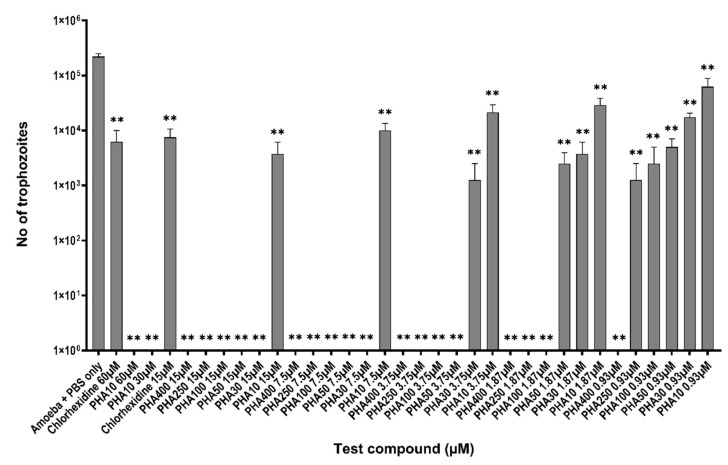
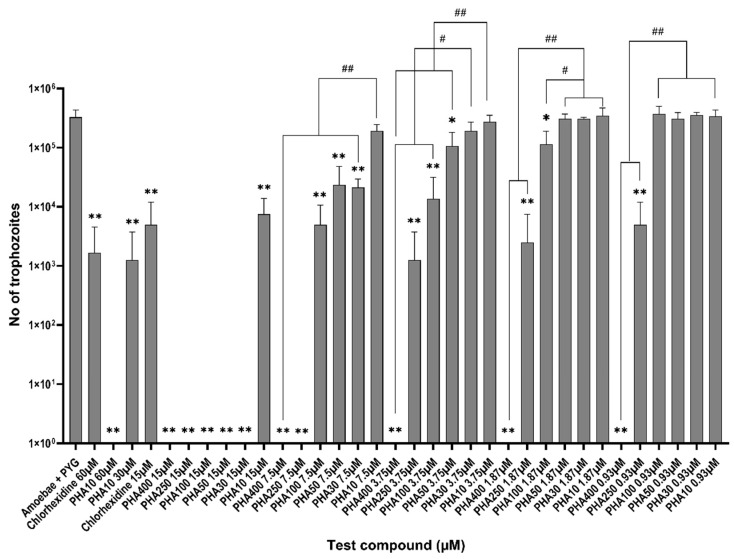
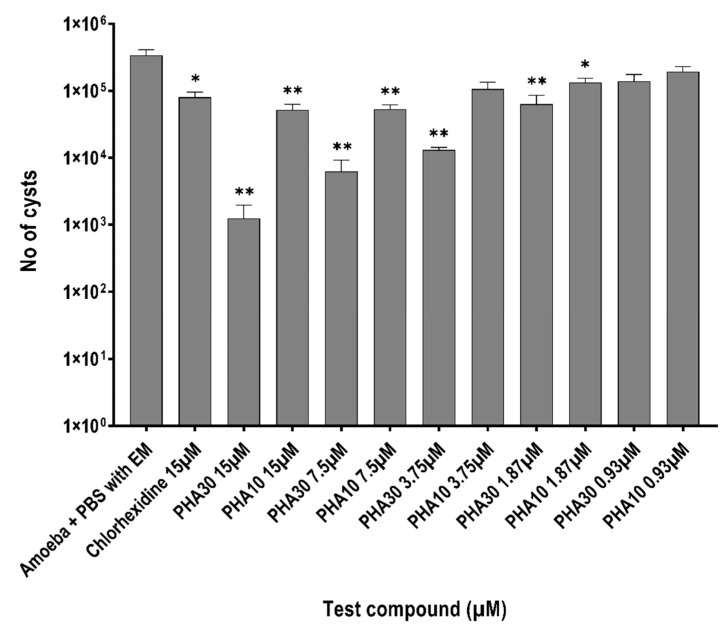
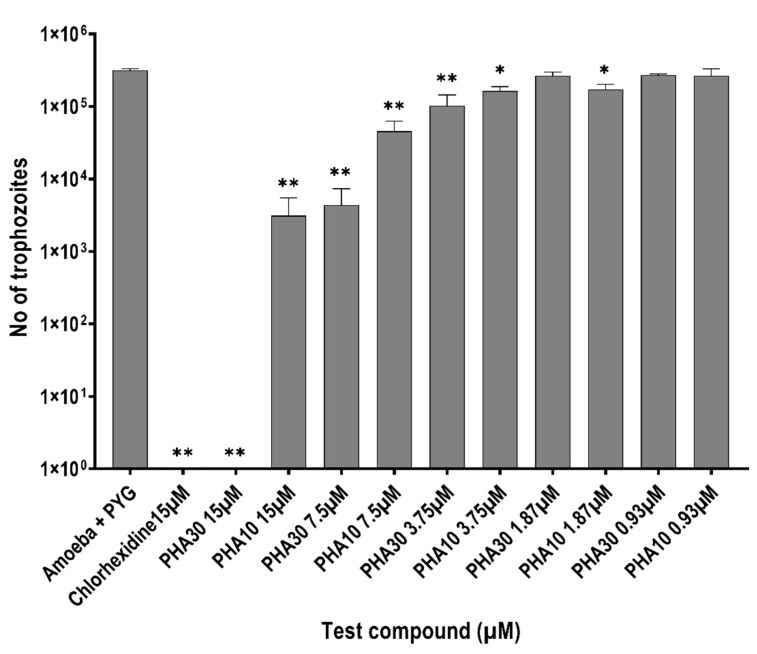
Arginine-rich peptides can have broad-spectrum anti-bacterial and anti-fungal activities. Polyhomoarginine consists of highly cationic residues which can act on the negatively charged microbial cell membranes. Acanthamoeba is a free-living protozoan known to cause a rare corneal infection which is difficult to diagnose and treat. This study evaluated the activity of the polyhomoarginines against Acanthamoeba castellanii. Acanthamoeba amoebicidal, amoebistatic, encystation and excystment assays were performed using protocols described in the literature. The activity of polyhomoarginines (PHAs) of different lengths (10 to 400 residues) was measured against the trophozoites and cysts of Acanthamoeba castellanii ATCC30868 in concentrations ranging from 0.93 μM to 15 μM. Data were represented as mean ± SE and analysed using one-way ANOVA. Overall, PHAs demonstrated good anti-acanthamoeba activity against both trophozoites and cysts. PHA 30 reduced the number of viable trophozoites by 99%, inhibited the formation of cysts by 96% and the emergence of trophozoites from cysts by 67% at 3.75 μM. PHA 10 was similarly active, but at a slightly higher concentration of 15 μM, reducing the numbers of viable trophozoites by 98%, inhibiting cyst formation by 84% and preventing the emergence of trophozoites from cysts by 99%. At their greatest anti-amoeba concentrations, PHA 10 gave only 8% haemolysis at 15 μM while PHA 30 gave <40 % haemolysis at 3.75 μM. Polyhomoarginine 10 showed excellent anti-amoebic activity against both forms of Acanthamoeba castellanii and was non-toxic at its most active concentrations. This implies that polyhomoarginines can be developed into a potential therapeutic agent for Acanthamoeba keratitis. However, there is a need to carry out further pre-clinical and then in vivo experiments in the AK animal model.
Keywords: Acanthamoeba; antimicrobial peptides; arginine peptides; free-living amoeba; polyhomoarginine.
Conflict of interest statement
The authors report no conflict of interest. The authors alone are responsible for the content and writing of the paper.
Figures
References
-
- Mollica A., Macedonio G., Stefanucci A., Costante R., Carradori S., Cataldi V., Di Giulio M., Cellini L., Silvestri R., Giordano C., et al. Arginine- and Lysine-rich Peptides: Synthesis, Characterization and Antimicrobial Activity. Lett. Drug Des. Discov. 2018;15:220–226. doi: 10.2174/1570180814666170213161341. - DOI
LinkOut - more resources
Full Text Sources
Molecular Biology Databases
