


Spatiotemporal Variability of Trace Elements Fingerprints in Otoliths of Japanese Eel (Anguilla japonica) and Its Use in Tracing Geographic Origin
- PMID: 36552242
- PMCID: PMC9774976
- DOI: 10.3390/biology11121733
Spatiotemporal Variability of Trace Elements Fingerprints in Otoliths of Japanese Eel (Anguilla japonica) and Its Use in Tracing Geographic Origin
Abstract
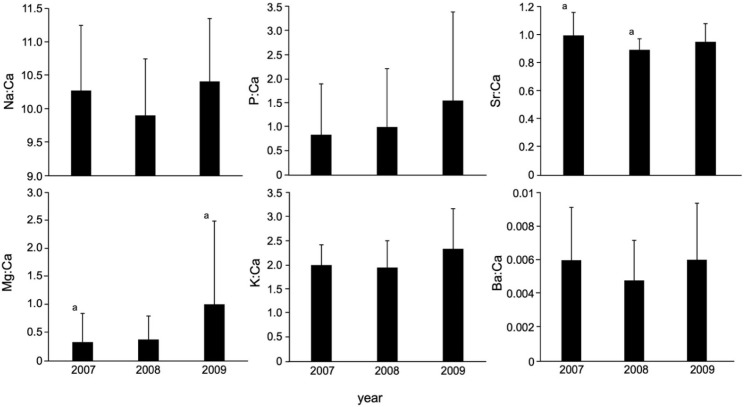
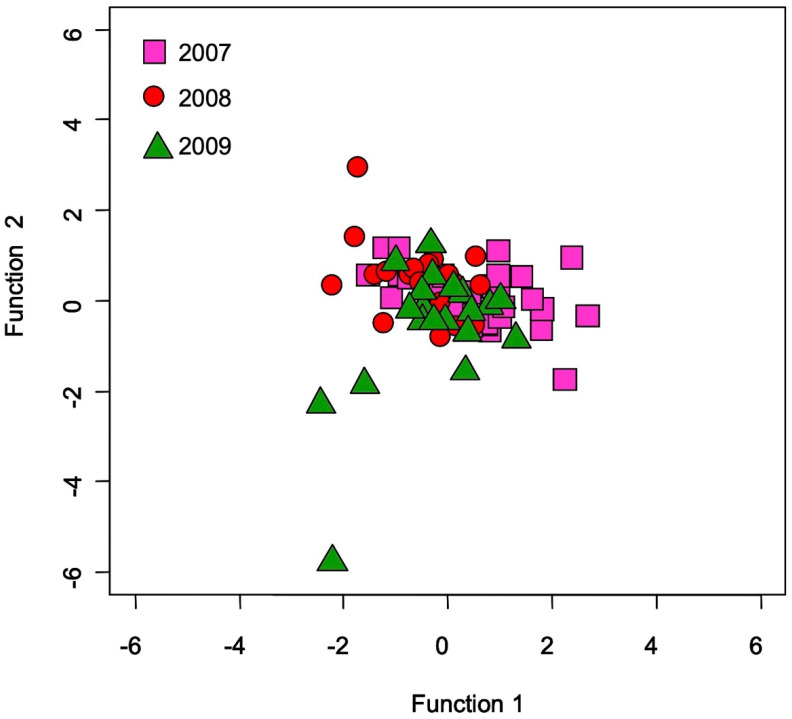
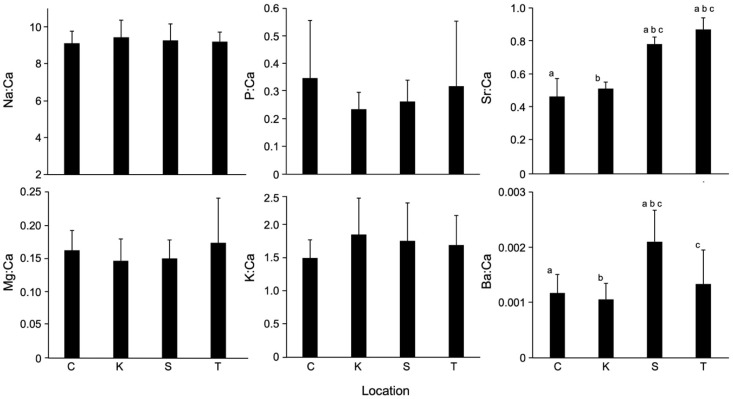
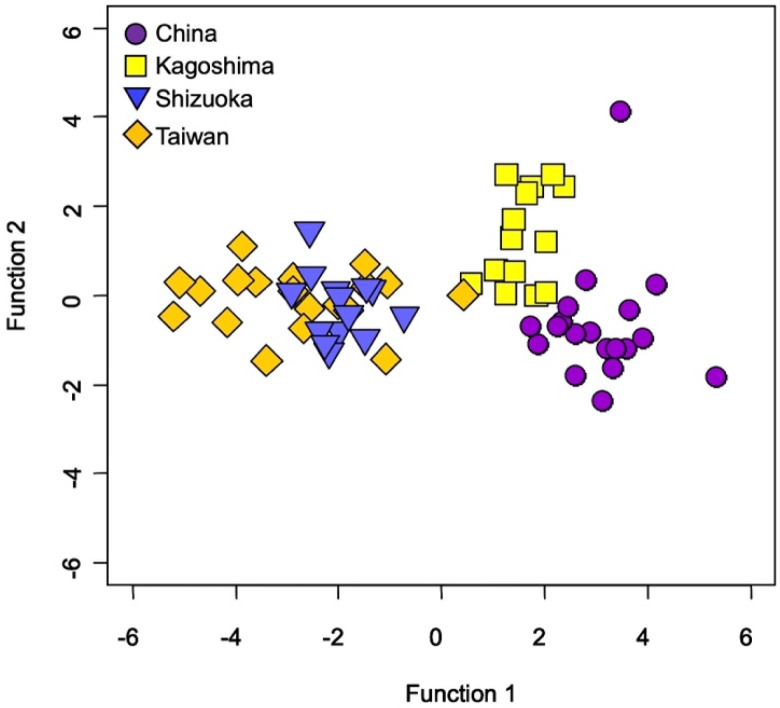
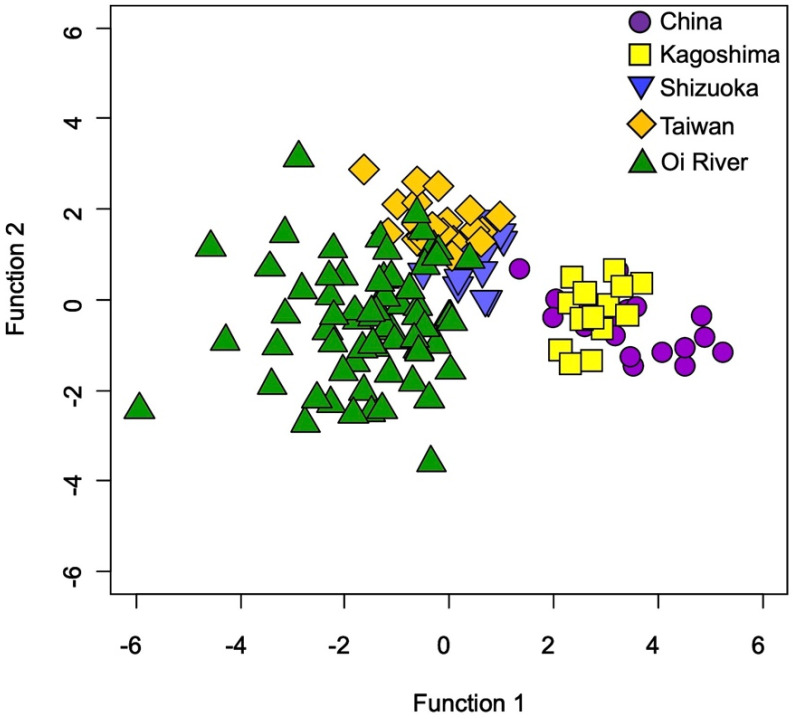
To secure traceability along supply chains of foodstuffs, the spatiotemporal variability of trace elements' fingerprints (TEF) in fish otoliths provides a powerful tool to determine and discriminate the origin. Spatiotemporal variability of TEF was examined in a commercially important seafood, Japanese eel (Anguilla japonica), by means of laser ablation-inductively coupled plasma mass spectrometry (LA-ICPMS). Six elemental ratios (Na:Ca, Mg:Ca, P:Ca, K:Ca, Sr:Ca, and Ba:Ca) were determined in the otoliths of specimens originating from four aquaculture farms to examine the spatial variability and from one wild habitat over three years to examine the temporal variation. Significant temporal variation was found in Mg:Ca and Sr:Ca ratios; however, discriminant function analysis showed a lower temporal variation (50%) for the three years. Spatial variations were significant in Sr:Ca and Ba:Ca ratios, and discriminant function analysis showed high (80%) spatial variation among the four farms. Otolith TEF in the Japanese eel showed specific spatial variation among aquaculture farms but intangible temporal variation, suggesting the otolith TEF reflect each aquaculture environment. The present study shows that otolith TEF can be a reliable tool to discriminate the geographic origin of the Japanese eel.
Keywords: element; environmental forensics; otolith microchemistry; stock identification; traceability.
Conflict of interest statement
The authors declare no conflict of interest.
Figures
References
-
- Jacquet J.L., Pauly D. Trade secrets: Renaming and mislabeling of seafood. Mar. Policy. 2008;32:309–318. doi: 10.1016/j.marpol.2007.06.007. - DOI
-
- Grahl-Nielsen O., Jacobsen A., Christophersen G., Magnesen T. Fatty acid composition in adductor muscle of juvenile scallops (Pecten maximus) from five Norwegian populations reared in the same environment. Biochem. Syst. Ecol. 2010;38:478–488. doi: 10.1016/j.bse.2010.04.010. - DOI
-
- Haye P.A., Segovia N.I., Vera R., Gallardo M.d.l.A., Gallardo-Escárate C. Authentication of commercialized crab-meat in Chile using DNA Barcoding. Food Control. 2012;25:239–244. doi: 10.1016/j.foodcont.2011.10.034. - DOI
LinkOut - more resources
Full Text Sources
Research Materials
