


Triage Grading and Correct Diagnosis Are Critical for the Emergency Treatment of Anaphylaxis
- PMID: 36553239
- PMCID: PMC9776430
- DOI: 10.3390/children9121794
Triage Grading and Correct Diagnosis Are Critical for the Emergency Treatment of Anaphylaxis
Abstract
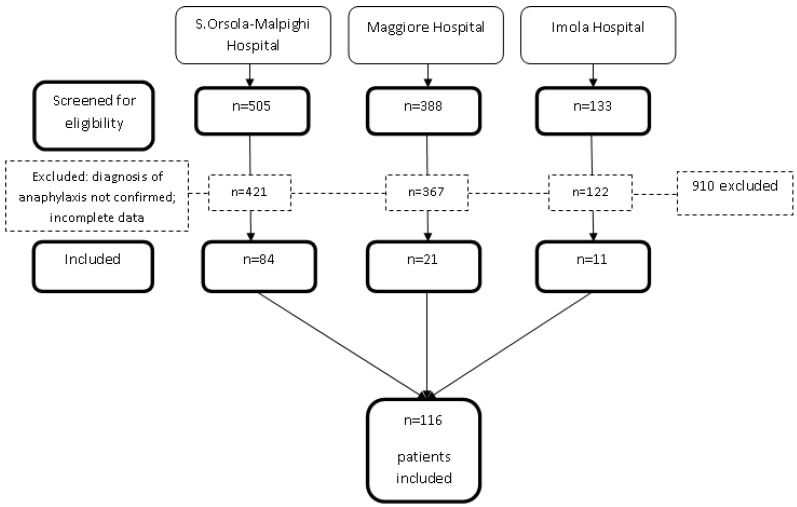
Introduction: Anaphylaxis is one of the most frequent and misdiagnosed emergencies in the pediatric emergency department (PED). We aimed to assess which factors play a major role for a correct diagnosis and an appropriate therapy. Methods: We reviewed the records of children discharged with a diagnosis of anaphylaxis or an allergic reaction over 11 years from 3 hospitals in the Bologna city area. Results: One hundred and sixteen cases matched the criteria (0.03% of the total admittances) and were divided according to the patients’ symptoms at arrival: active acute patients [AP], n = 50, or non-acute patients ([NAP], n = 66). At the patients’ discharge, anaphylaxis was diagnosed in 39 patients (33.6%). Some features seemed to favor a correct diagnosis: active symptoms at arrival (AP vs. NAP, p < 0.01), high-priority triage code (p < 0.01), and upper airway involvement (p < 0.01). Only 14 patients (12.1%), all in the AP group, received epinephrine, that was more likely administered to patients recognized to have anaphylaxis (p < 0.01) and with cardiovascular, respiratory, or persistent gastrointestinal symptoms (p < 0.02), as confirmed by logistic regression analysis. Conclusions: Anaphylaxis is still under-recognized and under-treated. Correct triage coding and a proper diagnosis seem to foster an appropriate treatment. Physicians often prefer third-line interventions. Specific training for nurses and physicians might improve the management of this disease.
Keywords: anaphylaxis; emergency service; epinephrine; hypersensitivity.
Conflict of interest statement
The authors declare no conflict of interest.
Figures
References
LinkOut - more resources
Full Text Sources
Research Materials
