Review
. 2022 Dec 14;23(24):15905.
doi: 10.3390/ijms232415905.

Effects of Metformin Delivery via Biomaterials on Bone and Dental Tissue Engineering

Affiliations
Review

Effects of Metformin Delivery via Biomaterials on Bone and Dental Tissue Engineering

Minjia Zhu et al. Int J Mol Sci. .

Abstract

Bone tissue engineering is a promising approach that uses seed-cell-scaffold drug delivery systems to reconstruct bone defects caused by trauma, tumors, or other diseases (e.g., periodontitis). Metformin, a widely used medication for type II diabetes, has the ability to enhance osteogenesis and angiogenesis by promoting cell migration and differentiation. Metformin promotes osteogenic differentiation, mineralization, and bone defect regeneration via activation of the AMP-activated kinase (AMPK) signaling pathway. Bone tissue engineering depends highly on vascular networks for adequate oxygen and nutrition supply. Metformin also enhances vascular differentiation via the AMPK/mechanistic target of the rapamycin kinase (mTOR)/NLR family pyrin domain containing the 3 (NLRP3) inflammasome signaling axis. This is the first review article on the effects of metformin on stem cells and bone tissue engineering. In this paper, we review the cutting-edge research on the effects of metformin on bone tissue engineering. This includes metformin delivery via tissue engineering scaffolds, metformin-induced enhancement of various types of stem cells, and metformin-induced promotion of osteogenesis, angiogenesis, and its regulatory pathways. In addition, the dental, craniofacial, and orthopedic applications of metformin in bone repair and regeneration are also discussed.

Keywords: angiogenesis; bone defect; bone tissue engineering; inflammation regulation; metformin; osteogenesis; periodontitis.


Conflict of interest statement

The authors report no conflicts of interest.

Figures
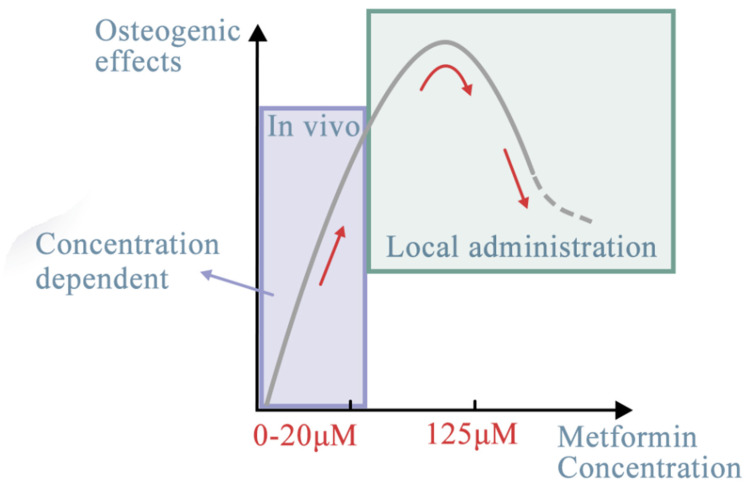
Figure 3
Figure 3
Effects of metformin concentration on different target stem cells. The optimal concentration of metformin, ranging from 0.5 to 500 μM, could have better osteogenic effects through the AMPK signaling pathway. With different target stem cells, in vivo or in vitro (local administration), the dose-dependent effect may be different (red line). The effects of metformin, despite regulating more or less the same signaling pathways, differ depending on the target tissues [37], whether they are stem cells or non-cell materials. For seed cells, it mostly depends on their cellular origin and osteogenic lineage. In this section, we discuss the potential targeted seed cells from within or outside of the oral cavity. The oral cavity is a special environment for targeted stem cells. Its complexity derives from its composition [38]. For example, the periodontal complex consists of hard tissues (alveolar bones, cementum), soft tissues (periodontal ligament fibers, gingival tissues), blood vessels, and nerves [39]. Other than non-cell materials, stem cells are categorized into six sources: MSCs, dental-derived cells, BMSCs, hi-PSCs, cancer cells, and immune cells. In the following section, each of these sources is reviewed.
Figure 1
Figure 1
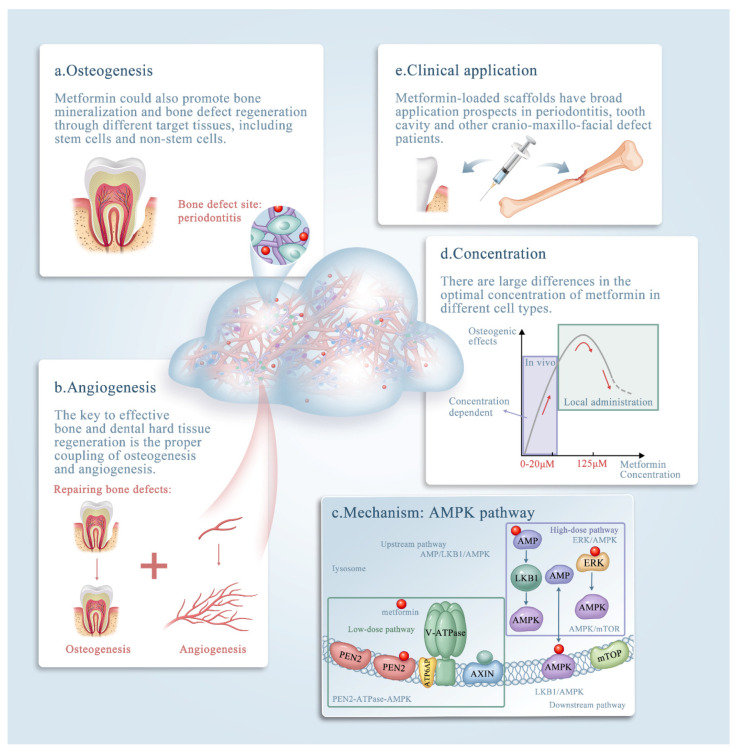
The roles of metformin in bone tissue engineering. The effects of metformin in bone tissue engineering. The promising clinical application metformin could contribute to diagnosis and treatment of bone defects. (ae) Schematic illustrating metformin delivery via biomaterials, mainly via scaffolds, and its effects on bone and dental tissue engineering. Note that metformin exerts its effects by: (a) enhancing osteogenesis; (b) enhancing angiogenesis; (c) affecting the AMPK pathway; and (d) acting in a concentration-dependent manner. (e) The clinical applications of metformin. The underlying mechanism of metformin (through the AMP-activated kinase (AMPK) signaling pathway) is discussed in detail in the text.
Figure 2
Figure 2
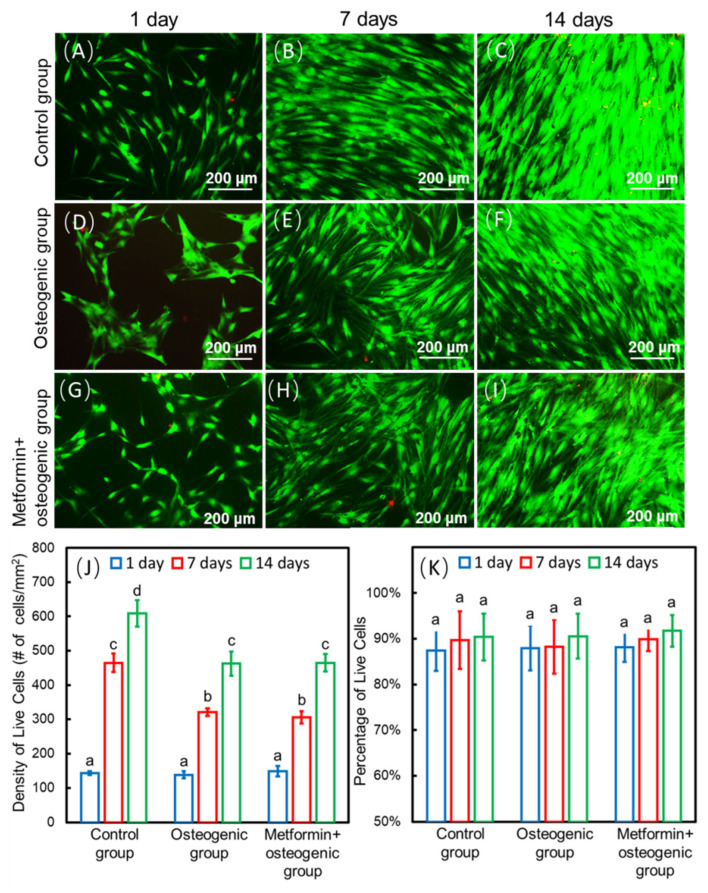
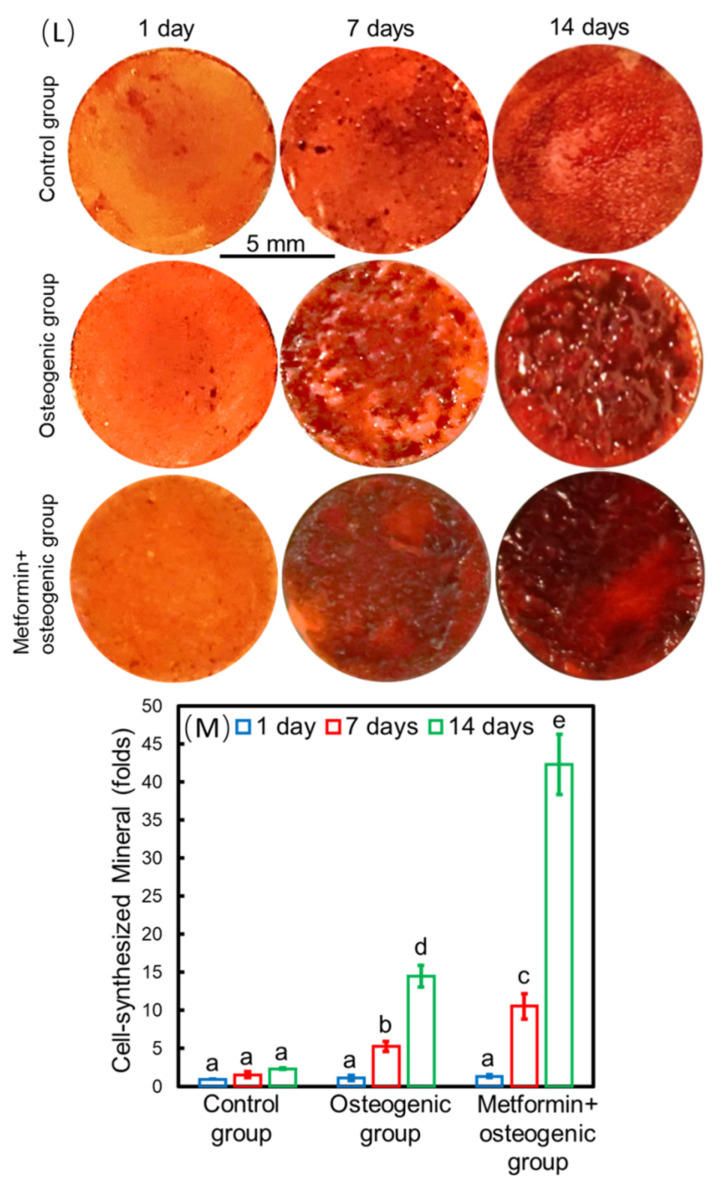
Methods of seed-cell drug delivery via a calcium phosphate cement (CPCs)/alginate-hydrogel-microfiber (MF) scaffold system. Live/dead staining images of cells seeding on the CPC-MF scaffold system at days 1, 7, and 14 (AI); live cell density and percentages of live cells encapsulated in CPC-MF scaffold system (J,K); synthesis of bone minerals by the encapsulated stem cells, which was enhanced by the encapsulated metformin. Alizarin red (ARS) staining and cell-synthesized mineral quantification of human periodontal ligament cells (hPDLSCs) on CPC-MF scaffold system with or without metformin (L,M) Values with dissimilar letters (a,b,c) are significantly different from each other (p < 0.05). (Adapted from reference [9], with permission).
Figure 2
Figure 2
Methods of seed-cell drug delivery via a calcium phosphate cement (CPCs)/alginate-hydrogel-microfiber (MF) scaffold system. Live/dead staining images of cells seeding on the CPC-MF scaffold system at days 1, 7, and 14 (AI); live cell density and percentages of live cells encapsulated in CPC-MF scaffold system (J,K); synthesis of bone minerals by the encapsulated stem cells, which was enhanced by the encapsulated metformin. Alizarin red (ARS) staining and cell-synthesized mineral quantification of human periodontal ligament cells (hPDLSCs) on CPC-MF scaffold system with or without metformin (L,M) Values with dissimilar letters (a,b,c) are significantly different from each other (p < 0.05). (Adapted from reference [9], with permission).
Figure 4
Figure 4
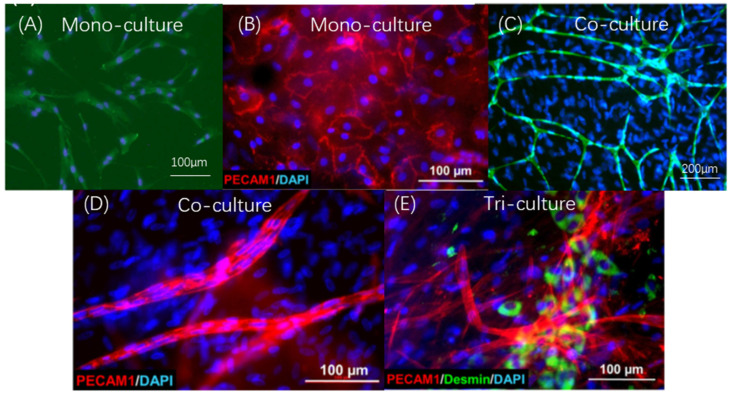
CPC-MF scaffold system and co-culture/tri-culture microenvironment system construction for bone regeneration. (A) hPDLSCs (second passage) were immunofluorescently stained with anti-STRO-1 antibodies (green) and 4′,6-diamidino-2-phenylindole (DAPI) for nuclei (blue). (B) Mono-cultured human umbilical vein endothelial cells (HUVECs) were immunofluorescently stained with endothelial marker platelet and endothelial cell adhesion molecule 1 (PECAM1; red) and DAPI for nuclei (blue) at day 15. (C) For the group co-cultured with HUVECs and hPDLSCs, vessel length/junctions were quantified. HUVECs were immunofluorescently stained with CD31 (green), and both HUVECs and hPDLSCs were stained with DAPI for nuclei (blue) at day 21. (D) Group co-cultured with hi-PMSCs and HUVECs. HUVECs were stained in red, and both nuclei were stained in blue. (E) Tri-culture group with hi-PMSCs, HUVECs, and pericytes. HUVECs were stained in red, pericytes were stained for the specific marker desmin in green, and all nuclei were stained in blue. (Adapted from references [9,28,37], with permission).
Figure 5
Figure 5
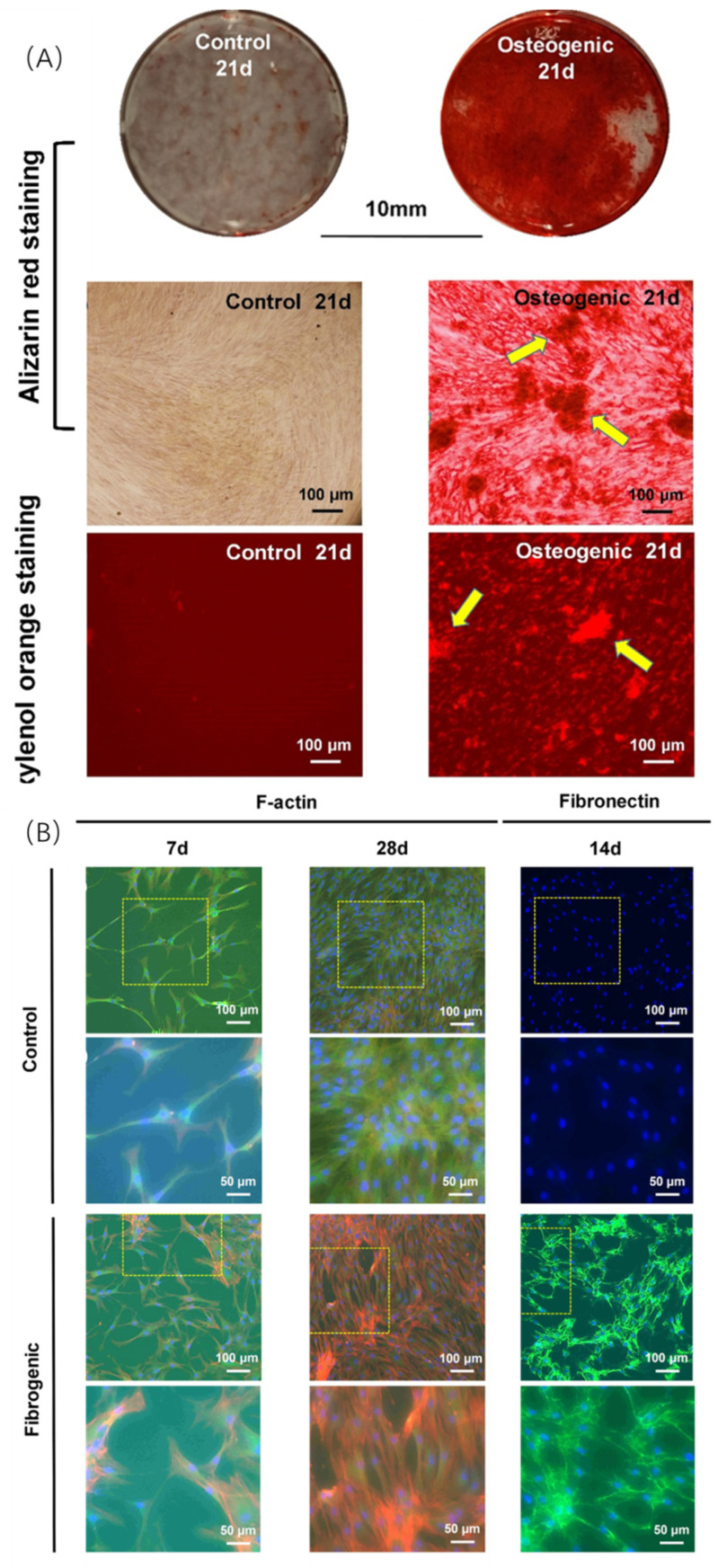
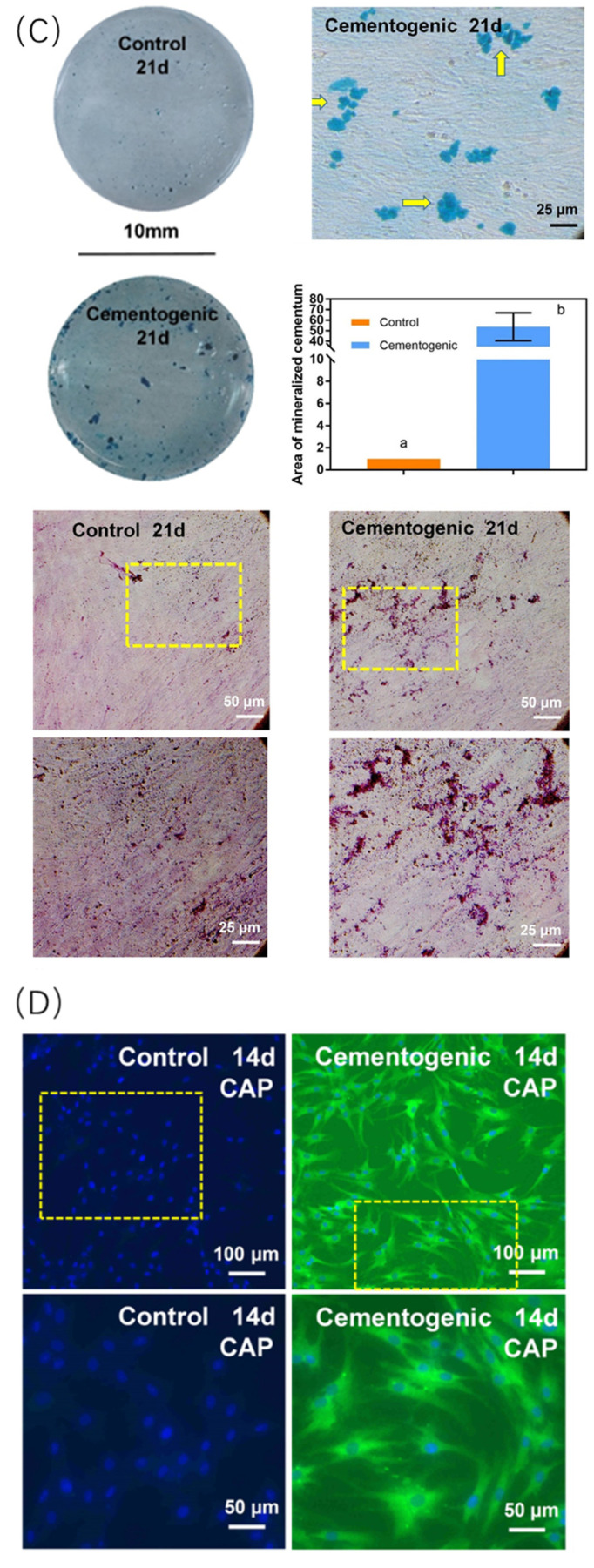
Triple differentiation potential of PDLSCs. (A) Osteogenic lineage. (B) Fibrogenic lineage. (C,D) Cementogenic lineage. Calf alkaline phosphatase (CAP) Values with dissimilar letters (a,b,c) are significantly different from each other (p < 0.05). (Adapted from reference [39], with permission).
Figure 5
Figure 5
Triple differentiation potential of PDLSCs. (A) Osteogenic lineage. (B) Fibrogenic lineage. (C,D) Cementogenic lineage. Calf alkaline phosphatase (CAP) Values with dissimilar letters (a,b,c) are significantly different from each other (p < 0.05). (Adapted from reference [39], with permission).
Figure 6
Figure 6
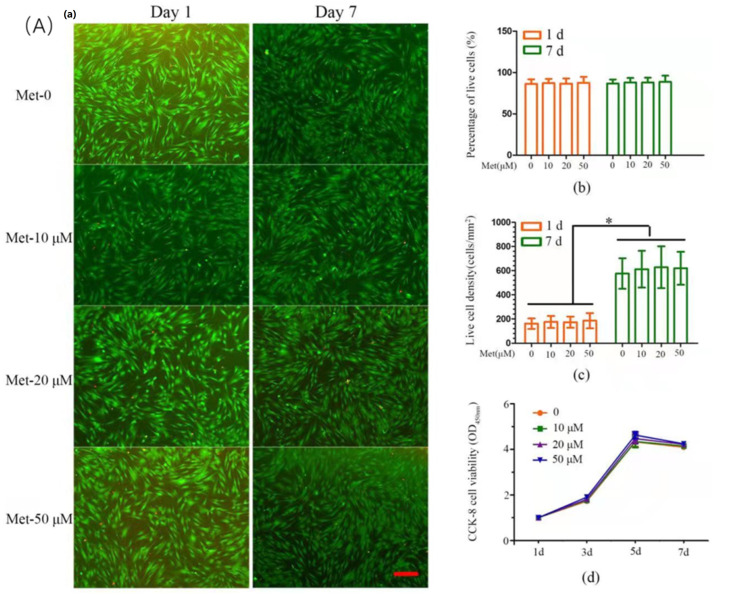
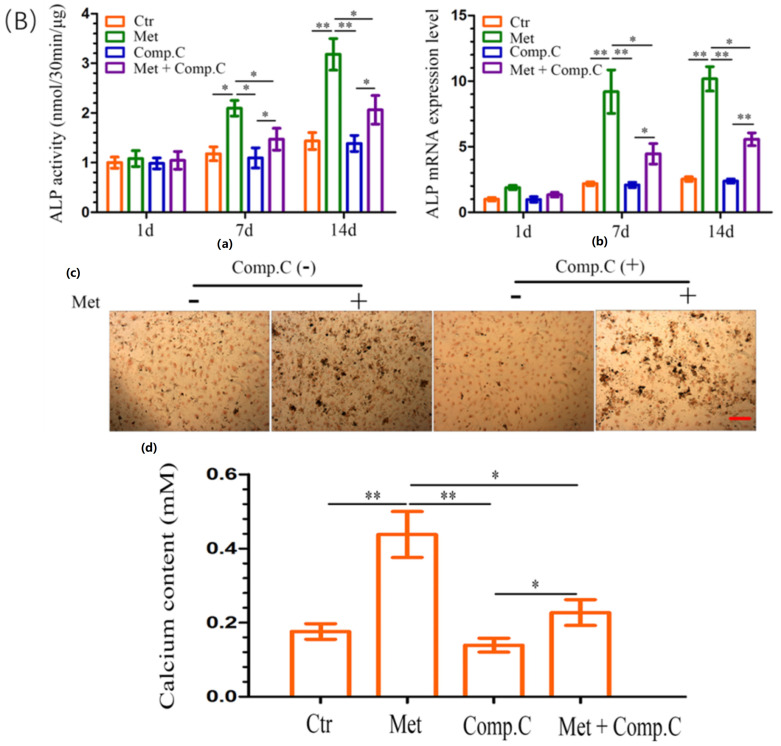
The effects of metformin on dental pulp cells (DPCs). (A) Effect of metformin on cell viability and proliferation of DPCs. (a) Representative live/dead images of metformin-treated DPCs at days 1 and 7 of culture, with live cells stained green and dead cells shown in red. In all four groups, live cells were abundant, and dead cells were few (scale bar = 100 μm). (b) Percentage of live cells of DPCs was around 90%. Data represent mean ± SD of 3 experiments with triplicates. (c) All groups exhibited increasing live cell density. Data represent mean ± SD of 3 experiments with triplicates. * p < 0.05. (d) Metformin has no effect on the cell proliferation. Data represent mean ± SD of 3 experiments with triplicates. (B) Effect of metformin-induced ALP activity and mineralized nodule formation in DPCs. (a,b) DPCs were treated with metformin (50 μM) in the absence or presence of Compound C (10 μM, pretreatment for 1 h); cells were retreated every 3 days. ALP activity (A) and ALP mRNA expression (b) were measured at each time point. Data represent mean ± SD of 3 experiments with triplicates. * p < 0.05. ** p < 0.001. (c) DPCs were cultured in osteogenic induction medium for 14 days, mineralized nodule formation was assessed by von Kossa staining (scale bar = 100 μm). (d) On the 14th day, the calcium content was determined. Data represent mean ± SD of 3 experiments with triplicates. * p < 0.05. ** p < 0.001. (Adapted from reference [51], with permission).
Figure 6
Figure 6
The effects of metformin on dental pulp cells (DPCs). (A) Effect of metformin on cell viability and proliferation of DPCs. (a) Representative live/dead images of metformin-treated DPCs at days 1 and 7 of culture, with live cells stained green and dead cells shown in red. In all four groups, live cells were abundant, and dead cells were few (scale bar = 100 μm). (b) Percentage of live cells of DPCs was around 90%. Data represent mean ± SD of 3 experiments with triplicates. (c) All groups exhibited increasing live cell density. Data represent mean ± SD of 3 experiments with triplicates. * p < 0.05. (d) Metformin has no effect on the cell proliferation. Data represent mean ± SD of 3 experiments with triplicates. (B) Effect of metformin-induced ALP activity and mineralized nodule formation in DPCs. (a,b) DPCs were treated with metformin (50 μM) in the absence or presence of Compound C (10 μM, pretreatment for 1 h); cells were retreated every 3 days. ALP activity (A) and ALP mRNA expression (b) were measured at each time point. Data represent mean ± SD of 3 experiments with triplicates. * p < 0.05. ** p < 0.001. (c) DPCs were cultured in osteogenic induction medium for 14 days, mineralized nodule formation was assessed by von Kossa staining (scale bar = 100 μm). (d) On the 14th day, the calcium content was determined. Data represent mean ± SD of 3 experiments with triplicates. * p < 0.05. ** p < 0.001. (Adapted from reference [51], with permission).
Figure 7
Figure 7
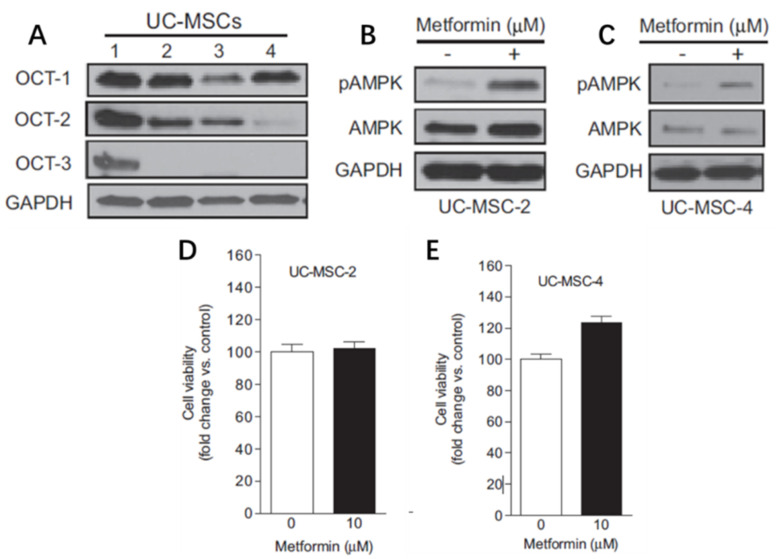
UC-MSCs expressing OCT to ingest metformin. (AC) Organic cation transporter (OCT) protein levels in umbilical cord mesenchymal stomal cells (UC-MSCs). (D,E) Transfection of OCT1 small interfering RNA (siRNA) duplex to downregulate metformin accumulation and RUNX family transcription factor 2 (Runx2) expression in UC-MSCs. AMPK, AMP-activated kinase; pAMPK, phosphorylated AMPK; GAPDH, glyceraldehyde-3-phosphate dehydrogenase (Adapted from reference [31], with permission).

Similar articles

Cited by

References

    1. Triggle C.R., Mohammed I., Bshesh K., Marei I., Ye K., Ding H., MacDonald R., Hollenberg M.D., Hill M.A. Metformin: Is it a drug for all reasons and diseases? Metabolism. 2022;133:155223. doi: 10.1016/j.metabol.2022.155223. - DOI - PubMed
    1. Kawakita E., Yang F., Kumagai A., Takagaki Y., Kitada M., Yoshitomi Y., Ikeda T., Nakamura Y., Ishigaki Y., Kanasaki K., et al. Metformin Mitigates DPP-4 Inhibitor-Induced Breast Cancer Metastasis via Suppression of mTOR Signaling. Mol. Cancer Res. 2021;19:61–73. doi: 10.1158/1541-7786.MCR-20-0115. - DOI - PubMed
    1. Al-Salameh A., Wiernsperger N., Cariou B., Lalau J.-D. A comment on metformin and COVID-19 with regard to “Metformin use is associated with a decrease in the risk of hospitalization and mortality in COVID-19 patients with diabetes: A population-based study in Lombardy”. Diabetes Obes. Metab. 2022;24:1888. doi: 10.1111/dom.14746. - DOI - PMC - PubMed
    1. Sun C.-K., Weng P.-W., Chang J.Z.-C., Lin Y.-W., Tsuang F.-Y., Lin F.-H., Tsai T.-H., Sun J.-S. Metformin-Incorporated Gelatin/Hydroxyapatite Nanofiber Scaffold for Bone Regeneration. Tissue Eng. Part A. 2022;28:1–12. doi: 10.1089/ten.tea.2021.0038. - DOI - PubMed
    1. Zhao X., Yang Y., Yu J., Ding R., Pei D., Zhang Y., He G., Cheng Y., Li A. Injectable hydrogels with high drug loading through B-N coordination and ROS-triggered drug release for efficient treatment of chronic periodontitis in diabetic rats. Biomaterials. 2022;282:121387. doi: 10.1016/j.biomaterials.2022.121387. - DOI - PubMed