


Oral Anticoagulant Use and Appropriateness in Elderly Patients with Atrial Fibrillation in Complex Clinical Conditions: ACONVENIENCE Study
- PMID: 36556039
- PMCID: PMC9781896
- DOI: 10.3390/jcm11247423
Oral Anticoagulant Use and Appropriateness in Elderly Patients with Atrial Fibrillation in Complex Clinical Conditions: ACONVENIENCE Study
Abstract
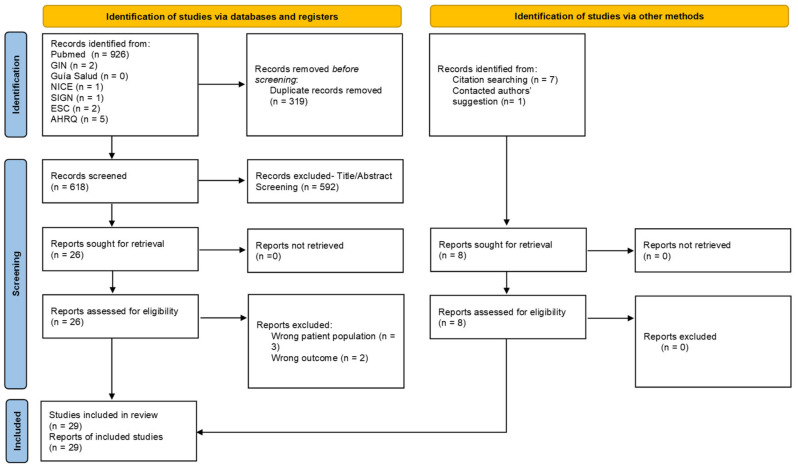
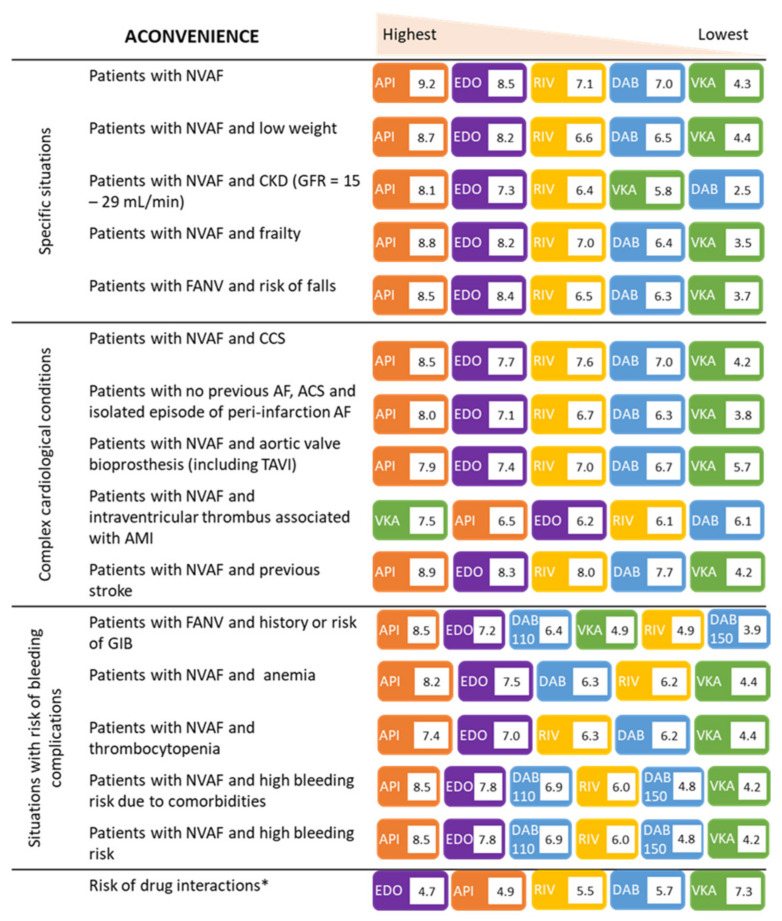
Non-valvular atrial fibrillation (NVAF) is the most common arrhythmia in older patients. Although direct-acting oral anticoagulants (DOAC) are the antithrombotic treatment of choice, irrespective of age, certain factors may limit their use. The aim of the ACONVENIENCE study was to consult the opinion of a multidisciplinary panel of experts on the appropriateness of using OACs in elderly patients (>75 years) with NVAF associated with certain complex clinical conditions. A consensus project was performed on the basis of a systematic review of the literature, and application of a two-round Delphi survey. The agreement of 79 panellists on 30 Delphi-type statements was evaluated, and their opinion on the appropriateness of different oral anticoagulants in 16 complex clinical scenarios was assessed. A total of 27 consensus statements were agreed upon, including all statements addressing anticoagulation in older patients and in patients at high risk of bleeding complications, and most of those addressing frailty, dementia, risk of falling, and complex cardiac situations. It was almost unanimously agreed upon that advanced age should not influence the anticoagulation decision. Apixaban was the highest-rated therapeutic option in 14/16 situations, followed by edoxaban. There is a high degree of agreement on anticoagulation in older patients with NVAF. Age should not be the single limiting factor when prescribing OACs, and the decision should be made based on net clinical benefit and a comprehensive geriatric assessment. Apixaban, followed by edoxaban, was considered the most appropriate treatment in the various complex clinical situations examined.
Keywords: anticoagulants; antithrombins; atrial fibrillation; bleeding; drug interactions; factor Xa inhibitors; frail elderly; geriatric assessment; stroke.
Conflict of interest statement
C. Bonanad declares that she has received funding for attendance at meetings and conferences, and speaker fees from BMS/Pfizer, Daiichi-Sankyo, Boehringer and Bayer. F. Formiga received funding for attendance at meetings and congresses, honoraria and funding from Pfizer for attending meetings and congresses; speaker fees from BMS/Pfizer, Daiichi-Sankyo, and Bayer; and funding for participating in research by BMS/Pfizer. M. Anguita declares that he has received speaker fees from BMS/Pfizer, Novartis, Bayer, Daiichi-Sankyo and Boehringer, and funding for participating in research projects from BMS/Pfizer, Abbot, Novartis, Bayer, and Daiichi-Sankyo. R. Petidier declares that he has received speaker fees from Bayer, BMS/Pfizer and Daiichy-Sankyo. A. Gullón declares that she has received speaker fees from BMS/Pfizer and Bayer and funding for participating in a research project from Daiichi-Sankyo.
Figures
References
-
- Gómez-Doblas J.J., Muñiz J., Martin J.J.A., Rodríguez-Roca G., Lobos J.M., Awamleh P., Permanyer-Miralda G., Chorro F.J., Anguita M., Roig E. Prevalence of Atrial Fibrillation in Spain. OFRECE Study Results. Rev. Esp. Cardiol. Engl. Ed. 2014;67:259–269. doi: 10.1016/j.recesp.2013.07.015. - DOI - PubMed
Grants and funding
LinkOut - more resources
Full Text Sources
