


How Telemedicine Can Improve the Quality of Care for Patients with Alzheimer's Disease and Related Dementias? A Narrative Review
- PMID: 36556907
- PMCID: PMC9783876
- DOI: 10.3390/medicina58121705
How Telemedicine Can Improve the Quality of Care for Patients with Alzheimer's Disease and Related Dementias? A Narrative Review
Abstract
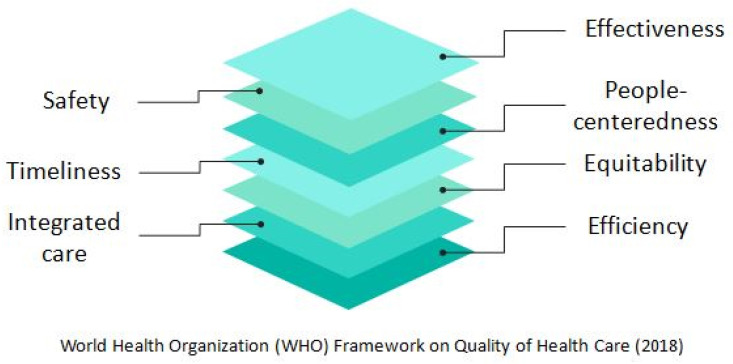
Background and Objectives: Dementia affects more than 55 million patients worldwide, with a significant societal, economic, and psychological impact. However, many patients with Alzheimer's disease (AD) and other related dementias have limited access to effective and individualized treatment. Care provision for dementia is often unequal, fragmented, and inefficient. The COVID-19 pandemic accelerated telemedicine use, which holds promising potential for addressing this important gap. In this narrative review, we aim to analyze and discuss how telemedicine can improve the quality of healthcare for AD and related dementias in a structured manner, based on the seven dimensions of healthcare quality defined by the World Health Organization (WHO), 2018: effectiveness, safety, people-centeredness, timeliness, equitability, integrated care, and efficiency. Materials and Methods: MEDLINE and Scopus databases were searched for peer-reviewed articles investigating the role of telemedicine in the quality of care for patients with dementia. A narrative synthesis was based on the seven WHO dimensions. Results: Most studies indicate that telemedicine is a valuable tool for AD and related dementias: it can improve effectiveness (better access to specialized care, accurate diagnosis, evidence-based treatment, avoidance of preventable hospitalizations), timeliness (reduction of waiting times and unnecessary transportation), patient-centeredness (personalized care for needs and values), safety (appropriate treatment, reduction of infection risk),integrated care (interdisciplinary approach through several dementia-related services), efficiency (mainly cost-effectiveness) and equitability (overcoming geographical barriers, cultural diversities). However, digital illiteracy, legal and organizational issues, as well as limited awareness, are significant potential barriers. Conclusions: Telemedicine may significantly improve all aspects of the quality of care for patients with dementia. However, future longitudinal studies with control groups including participants of a wide educational level spectrum will aid in our deeper understanding of the real impact of telemedicine in quality care for this population.
Keywords: Alzheimer’s disease (AD); COVID-19; World Health Organization (WHO); telemedicine.
Conflict of interest statement
The authors declare no conflict of interest.
Figures
References
-
- Emmady P.D., Tadi P. Dementia. StatPearls; Treasure Island, FL, USA: 2022.
-
- Loi S.M., Goh A.M.Y., Mocellin R., Malpas C.B., Parker S., Eratne D., Farrand S., Kelso W., Evans A., Walterfang M., et al. Time to diagnosis in younger-onset dementia and the impact of a specialist diagnostic service. Int. Psychogeriatr. 2022;34:367–375. doi: 10.1017/S1041610220001489. - DOI - PubMed
Publication types
MeSH terms
LinkOut - more resources
Full Text Sources
Medical
Miscellaneous
