


Protozoa-Derived Extracellular Vesicles on Intercellular Communication with Special Emphasis on Giardia lamblia
- PMID: 36557675
- PMCID: PMC9788250
- DOI: 10.3390/microorganisms10122422
Protozoa-Derived Extracellular Vesicles on Intercellular Communication with Special Emphasis on Giardia lamblia
Abstract
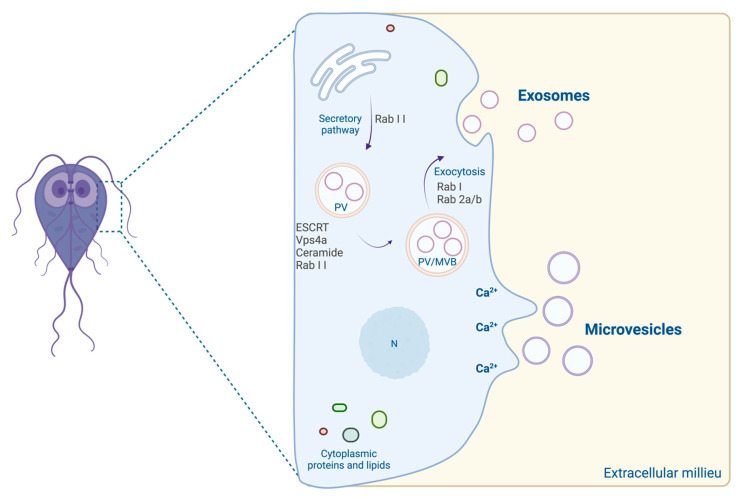
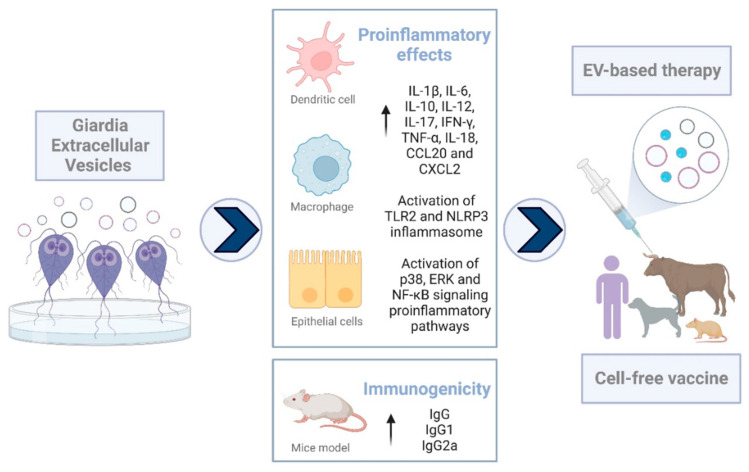
Parasitic diseases are an important worldwide problem threatening human health and affect millions of people. Acute diarrhea, intestinal bleeding, malabsorption of nutrients and nutritional deficiency are some of the issues related to intestinal parasitic infections. Parasites are experts in subvert the host immune system through different kinds of mechanisms. There are evidences that extracellular vesicles (EVs) have an important role in dissemination of the disease and in modulating the host immune system. Released by almost all types of cells, these nanovesicles are a natural secretory product containing multiple components of interest. The EVs are classified as apoptotic bodies, microvesicles, exosomes, ectosomes, and microparticles, according to their physical characteristics, biochemical composition and cell of origin. Interestingly, EVs play an important role in intercellular communication between parasites as well as with the host cells. Concerning Giardia lamblia, it is known that this parasite release EVs during it life cycle that modulate the parasite growth and adherence as well the immune system of the host. Here we review the recently updates on protozoa EVs, with particular emphasis on the role of EVs released by the flagellate protozoa G. lamblia in cellular communication and its potential for future applications as vaccine, therapeutic agent, drug delivery system and as diagnostic or prognostic biomarker.
Keywords: Cryptosporidium; Entamoeba; G. lamblia; Leishmania; Plasmodium; Toxoplasma; Trichomonas; Trypanosoma; exosomes; extracellular vesicles (EVs); giardiasis; microvesicles (MVs); parasite–host interaction; protozoan.
Conflict of interest statement
The authors declare no competing interest.
Figures
References
Publication types
LinkOut - more resources
Full Text Sources
