


The Role of the Gut Microbiome in Psychiatric Disorders
- PMID: 36557689
- PMCID: PMC9786082
- DOI: 10.3390/microorganisms10122436
The Role of the Gut Microbiome in Psychiatric Disorders
Abstract
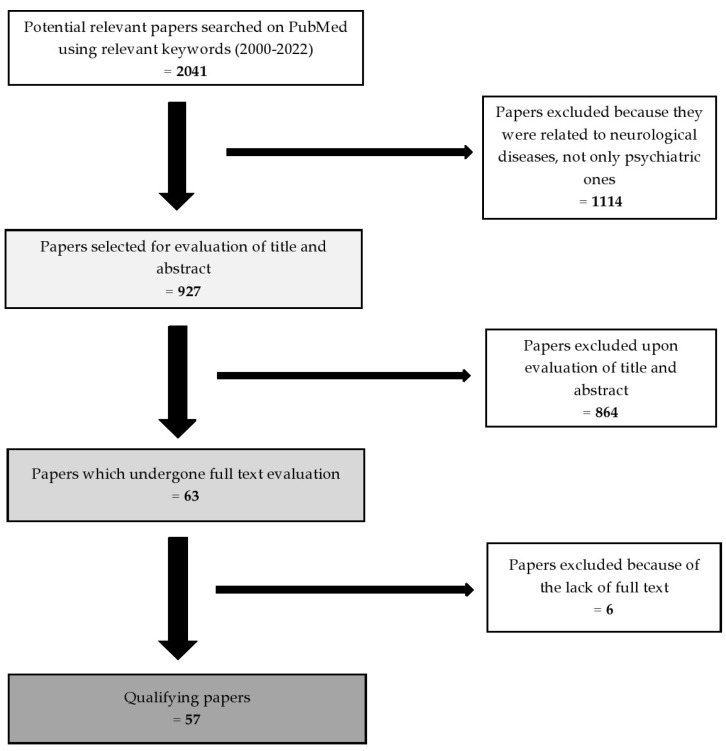
The role of the gut microbiome in mental health has been of great interest in the past years, with several breakthroughs happening in the last decade. Its implications in several psychiatric disorders, namely anxiety, depression, autism and schizophrenia, are highlighted. In this review were included relevant studies on rodents, as well as human studies. There seems to be a connection between the gut microbiome and these pathologies, the link being emphasized both in rodents and humans. The results obtained in murine models align with the results acquired from patients; however, fewer studies regarding anxiety were conducted on humans. The process of sequencing and analyzing the microbiome has been conducted in humans for several other pathologies mentioned above. Additionally, the possible beneficial role of probiotics and postbiotics administered as an aid to the psychiatric medication was analyzed.
Keywords: anxiety; autism; depression; gut microbiome; microbiota–gut–brain axis; probiotics; psychiatric disorders; schizophrenia.
Conflict of interest statement
The authors declare no conflict of interest.
Figures
References
-
- Balamurugan R., Rajendiran E., George S., Samuel G.V., Ramakrishna B.S. Real-time polymerase chain reaction quantification of specific butyrate-producing bacteria, Desulfovibrio and Enterococcus faecalis in the feces of patients with colorectal cancer. J. Gastroenterol. Hepatol. 2008;23:1298–1303. doi: 10.1111/j.1440-1746.2008.05490.x. - DOI - PubMed
Publication types
LinkOut - more resources
Full Text Sources
Medical
Miscellaneous
