


The Discovery of Oropharyngeal Microbiota with Inhibitory Activity against Pathogenic Neisseria gonorrhoeae and Neisseria meningitidis: An In Vitro Study of Clinical Isolates
- PMID: 36557750
- PMCID: PMC9787740
- DOI: 10.3390/microorganisms10122497
The Discovery of Oropharyngeal Microbiota with Inhibitory Activity against Pathogenic Neisseria gonorrhoeae and Neisseria meningitidis: An In Vitro Study of Clinical Isolates
Abstract
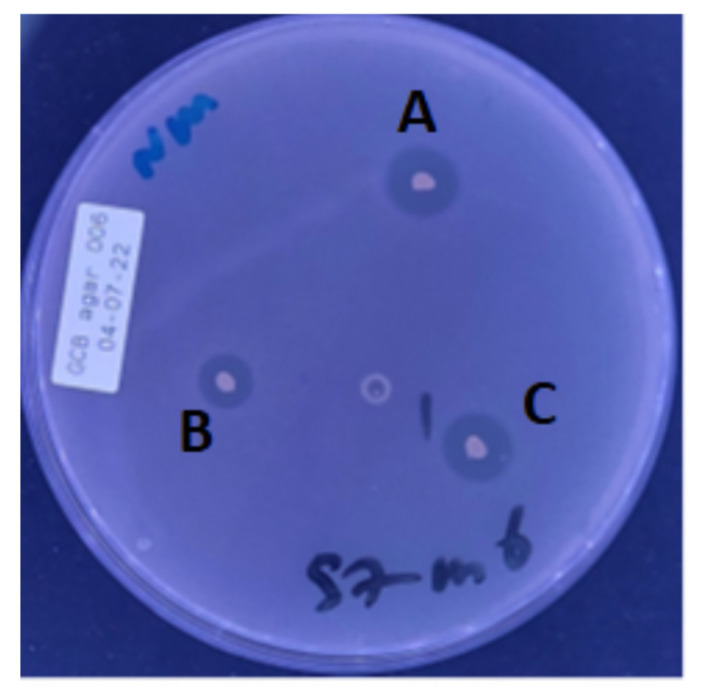
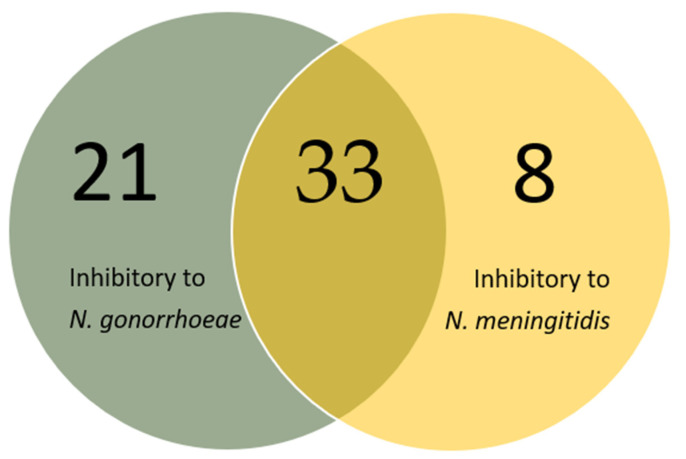
With increasing incidence of pathogenic Neisseria infections coupled with emerging resistance to antimicrobials, alternative approaches to limit the spread are sought. We investigated the inhibitory effect of oropharyngeal microbiota on the growth of N. gonorrhoeae and N. meningitidis and the impact of the essential oil-based mouthwash Listerine Cool Mint® (Listerine). Oropharyngeal swabs from 64 men who have sex with men (n = 118) from a previous study (PReGo study) were analysed (ClinicalTrials.gov, NCT03881007). These included 64 baseline and 54 samples following three months of daily use of Listerine. Inhibition was confirmed by agar overlay assay, and inhibitory bacteria isolated using replica plating and identified using MALDI-TOF. The number of inhibitory isolates were compared before and after Listerine use. Thirty-one pharyngeal samples (26%) showed inhibitory activity against N. gonorrhoeae and/or N. meningitidis, and 62 inhibitory isolates were characterised. Fourteen species belonging to the genera Streptococci and Rothia were identified. More inhibitory isolates were observed following Listerine use compared to baseline, although this effect was not statistically significant (p = 0.073). This study isolated and identified inhibitory bacteria against pathogenic Neisseria spp. and established that daily Listerine use did not decrease their prevalence. These findings could provide a new approach for the prevention and treatment of pharyngeal Neisseria infections.
Keywords: Listerine mouthwash; Microbiome; Neisseria gonorrhoeae; Neisseria meningitidis; colonisation resistance.
Conflict of interest statement
All authors declare no competing interests.
Figures
References
-
- Bennett J.S., Bratcher H.B., Brehony C., Harrison O.B., Maiden M.C.J. The Prokaryotes. Springer; Berlin/Heidelberg, Germany: 2014. The Genus Neisseria; pp. 881–900. - DOI
-
- Hsu K., Ram S., Darville T. Nelson Textbook of Pediatrics. 21st ed. Elsevier; Amsterdam, The Netherlands: 2020. Neisseria gonorrhoeae (Gonococcus) pp. 1478–1484.e1.
Associated data
Grants and funding
LinkOut - more resources
Full Text Sources
Medical
Miscellaneous
