


Targeting Tumor Microenvironment by Metal Peroxide Nanoparticles in Cancer Therapy
- PMID: 36568636
- PMCID: PMC9788889
- DOI: 10.1155/2022/5041399
Targeting Tumor Microenvironment by Metal Peroxide Nanoparticles in Cancer Therapy
Abstract
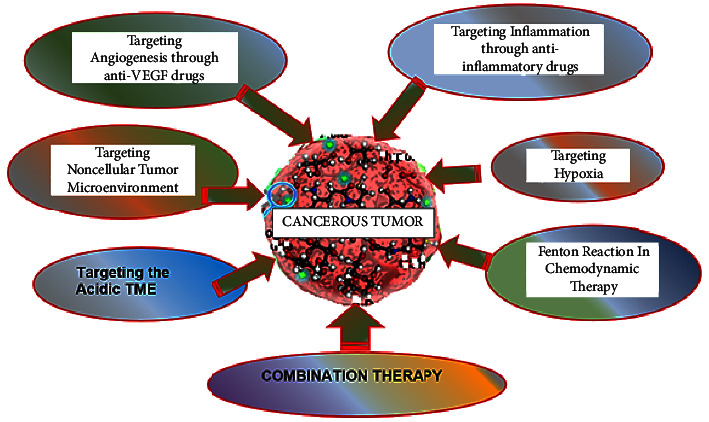
Solid tumors have a unique tumor microenvironment (TME), which includes hypoxia, low acidity, and high hydrogen peroxide and glutathione (GSH) levels, among others. These unique factors, which offer favourable microenvironments and nourishment for tumor development and spread, also serve as a gateway for specific and successful cancer therapies. A good example is metal peroxide structures which have been synthesized and utilized to enhance oxygen supply and they have shown great promise in the alleviation of hypoxia. In a hypoxic environment, certain oxygen-dependent treatments such as photodynamic therapy and radiotherapy fail to respond and therefore modulating the hypoxic tumor microenvironment has been found to enhance the antitumor impact of certain drugs. Under acidic environments, the hydrogen peroxide produced by the reaction of metal peroxides with water not only induces oxidative stress but also produces additional oxygen. This is achieved since hydrogen peroxide acts as a reactive substrate for molecules such as catalyse enzymes, alleviating tumor hypoxia observed in the tumor microenvironment. Metal ions released in the process can also offer distinct bioactivity in their own right. Metal peroxides used in anticancer therapy are a rapidly evolving field, and there is good evidence that they are a good option for regulating the tumor microenvironment in cancer therapy. In this regard, the synthesis and mechanisms behind the successful application of metal peroxides to specifically target the tumor microenvironment are highlighted in this review. Various characteristics of TME such as angiogenesis, inflammation, hypoxia, acidity levels, and metal ion homeostasis are addressed in this regard, together with certain forms of synergistic combination treatments.
Copyright © 2022 Simon Ngigi Mbugua.
Conflict of interest statement
The author declares no conflicts of interest.
Figures
References
Publication types
LinkOut - more resources
Full Text Sources
