


Simple methods for early warnings of COVID-19 surges: Lessons learned from 21 months of wastewater and clinical data collection in Detroit, Michigan, United States
- PMID: 36572285
- PMCID: PMC9783093
- DOI: 10.1016/j.scitotenv.2022.161152
Simple methods for early warnings of COVID-19 surges: Lessons learned from 21 months of wastewater and clinical data collection in Detroit, Michigan, United States
Abstract
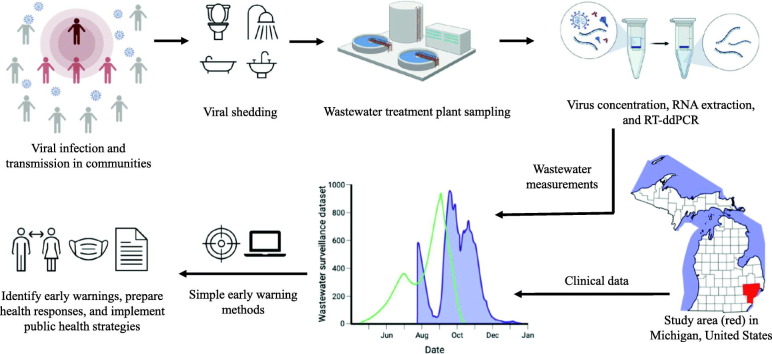
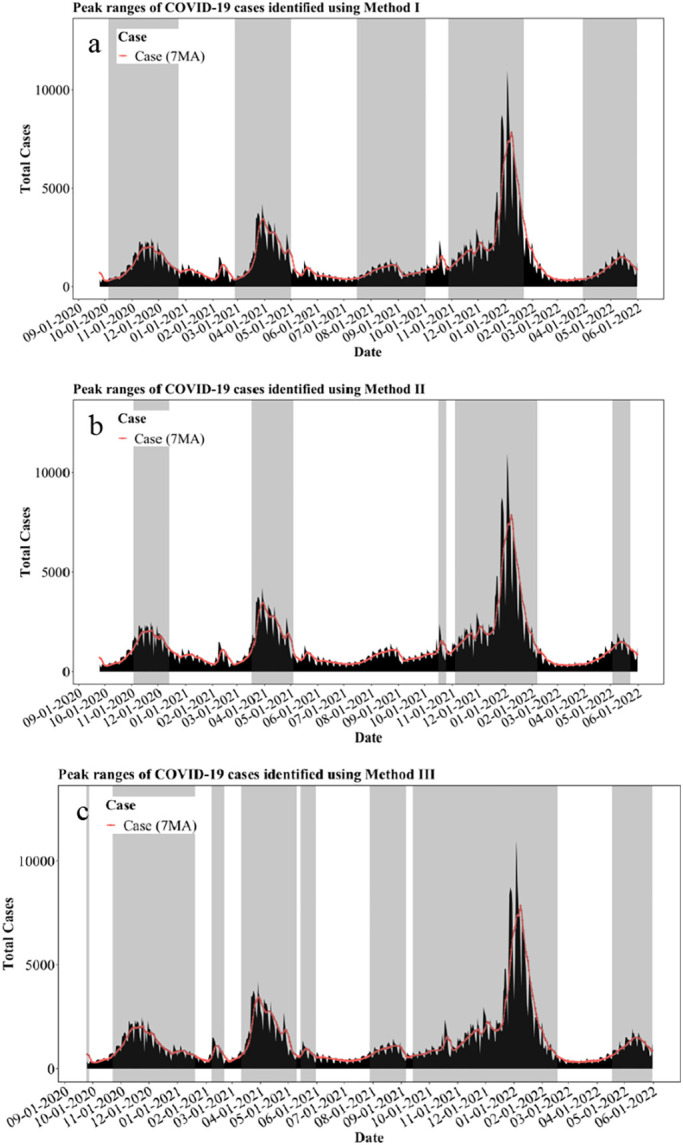
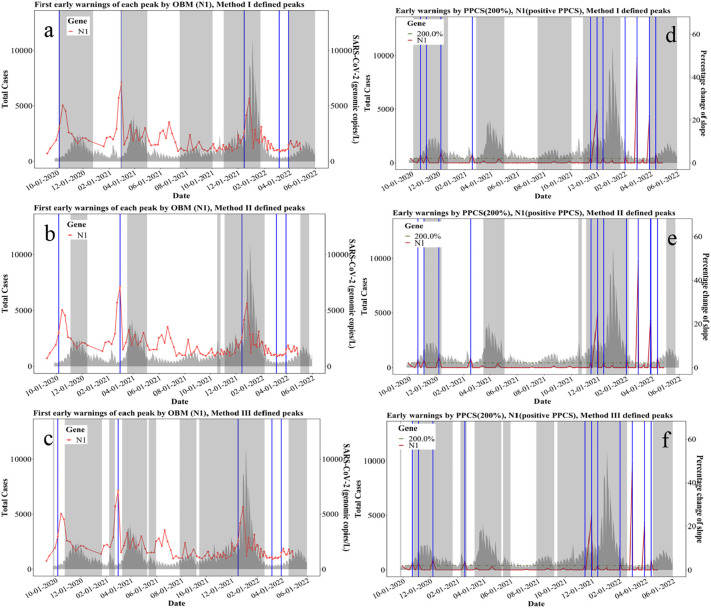
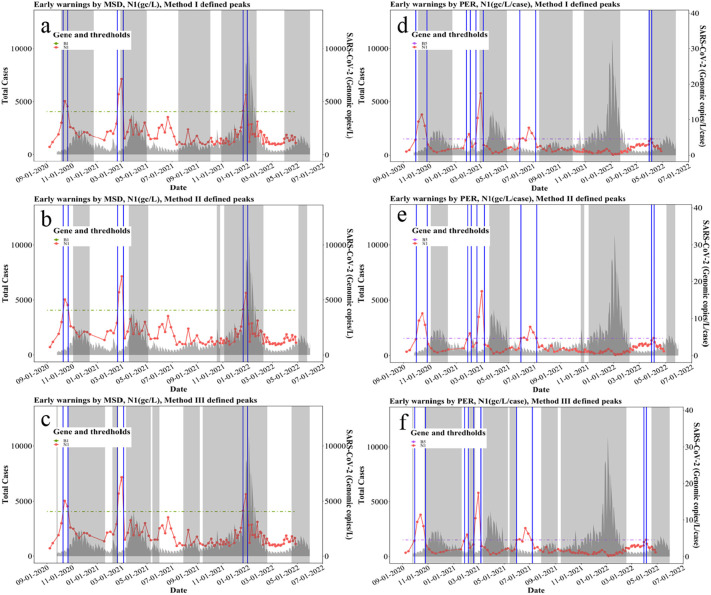
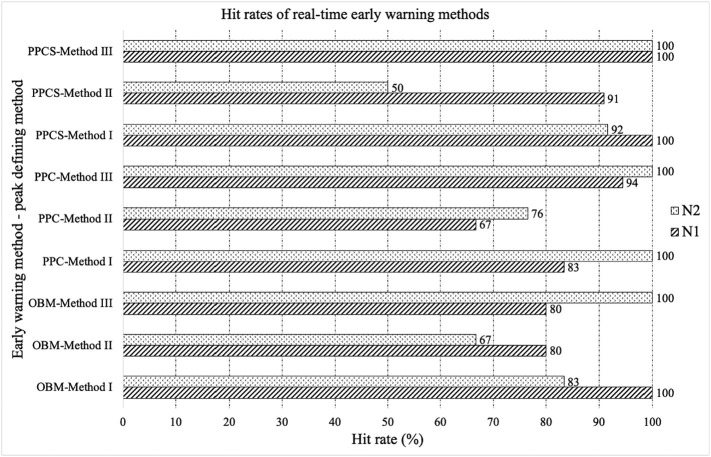
Wastewater-based epidemiology (WBE) has drawn great attention since the Coronavirus disease 2019 (COVID-19) pandemic, not only due to its capability to circumvent the limitations of traditional clinical surveillance, but also due to its potential to forewarn fluctuations of disease incidences in communities. One critical application of WBE is to provide "early warnings" for upcoming fluctuations of disease incidences in communities which traditional clinical testing is incapable to achieve. While intricate models have been developed to determine early warnings based on wastewater surveillance data, there is an exigent need for straightforward, rapid, broadly applicable methods for health departments and partner agencies to implement. Our purpose in this study is to develop and evaluate such early-warning methods and clinical-case peak-detection methods based on WBE data to mount an informed public health response. Throughout an extended wastewater surveillance period across Detroit, MI metropolitan area (the entire study period is from September 2020 to May 2022) we designed eight early-warning methods (three real-time and five post-factum). Additionally, we designed three peak-detection methods based on clinical epidemiological data. We demonstrated the utility of these methods for providing early warnings for COVID-19 incidences, with their counterpart accuracies evaluated by hit rates. "Hit rates" were defined as the number of early warning dates (using wastewater surveillance data) that captured defined peaks (using clinical epidemiological data) divided by the total number of early warning dates. Hit rates demonstrated that the accuracy of both real-time and post-factum methods could reach 100 %. Furthermore, the results indicate that the accuracy was influenced by approaches to defining peaks of disease incidence. The proposed methods herein can assist health departments capitalizing on WBE data to assess trends and implement quick public health responses to future epidemics. Besides, this study elucidated critical factors affecting early warnings based on WBE amid the COVID-19 pandemic.
Keywords: COVID-19; Early warning methods; Peak-defining methods; Public health response; SARS-CoV-2; Wastewater-based epidemiology.
Copyright © 2022 Elsevier B.V. All rights reserved.
Conflict of interest statement
Declaration of competing interest All authors declare that they have no known competing financial interests or personal relationships that could have appeared to influence the work reported in this paper.
Figures
References
-
- Ahmed W., Angel N., Edson J., Bibby K., Bivins A., O’Brien J.W., Choi P.M., Kitajima M., Simpson S.L., Li J., Tscharke B., Verhagen R., Smith W.J.M., Zaugg J., Dierens L., Hugenholtz P., Thomas K.V., Mueller J.F. First confirmed detection of SARS-CoV-2 in untreated wastewater in Australia: a proof of concept for the wastewater surveillance of COVID-19 in the community. Sci. Total Environ. 2020;728 doi: 10.1016/j.scitotenv.2020.138764. - DOI - PMC - PubMed
-
- Ahmed W., Bertsch P.M., Bibby K., Haramoto E., Hewitt J., Huygens F., Gyawali P., Korajkic A., Riddell S., Sherchan S.P., Simpson S.L., Sirikanchana K., Symonds E.M., Verhagen R., Vasan S.S., Kitajima M., Bivins A. Decay of SARS-CoV-2 and surrogate murine hepatitis virus RNA in untreated wastewater to inform application in wastewater-based epidemiology. Environ. Res. 2020;191 doi: 10.1016/j.envres.2020.110092. - DOI - PMC - PubMed
-
- Ahmed W., Tscharke B., Bertsch P.M., Bibby K., Bivins A., Choi P., Clarke L., Dwyer J., Edson J., Nguyen T.M.H., O’Brien J.W., Simpson S.L., Sherman P., Thomas K.V., Verhagen R., Zaugg J., Mueller J.F. SARS-CoV-2 RNA monitoring in wastewater as a potential early warning system for COVID-19 transmission in the community: a temporal case study. Sci. Total Environ. 2021;761 doi: 10.1016/j.scitotenv.2020.144216. - DOI - PMC - PubMed
-
- Ahmed W., Bertsch P.M., Bivins A., Bibby K., Farkas K., Gathercole A., Haramoto E., Gyawali P., Korajkic A., McMinn B.R., Mueller J.F., Simpson S.L., Smith W.J.M., Symonds E.M., Thomas K.V., Verhagen R., Kitajima M. Comparison of virus concentration methods for the RT-qPCR-based recovery of murine hepatitis virus, a surrogate for SARS-CoV-2 from untreated wastewater. Sci. Total Environ. 2020;739 doi: 10.1016/j.scitotenv.2020.139960. - DOI - PMC - PubMed
-
- Ahmed W., Bivins A., Simpson S.L., Bertsch P.M., Ehret J., Hosegood I., Metcalfe S.S., Smith W.J.M., Thomas K.V., Tynan J., Mueller J.F. Wastewater surveillance demonstrates high predictive value for COVID-19 infection on board repatriation flights to Australia. Environ. Int. 2022;158 doi: 10.1016/j.envint.2021.106938. - DOI - PMC - PubMed
MeSH terms
Substances
LinkOut - more resources
Full Text Sources
Medical
Miscellaneous
