


'Stress hyperglycemia ratio and in-hospital prognosis in non-surgical patients with heart failure and type 2 diabetes
- PMID: 36572923
- PMCID: PMC9791974
- DOI: 10.1186/s12933-022-01728-w
'Stress hyperglycemia ratio and in-hospital prognosis in non-surgical patients with heart failure and type 2 diabetes
Abstract
Objective: To evaluate the impact of stress hyperglycemia on the in-hospital prognosis in non-surgical patients with heart failure and type 2 diabetes.
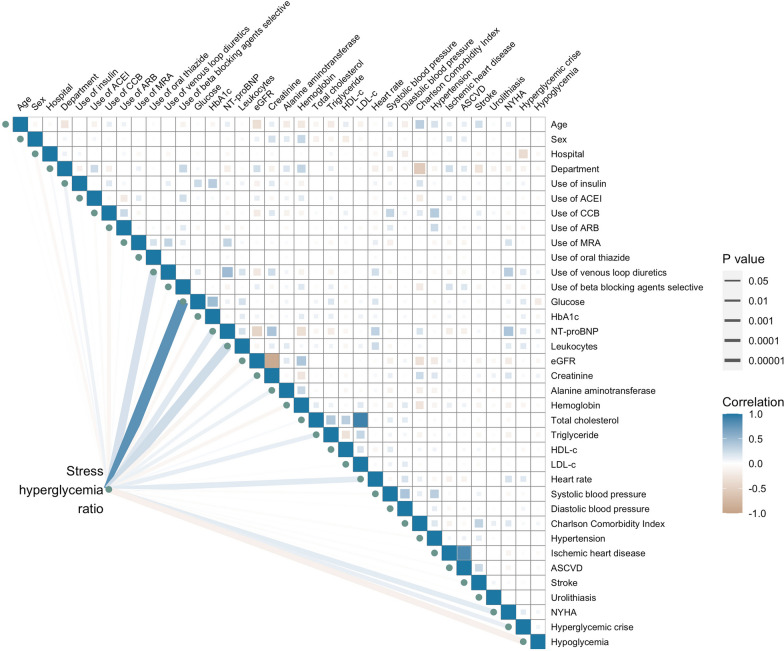
Research design and methods: We identified non-surgical hospitalized patients with heart failure and type 2 diabetes from a large electronic medical record-based database of diabetes in China (WECODe) from 2011 to 2019. We estimated stress hyperglycemia using the stress hyperglycemia ratio (SHR) and its equation, say admission blood glucose/[(28.7 × HbA1c)- 46.7]. The primary outcomes included the composite cardiac events (combination of death during hospitalization, requiring cardiopulmonary resuscitation, cardiogenic shock, and the new episode of acute heart failure during hospitalization), major acute kidney injury (AKI stage 2 or 3), and major systemic infection.
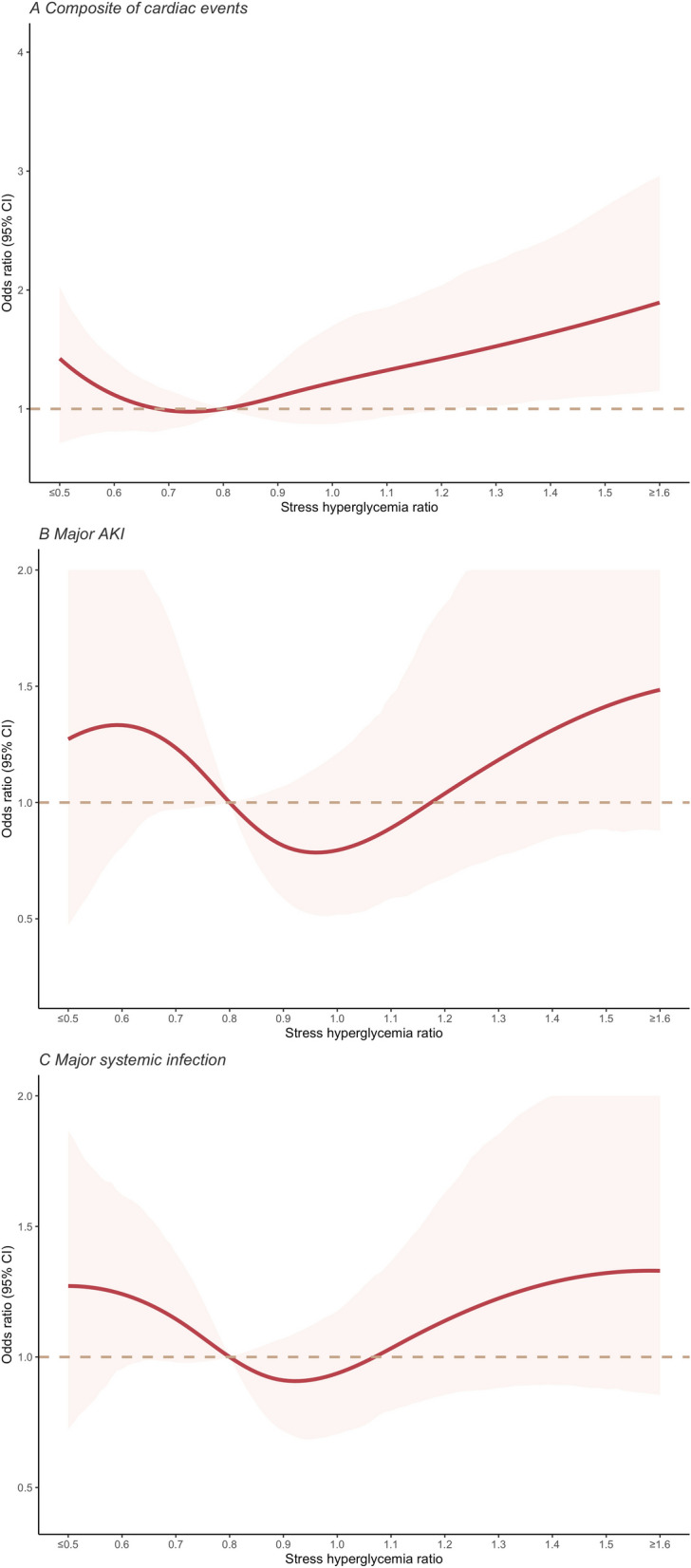
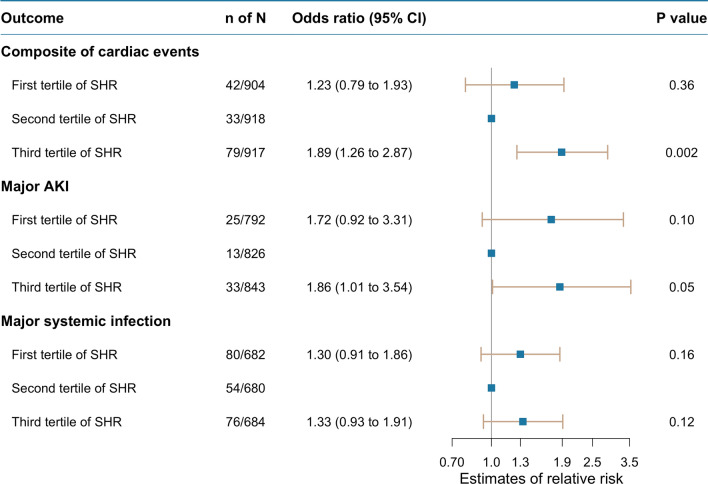
Results: Of 2875 eligible Chinese adults, SHR showed U-shaped associations with composite cardiac events, major AKI, and major systemic infection. People with SHR in the third tertile (vs those with SHR in the second tertile) presented higher risks of composite cardiac events ([odds ratio, 95% confidence interval] 1.89, 1.26 to 2.87) and major AKI (1.86, 1.01 to 3.54). In patients with impaired kidney function at baseline, both SHR in the first and third tertiles anticipated higher risks of major AKI and major systemic infection.
Conclusions: Both high and low SHR indicates poor prognosis during hospitalization in non-surgical patients with heart failure and type 2 diabetes.
Keywords: Acute kidney injury; Cardiovascular events; Death; Heart failure; Hospitalization; Stress hyperglycemia; Type 2 diabetes.
© 2022. The Author(s).
Conflict of interest statement
All authors have completed the ICMJE's Uniform Disclosure Form for Potential Conflicts of Interest. No potential conflicts of interest relevant to this article were reported.
Figures
References
Publication types
MeSH terms
LinkOut - more resources
Full Text Sources
Medical
