


Zebrafish model of RERE syndrome recapitulates key ophthalmic defects that are rescued by small molecule inhibitor of shh signaling
- PMID: 36576487
- PMCID: PMC11528340
- DOI: 10.1002/dvdy.561
Zebrafish model of RERE syndrome recapitulates key ophthalmic defects that are rescued by small molecule inhibitor of shh signaling
Abstract
Background: RERE is a highly conserved transcriptional co-regulator that is associated with a human neurodevelopmental disorder with or without anomalies of the brain, eye, or heart (NEDBEH, OMIM: 616975).
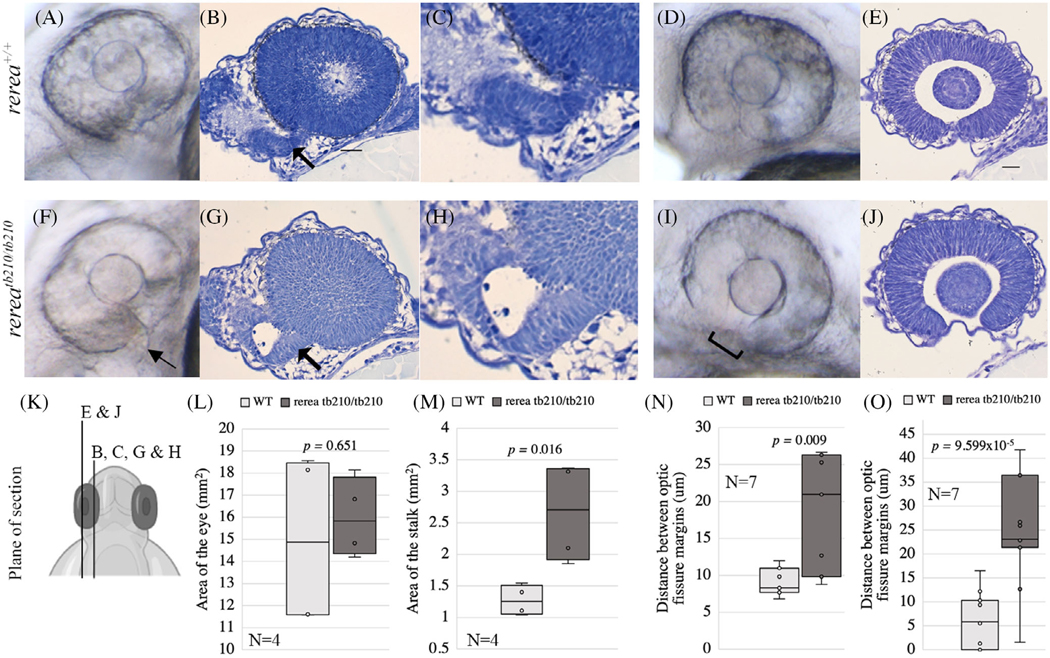
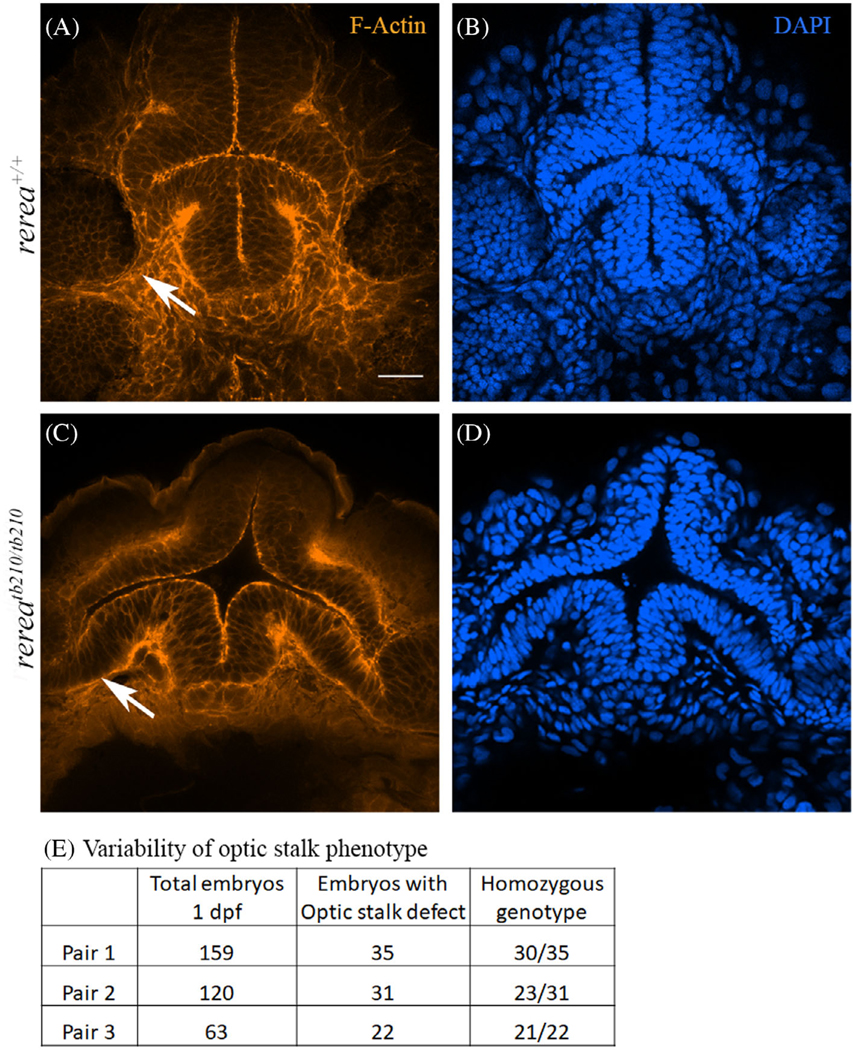
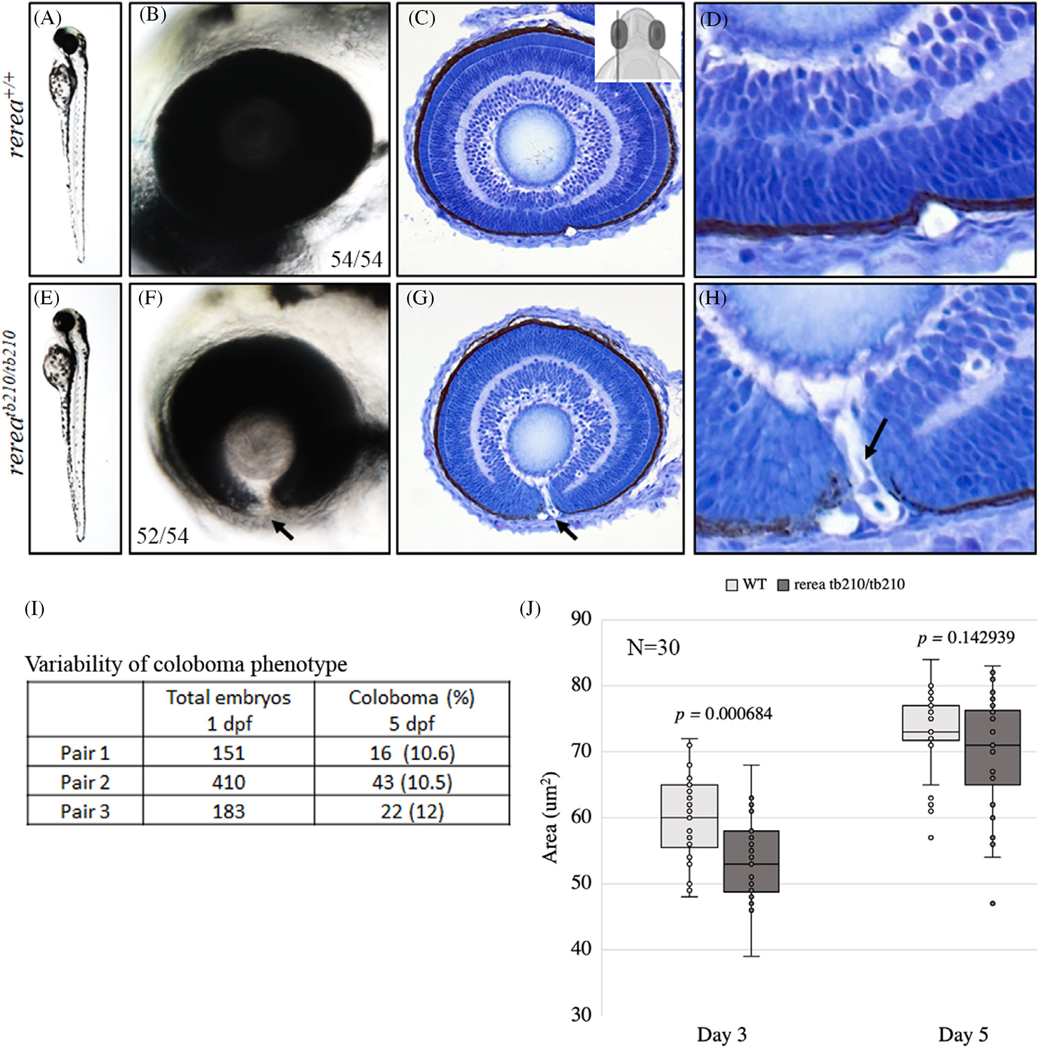
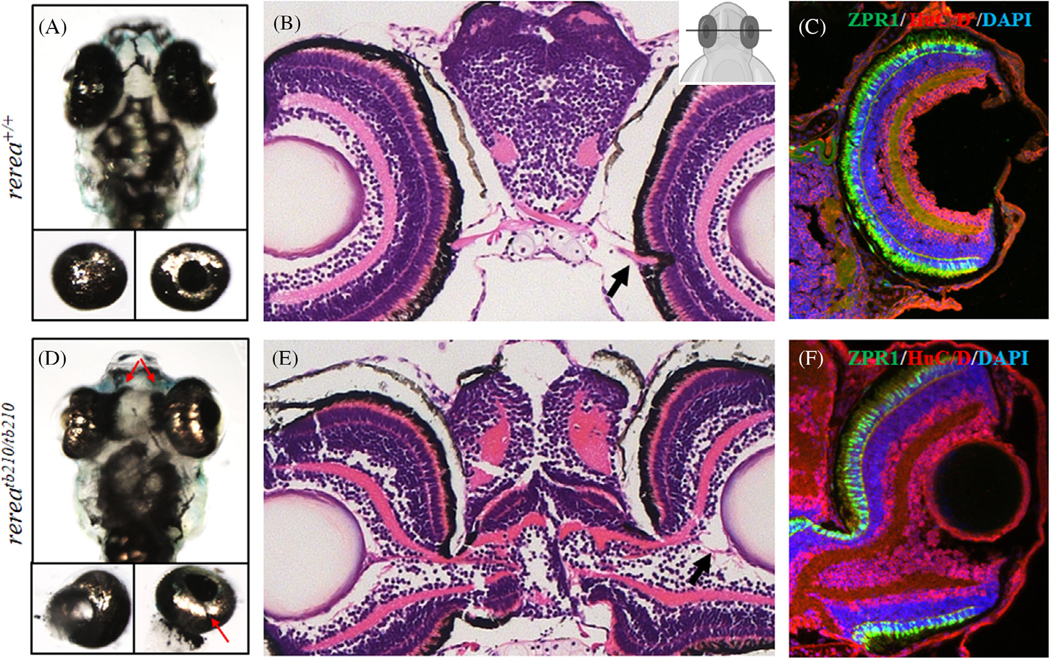
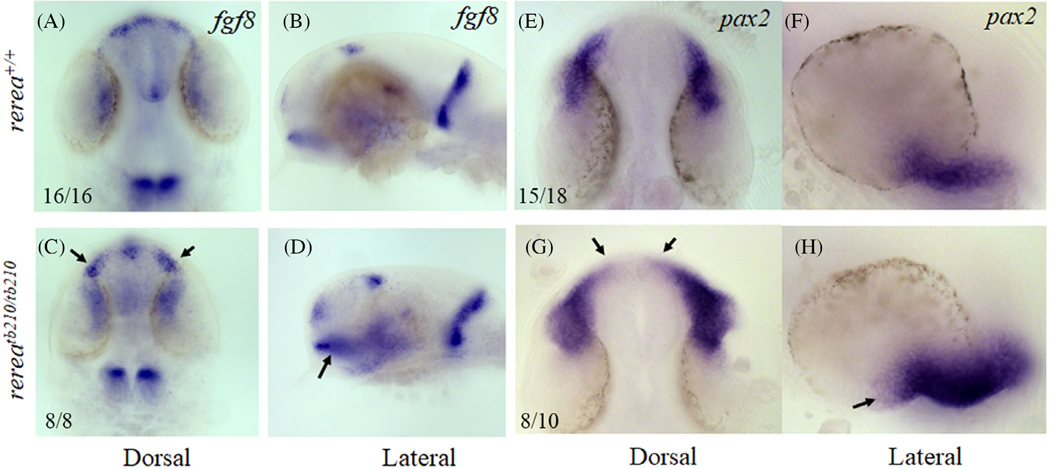
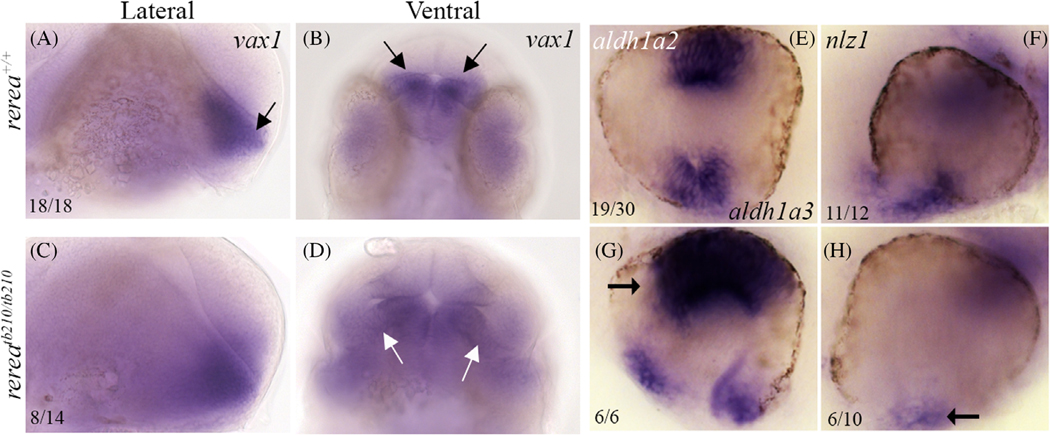
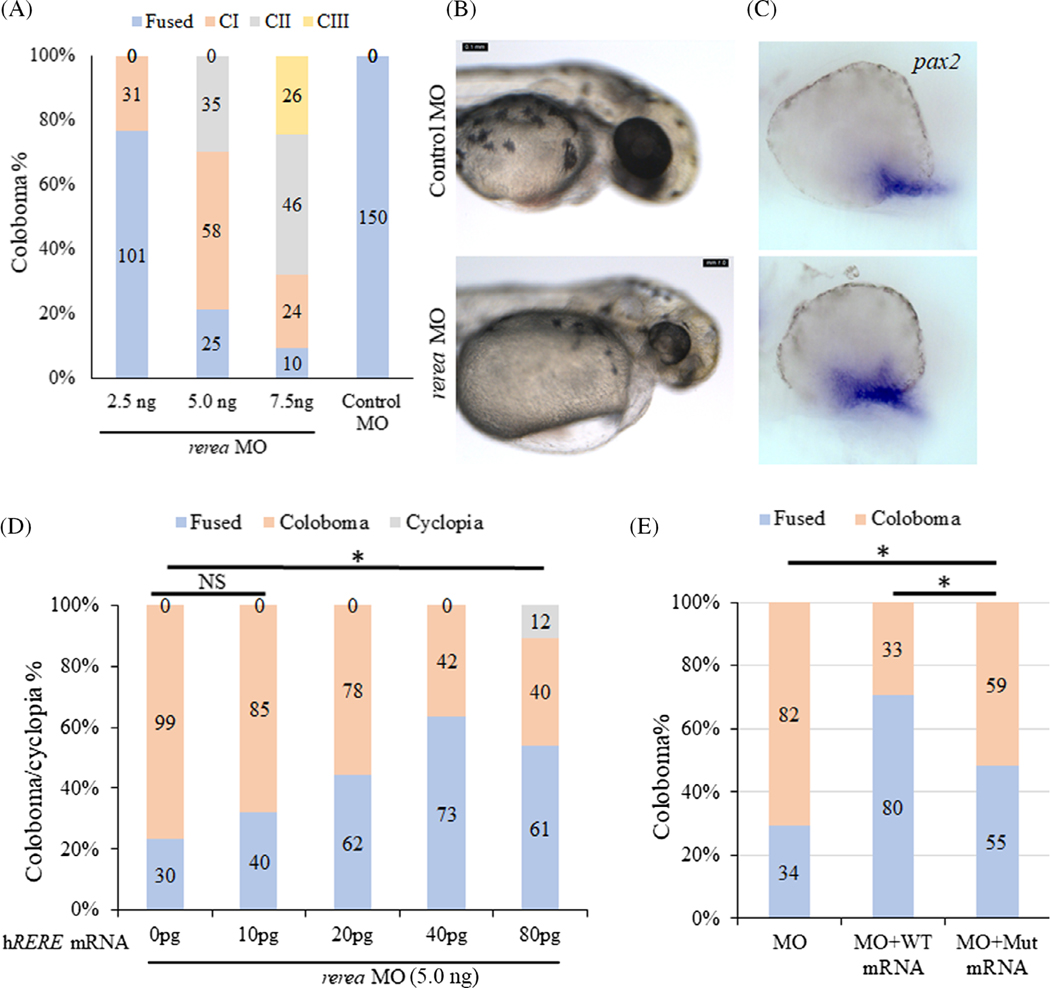
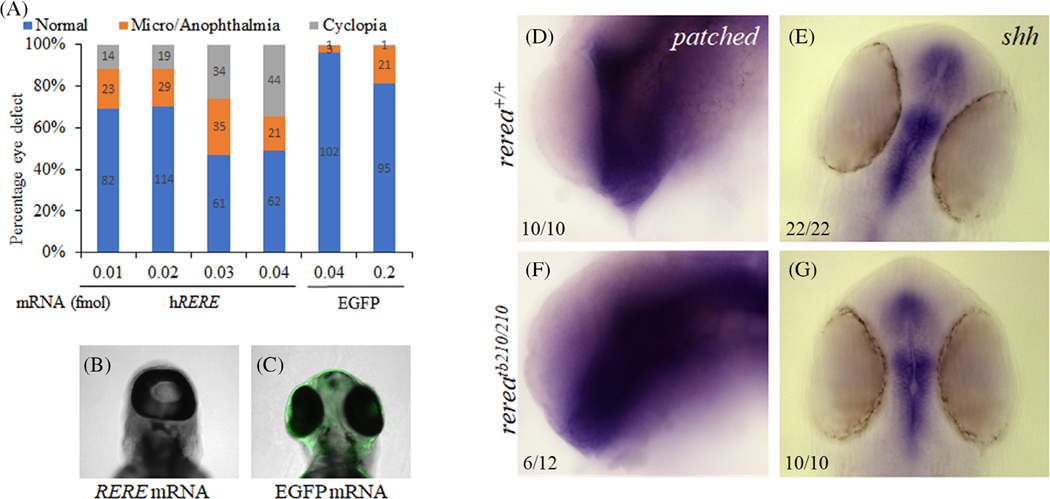
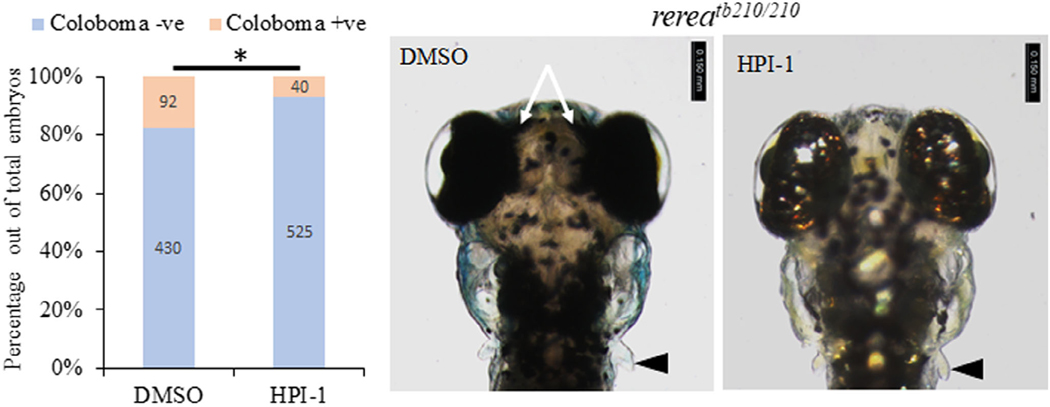
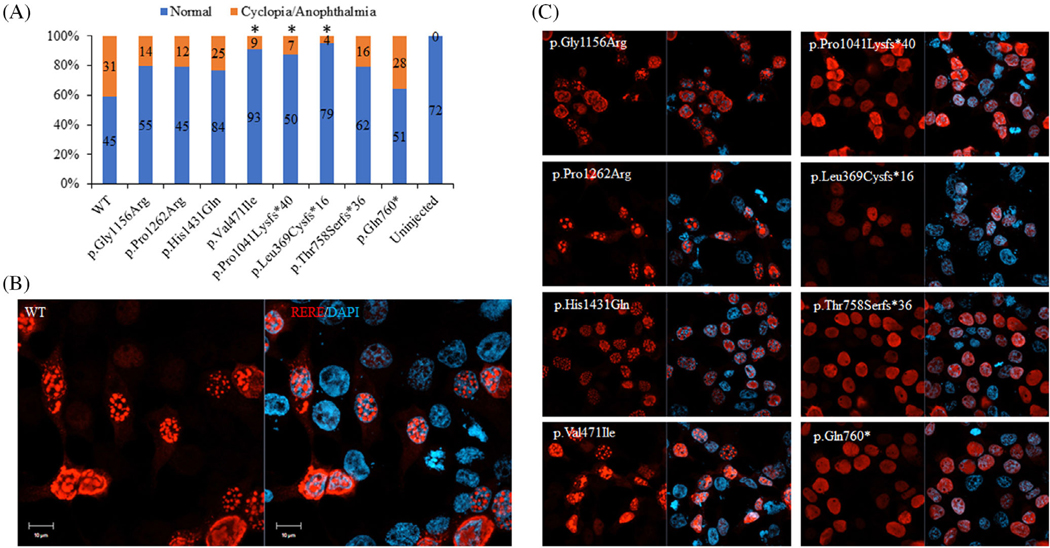
Results: We show that the zebrafish rerea mutant (babyface) robustly recapitulates optic fissure closure defects resulting from loss of RERE function, as observed in humans. These defects result from expansion of proximal retinal optic stalk (OS) and reduced expression of some of the ventral retinal fate genes due to deregulated protein signaling. Using zebrafish and cell-based assays, we determined that NEDBEH-associated human RERE variants function as hypomorphs in their ability to repress shh signaling and some exhibit abnormal nuclear localization. Inhibiting shh signaling by the protein inhibitor HPI-1 rescues coloboma, confirming our observation that coloboma in rerea mutants is indeed due to deregulation of shh signaling.
Conclusions: Zebrafish rerea mutants exhibit OS and optic fissure closure defects. The optic fissure closure defect was rescued by an shh signaling inhibitor, suggesting that this defect could arise due to deregulated shh signaling.
Keywords: RERE and SHH; coloboma; optic fissure; optic stalk.
Published 2022. This article is a U.S. Government work and is in the public domain in the USA. Developmental Dynamics published by Wiley Periodicals LLC on behalf of American Association for Anatomy.
Conflict of interest statement
CONFLICT OF INTEREST
The authors declare no competing financial interests.
Figures
References
Publication types
MeSH terms
Substances
Grants and funding
LinkOut - more resources
Full Text Sources
Molecular Biology Databases
