


Should Inflammatory Bowel Disease Clinicians Provide Their Patients with e-Health Resources? Patients' and Professionals' Perspectives
- PMID: 36576850
- PMCID: PMC10589484
- DOI: 10.1089/tmj.2022.0425
Should Inflammatory Bowel Disease Clinicians Provide Their Patients with e-Health Resources? Patients' and Professionals' Perspectives
Abstract
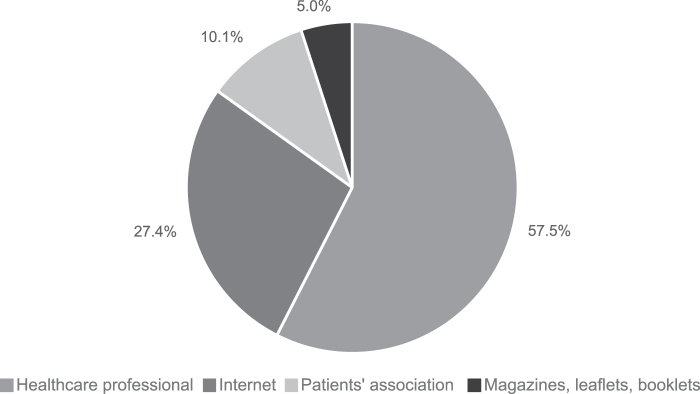
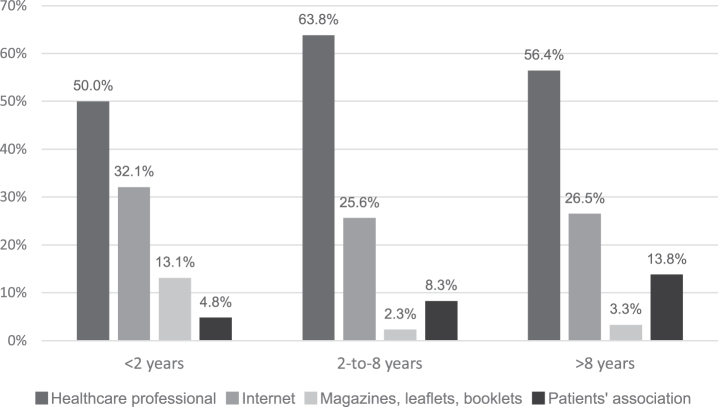
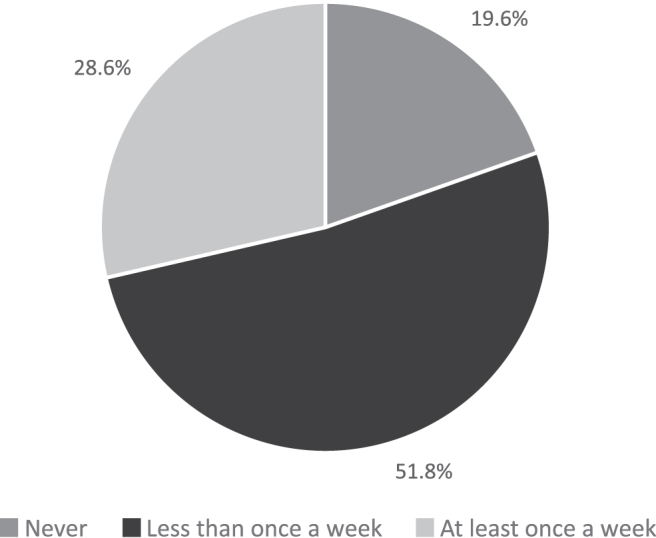
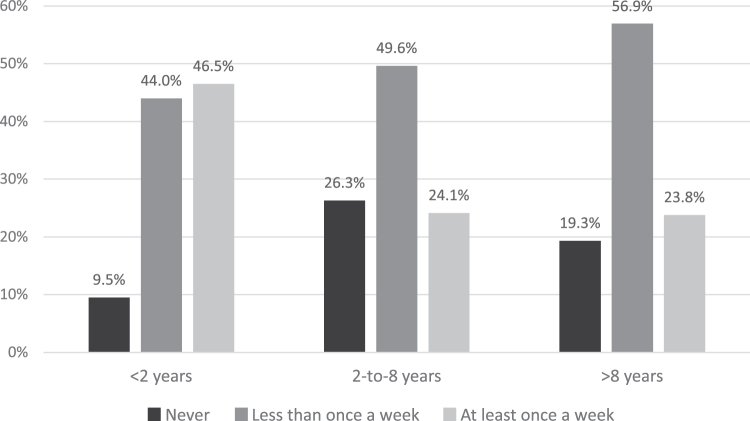
Introduction: The internet is emerging as a source of information for patients with inflammatory bowel disease (IBD). However, it is not always reliable and may cause anxiety. We aim to assess patients' information habits and patients' and professionals' perceptions of a national website integrated as an educational resource for the IBD unit. Methods: Patients aged 18-65 years, comfortable with the internet, and attending follow-ups at participating IBD units (March-June 2019) and their professionals were invited to evaluate a recommended website through an online survey. Results: Three hundred eighty-nine patients and 95 professionals completed the survey. The internet (n = 109; 27.4%) was the second preferred source of information after the health care team (n = 229; 57.5%). Eighty percent of patients searched the internet for information on their disease and 28.6% did so at least once a week (n = 114), especially newly diagnosed ones (<2 years). Patients valued a website recommended by their professional (n = 379; 95.2%) and endorsed by the National Working Group (n = 377; 94.7%). They would attend online educational initiatives on the website (n = 279; 70.1%) and complete periodical surveys to improve its usefulness (n = 338; 84.9%). According to IBD professionals, this type of website is the best patient source of supplementary information (n = 76; 80%) and they "prescribe" it to most patients (67.0 ± 25.2%), especially the newly diagnosed patients (52.7 ± 26.5%). It effectively integrates routine face-to-face education (n = 95; 100%). Conclusions: Patients of IBD units, especially newly diagnosed ones, appreciate a trusted e-Health resource to back up professional information. The favorable opinion of patients and professionals will allow its use in training interventions.
Keywords: digital health; digital health resources; e-Health; inflammatory bowel disease; online health; patient education; telemedicine; web application; website.
Conflict of interest statement
A.E. has participated as a speaker, trainer, or consultant in projects funded by Takeda, Janssen, AbbVie, Pfizer, and MSD Spain. M.C. has participated as a speaker, trainer, or consultant in projects funded by MSD Spain, AbbVie, Takeda, Janssen, Pfizer, Dr. Falk, Faes Farma, Ferring, and Tillotts. N.M. has participated as a speaker in projects funded by Takeda, Janssen, and AbbVie. None of the other coauthors has any conflicts of interest to declare.
Figures
References
MeSH terms
LinkOut - more resources
Full Text Sources
