


Current distribution monitoring enables quench and damage detection in superconducting fusion magnets
- PMID: 36577760
- PMCID: PMC9797567
- DOI: 10.1038/s41598-022-26592-2
Current distribution monitoring enables quench and damage detection in superconducting fusion magnets
Abstract
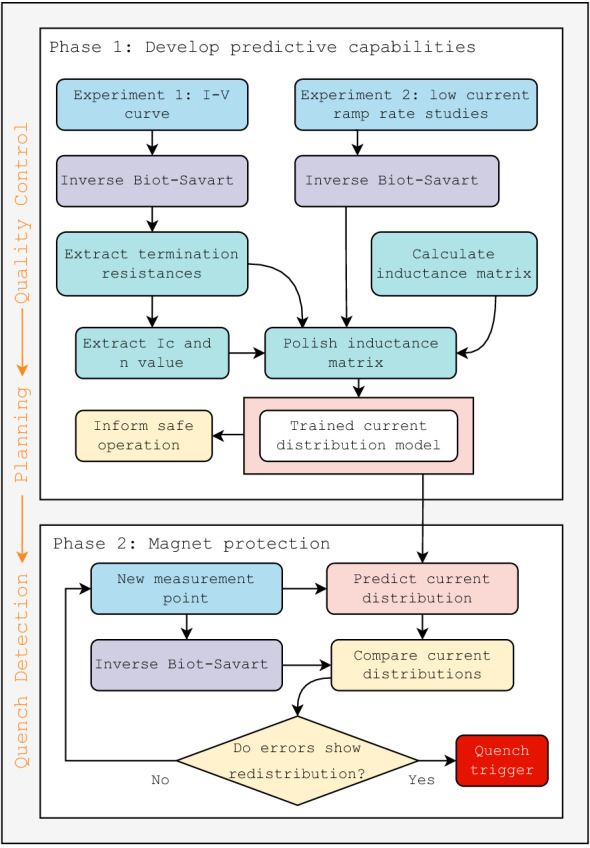
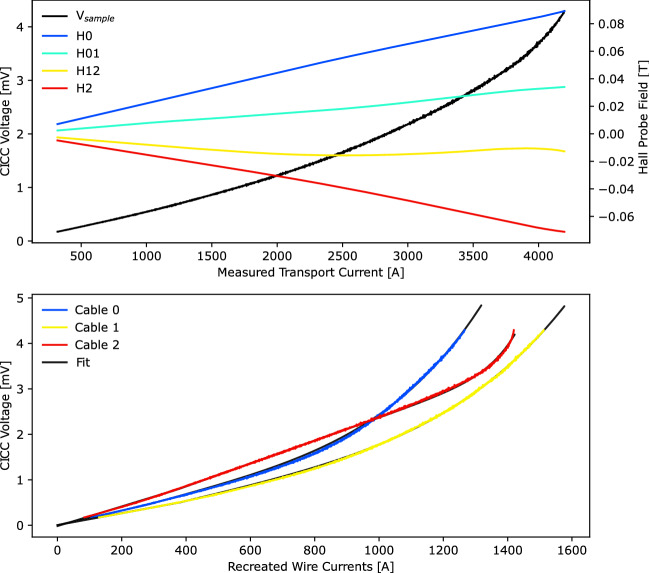
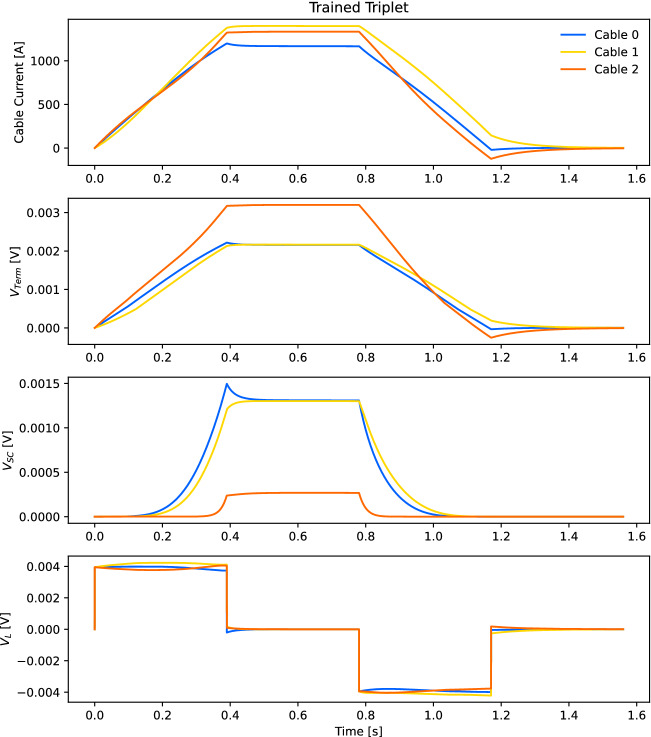
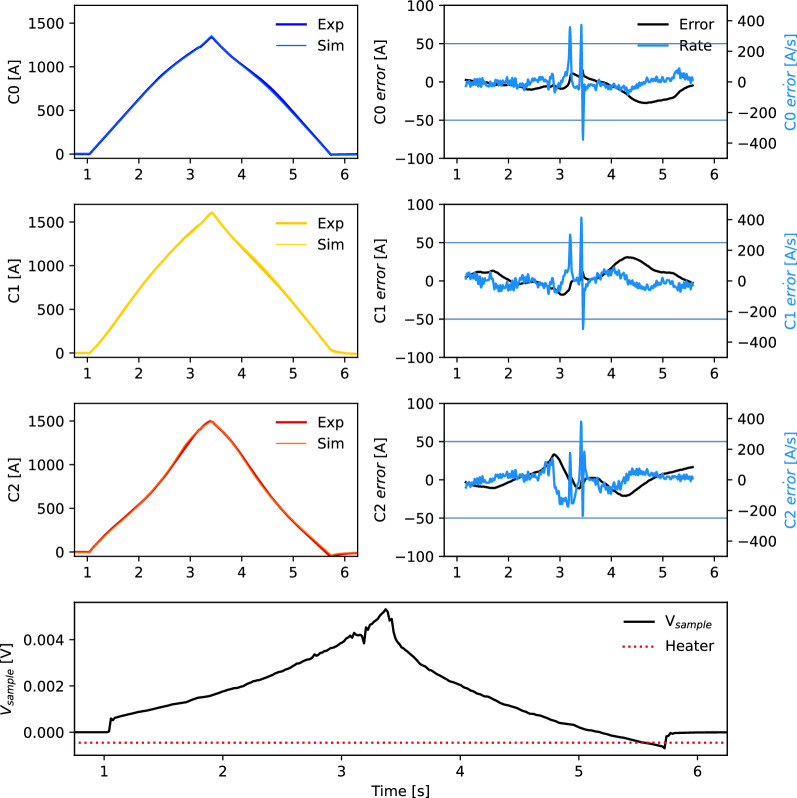
Fusion magnets made from high temperature superconducting ReBCO CORC® cables are typically protected with quench detection systems that use voltage or temperature measurements to trigger current extraction processes. Although small coils with low inductances have been demonstrated, magnet protection remains a challenge and magnets are typically operated with little knowledge of the intrinsic performance parameters. We propose a protection framework based on current distribution monitoring in fusion cables with limited inter-cable current sharing. By employing inverse Biot-Savart techniques to distributed Hall probe arrays around CORC® Cable-In-Conduit-Conductor (CICC) terminations, individual cable currents are recreated and used to extract the parameters of a predictive model. These parameters are shown to be of value for detecting conductor damage and defining safe magnet operating limits. The trained model is then used to predict cable current distributions in real-time, and departures between predictions and inverse Biot-Savart recreated current distributions are used to generate quench triggers. The methodology shows promise for quality control, operational planning and real-time quench detection in bundled CORC® cables for compact fusion reactors.
© 2022. The Author(s).
Conflict of interest statement
The authors declare no competing interests.
Figures



References
-
- Bruzzone P, et al. High temperature superconductors for fusion magnets. Nucl. Fusion. 2018;58:103001. doi: 10.1088/1741-4326/aad835. - DOI
-
- Mitchell N, et al. Superconductors for fusion: a roadmap. Supercond. Sci. Technol. 2021;34:103001. doi: 10.1088/1361-6668/ac0992. - DOI
-
- Ito S, Tamura H, Yanagi N, Hashizume H. Low-resistance joint development for segment-fabrication of high-temperature superconducting fusion magnets. Nucl. Fusion. 2021;61:115002. doi: 10.1088/1741-4326/ac269e. - DOI
-
- Sorbom B, et al. Arc: A compact, high-field, fusion nuclear science facility and demonstration power plant with demountable magnets. Fusion Eng. Des. 2015;100:378–405. doi: 10.1016/j.fusengdes.2015.07.008. - DOI
Grants and funding
LinkOut - more resources
Full Text Sources
Miscellaneous
