


Atypical cell cycle profile of mouse embryonic stem cell is regulated by classic oncogenic and tumor suppressive genes in vitro
- PMID: 36578422
- PMCID: PMC9791322
- DOI: 10.1016/j.heliyon.2022.e11979
Atypical cell cycle profile of mouse embryonic stem cell is regulated by classic oncogenic and tumor suppressive genes in vitro
Abstract
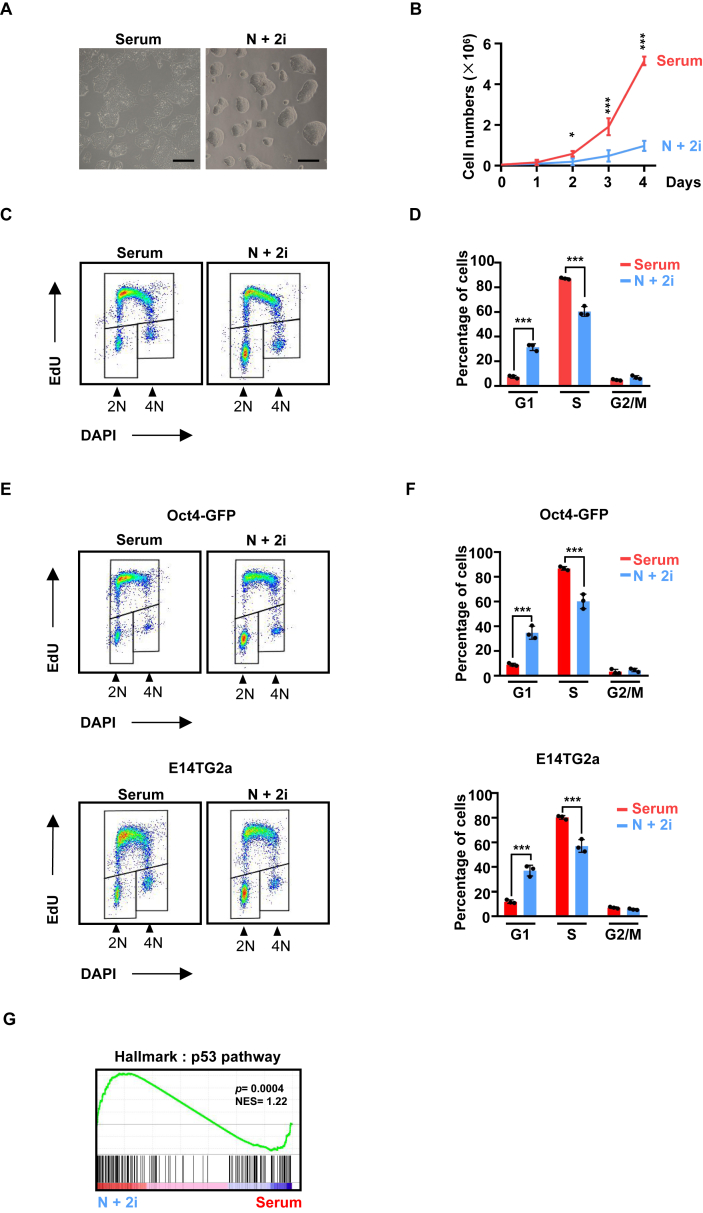
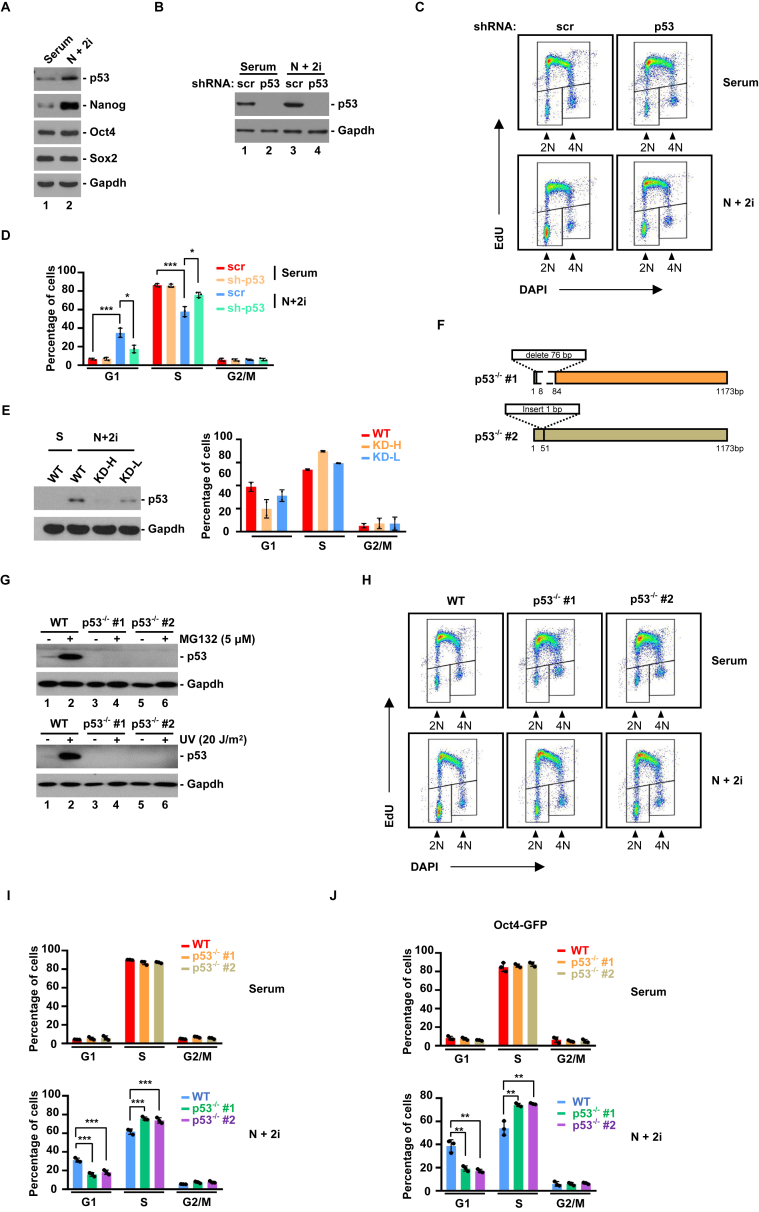
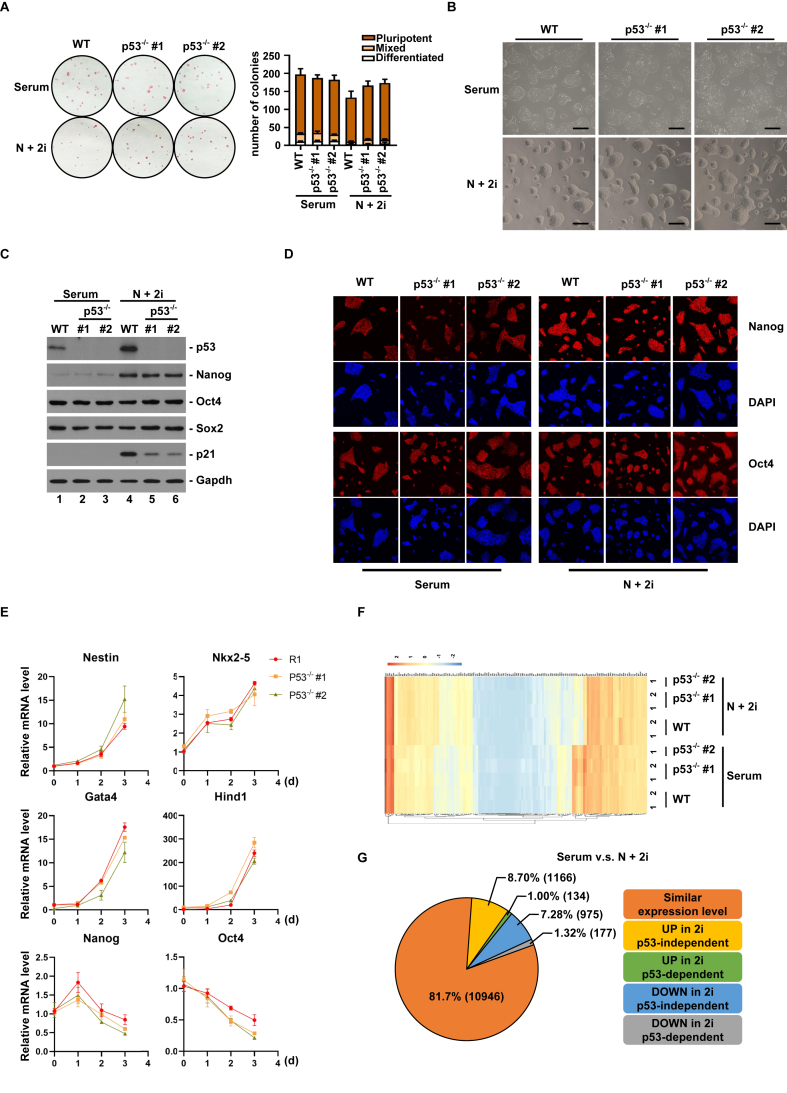
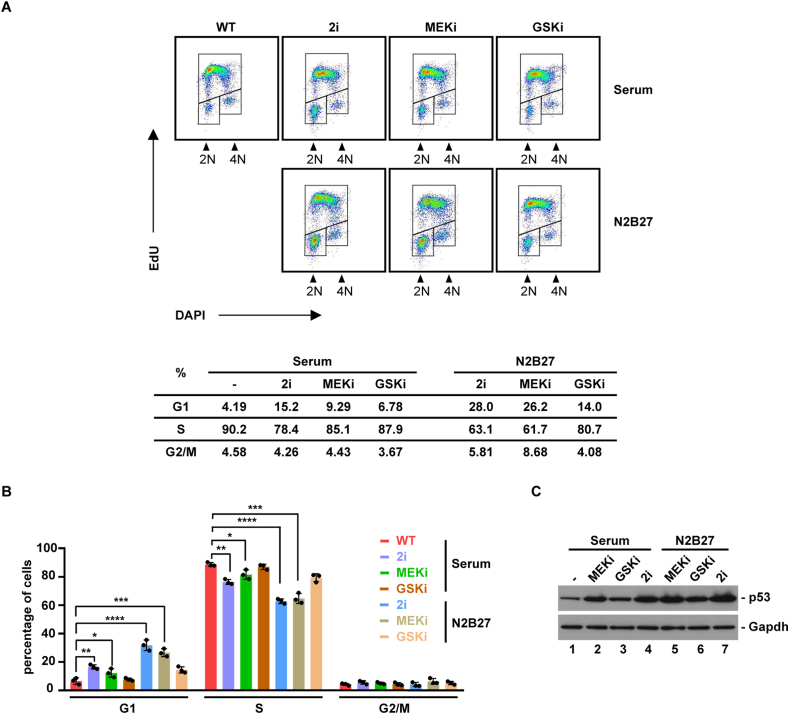
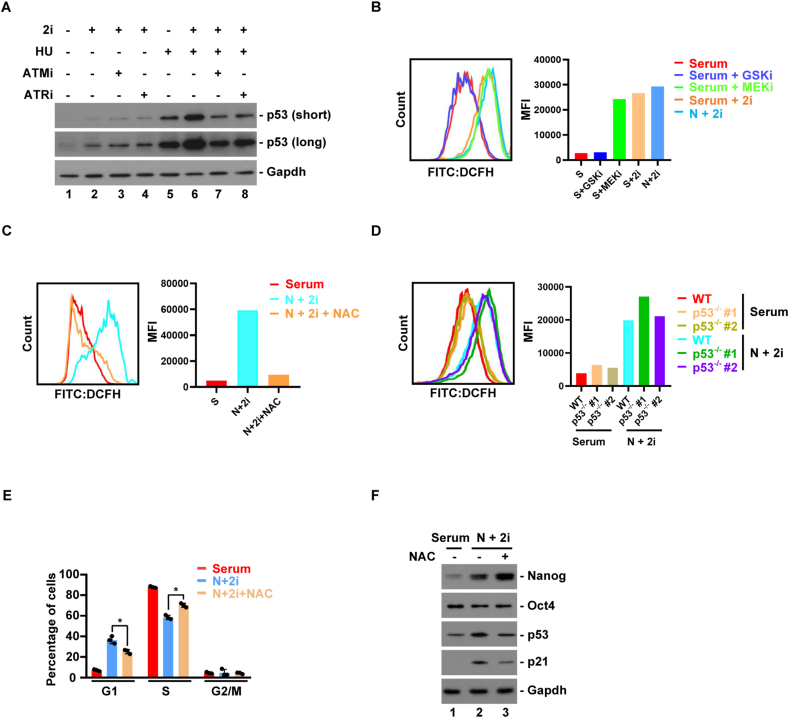
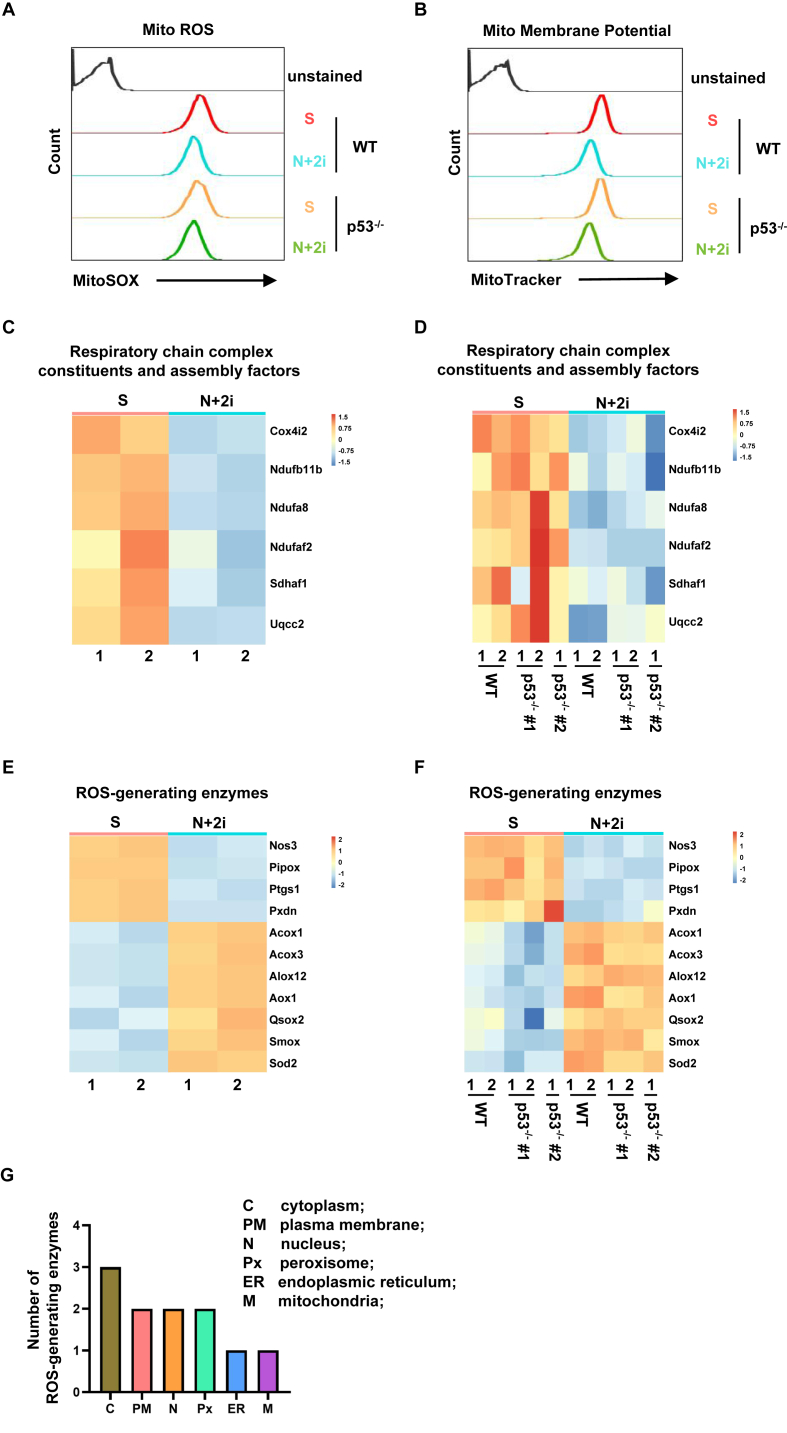
Embryonic stem cells (ESCs) exhibit an unusual cell cycle profile containing a short G1 phase. Whether this feature is required to maintain pluripotency is a matter of debate. Here, we report that the short G1 phase is a consequence of MEK1/2 kinase-mediated promotion of G1/S transition, but not necessarily coupled with pluripotency maintenance. We find that compared to primed ESCs, naïve ESCs exhibit a significantly longer G1 phase due to the inhibition of MEK1/2 kinases. MEK1/2 inhibition increases intracellular level of reactive oxygen species (ROS), leading to the stabilization of p53 protein. The genetic ablation of p53 largely converts the cell cycle profile of naïve ESCs to that of primed ESCs. These results demonstrate that pluripotency and proliferation are separable cellular events, and the short G1 phase of primed ESCs is a manifestation of the intricate interplay between classical oncogenes MEK1/2 and tumor suppressor gene TP53 to promote G1/S transition.
Keywords: Cell cycle; Embryonic stem cell; P53; ROS.
© 2022 The Author(s).
Conflict of interest statement
The authors declare no conflict of interest.
Figures
References
-
- Borghese L., Dolezalova D., Opitz T., Haupt S., Leinhaas A., Steinfarz B., Koch P., Edenhofer F., Hampl A., Brustle O. Inhibition of notch signaling in human embryonic stem cell-derived neural stem cells delays G1/S phase transition and accelerates neuronal differentiation in vitro and in vivo. Stem Cells. 2010;28:955–964. - PubMed
LinkOut - more resources
Full Text Sources
Research Materials
Miscellaneous
