


Experiencing and witnessing disruptive behaviors toward nurses in COVID-19 teams, patient safety, and errors in care
- PMID: 36583655
- PMCID: PMC9880736
- DOI: 10.1111/jnu.12857
Experiencing and witnessing disruptive behaviors toward nurses in COVID-19 teams, patient safety, and errors in care
Abstract
Background: Nurse managers and team co-workers' disruptive behaviors (DBs) are negatively associated with a perceived safe climate. Moreover, DBs are a risk factor for patients' safety. Yet, it remains unknown whether and to what extent these effects were prevalent in COVID-19 wards and among witnesses of DBs.
Design: A cross-sectional study.
Methods: A questionnaire was distributed on social networks and completed by nurses in various Israeli healthcare organizations using snowball sampling between October and December 2021. The questionnaire included seven previously published measures and a question checking whether the participants had worked in a COVID-19 ward. The minimal sample size for any analysis was 236. Hypotheses were tested with correlations and structural equation modeling.
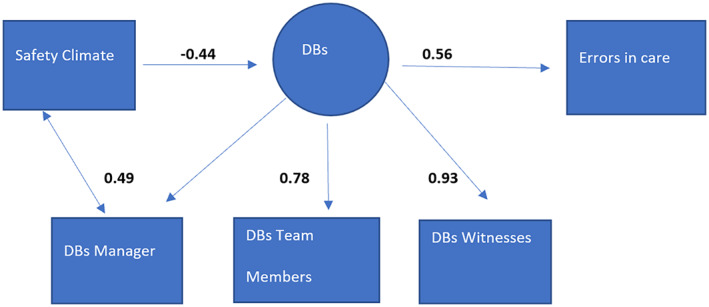
Results: DBs of nurse managers and team co-workers toward nurses were higher in COVID-19 teams. As hypothesized, DBs were negatively correlated with a safe climate and positively with patient safety (fewer errors). The data were consistent with a model suggesting that a safe climate is related to fewer DBs and DBs largely mediate the effects of safe climate on errors. Surprisingly and importantly, the strongest predictor of errors, including preventable mortality, is witnessing DBs and not being a victim of DBs.
Conclusions: DBs may impede open communication and collaboration among co-workers, particularly in COVID-19 teams. This study shows the links between nurse shaping of a safe climate, DBs toward nurses, and patient safety.
Clinical relevance: Nurse managers who create a safe climate and show zero tolerance for DBs could reduce the risk of errors in care.
Keywords: disruptive behaviors; frontline Covid-19 nurses; patient safety; safety climate; team coworkers.
© 2022 Sigma Theta Tau International.
Conflict of interest statement
The authors declare that there is no conflict of interest.
Figures
References
-
- Adams, J. G. , & Walls, R. M. (2020). Supporting the health care workforce during the COVID‐19 global epidemic. JAMA, 323(15), 1439–1440. - PubMed
-
- Aguinis, H. , Pierce, C. A. , & Culpepper, S. A. (2009). Scale coarseness as a methodological artifact: Correcting correlation coefficients attenuated from using coarse scales. Organizational Research Methods, 12, 623–652. 10.1177/1094428108318065 - DOI
-
- Aiken, L. H. , Sloane, D. , Griffiths, P. , Rafferty, A. M. , Bruyneel, L. , McHugh, M. , Maier, C. B. , Moreno‐Casbas, T. , Ball, J. E. , Ausserhofer, D. , Sermeus, W. , & RN4CAST Consortium . (2017). Nursing skill mix in European hospitals: Cross‐sectional study of the association with mortality, patient ratings, and quality of care. BMJ Quality & Safety, 26(7), 559–568. 10.1136/bmjqs-2016-005567 - DOI - PMC - PubMed
-
- Allen, B. C. , Holland, P. , & Reynolds, R. (2015). The effect of bullying on burnout in nurses: The moderating role of psychological detachment. Journal of Advanced Nursing, 71(2), 381–390. - PubMed
MeSH terms
LinkOut - more resources
Full Text Sources
Medical
Research Materials
