


Validating the primary care posttraumatic stress disorder screen for DSM-5 (PC-PTSD-5) in a substance misusing, trauma-exposed, socioeconomically vulnerable population
- PMID: 36584543
- PMCID: PMC9993036
- DOI: 10.1016/j.addbeh.2022.107592
Validating the primary care posttraumatic stress disorder screen for DSM-5 (PC-PTSD-5) in a substance misusing, trauma-exposed, socioeconomically vulnerable population
Abstract
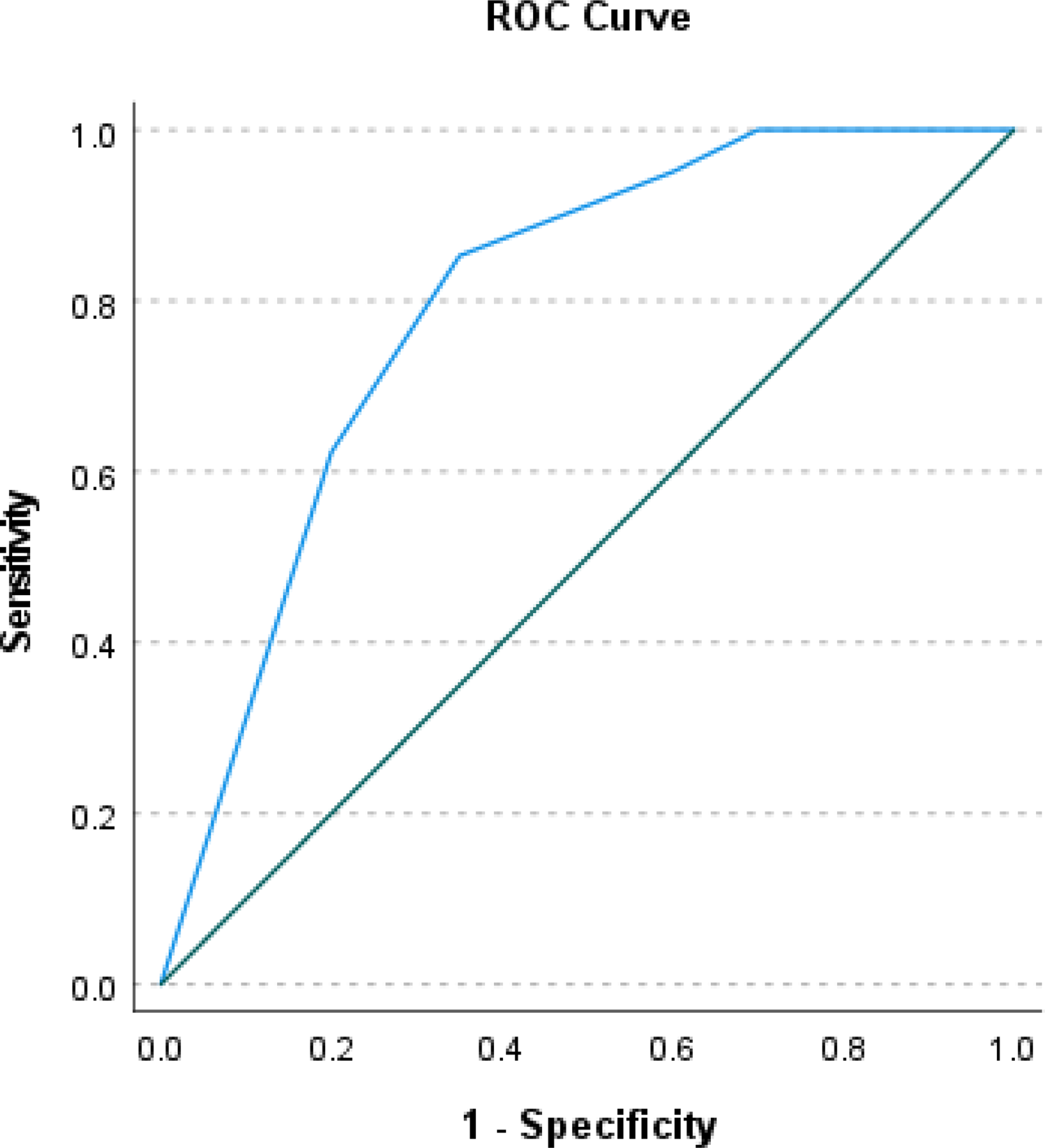
The co-occurrence of substance use disorder (SUD) and posttraumatic stress disorder (PTSD) is common, and is associated with greater severity of symptoms, poorer treatment prognosis, and increased risk of return to substance use following treatment. Screening for PTSD is not routinely implemented in substance use treatment programs, despite clinical relevance. Identifying screening tools that minimize patient burden and allow for comprehensive treatment in this patient population is critical. The current study examined the utility of the Primary Care PTSD Screen for DSM-5 (PC-PTSD-5) in identifying probable PTSD in a predominantly Black sample of 81 socioeconomically disadvantaged substance misusing hospital patients. The majority of the sample (75.3 %; n = 61) were found to meet criteria for probable PTSD using a suggested clinical cut score of 33 on the PTSD Checklist for DSM-5 (PCL-5). Diagnostic utility analyses were completed and determined a cut-score of 5 for the PC-PTSD-5 to demonstrate the best performance (SE = 0.62, κ(1) = 0.22; SP =.80, κ(0) = 0.61; EEF = 0.67, κ(0.5) = 0.32) in this sample. Results provide preliminary support for the use of the PC-PTSD-5 as a brief screening tool for probable PTSD in substance misusing patient populations. Routine use of the PC-PTSD-5 during assessment may be beneficial when treatment planning with those undergoing treatment for SUD because comprehensive assessment and treatment will provide a better chance of long-term recovery.
Keywords: Alcohol; PC-PTSD-5; PTSD; Substance misuse; Substance use; Trauma.
Copyright © 2022 Elsevier Ltd. All rights reserved.
Conflict of interest statement
Declaration of Competing Interest The authors declare that they have no known competing financial interests or personal relationships that could have appeared to influence the work reported in this paper.
Figures
References
-
- Agresti A. (2013). Categorical Data Analysis (3rd ed.). John Wiley & Sons.
-
- Bohn MJ., Babor TF., & Kranzler HR. (1991). Validity of the Drug Abuse Screening Test (DAST-10) in inpatient substance abusers: Problems of drug dependence. Proceedings of the 53rd Annual Scientific Meeting, The Committee on Problems of Drug Dependence, Inc., DHHS Publication No. (ADM) 92–1888, NIDA Research Monograph, 119, 233.
-
- Bovin MJ, Kimerling R, Weathers FW, Prins A, Marx BP, Post EP, & Schnurr PP (2021). Diagnostic Accuracy and Acceptability of the Primary Care Posttraumatic Stress Disorder Screen for the Diagnostic and Statistical Manual of Mental Disorders (Fifth Edition) Among US Veterans. JAMA Network Open, 4(2), e2036733–e2036733. 10.1001/JAMANETWORKOPEN.2020.36733 - DOI - PMC - PubMed
-
- Bovin MJ, Marx BP, Weathers FW, Gallagher MW, Rodriguez P, Schnurr PP, & Keane TM (2016). Psychometric properties of the PTSD Checklist for Diagnostic and Statistical Manual of Mental Disorders–Fifth Edition (PCL-5) in veterans. Psychological Assessment, 28(11), 1379–1391. 10.1037/pas0000254 - DOI - PubMed
