


Clinical characteristics, impairment, and psychiatric morbidity in 102 youth with misophonia
- PMID: 36584703
- PMCID: PMC9878468
- DOI: 10.1016/j.jad.2022.12.083
Clinical characteristics, impairment, and psychiatric morbidity in 102 youth with misophonia
Erratum in
-
Corrigendum to "Clinical characteristics, impairment, and psychiatric morbidity in 102 youth with misophonia" [J. Affect. Disord. volume 324 (2023) 395-402].J Affect Disord. 2024 Mar 1;348:410. doi: 10.1016/j.jad.2023.11.045. Epub 2023 Nov 30. J Affect Disord. 2024. PMID: 38040623 No abstract available.
Abstract
Background: There is little information on the clinical presentation, functional impact, and psychiatric characteristics of misophonia in youth, an increasingly recognized syndrome characterized by high emotional reactivity to certain sounds and associated visual stimuli.
Method: One-hundred-two youth (8-17 years-old) with misophonia and their parents were recruited and compared with 94 youth with anxiety disorders. Participants completed validated assessments of misophonia severity, quality of life, as well as psychiatric symptoms and diagnoses.
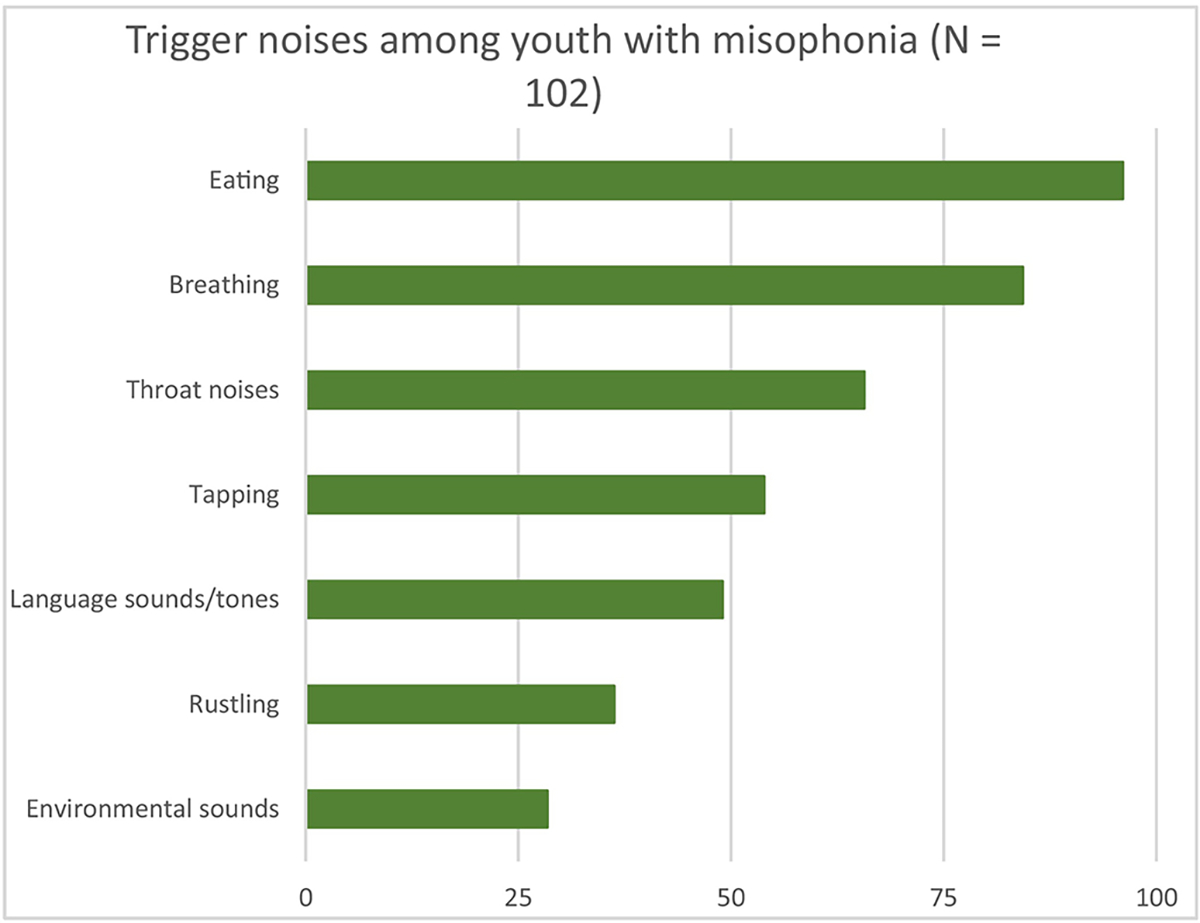
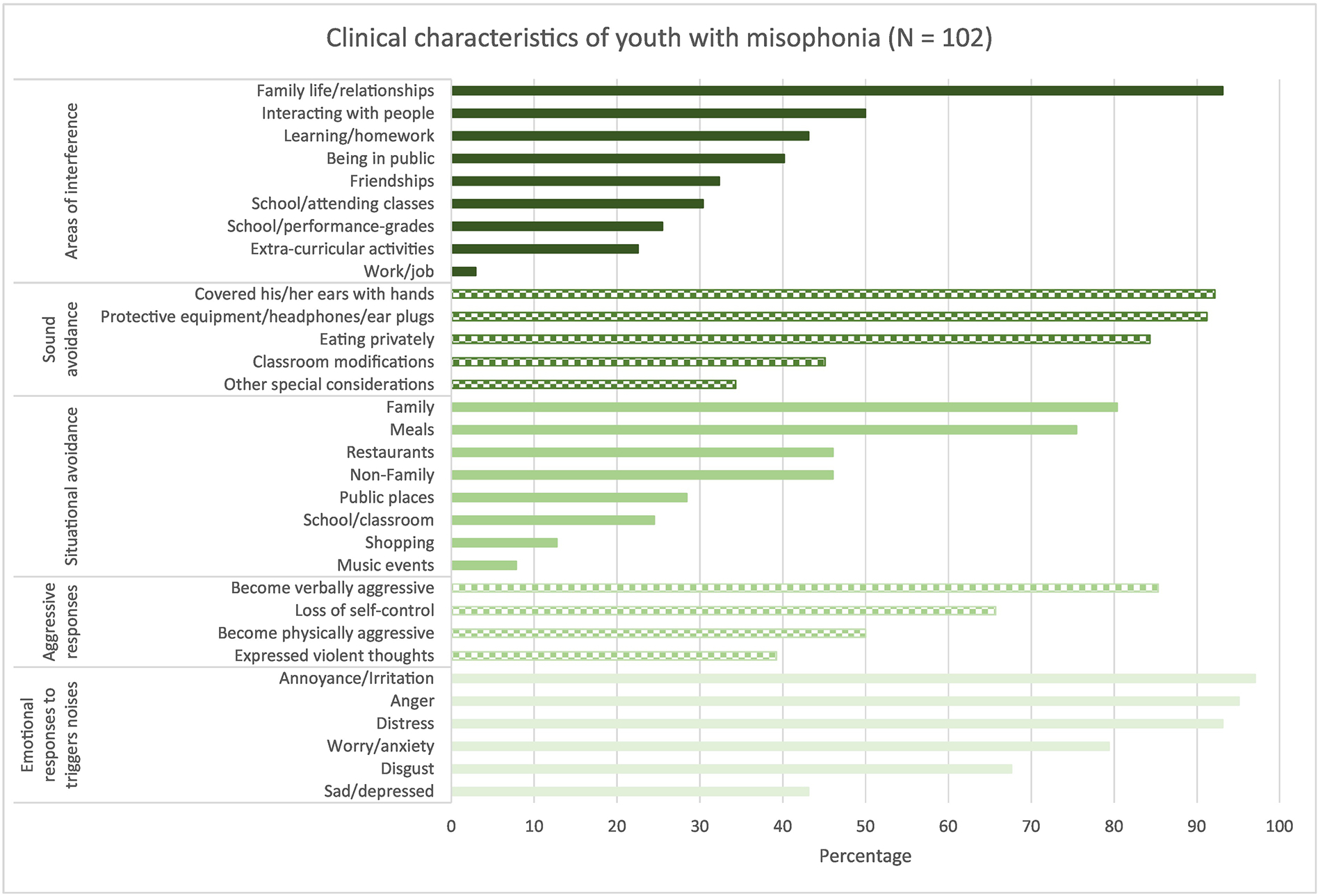
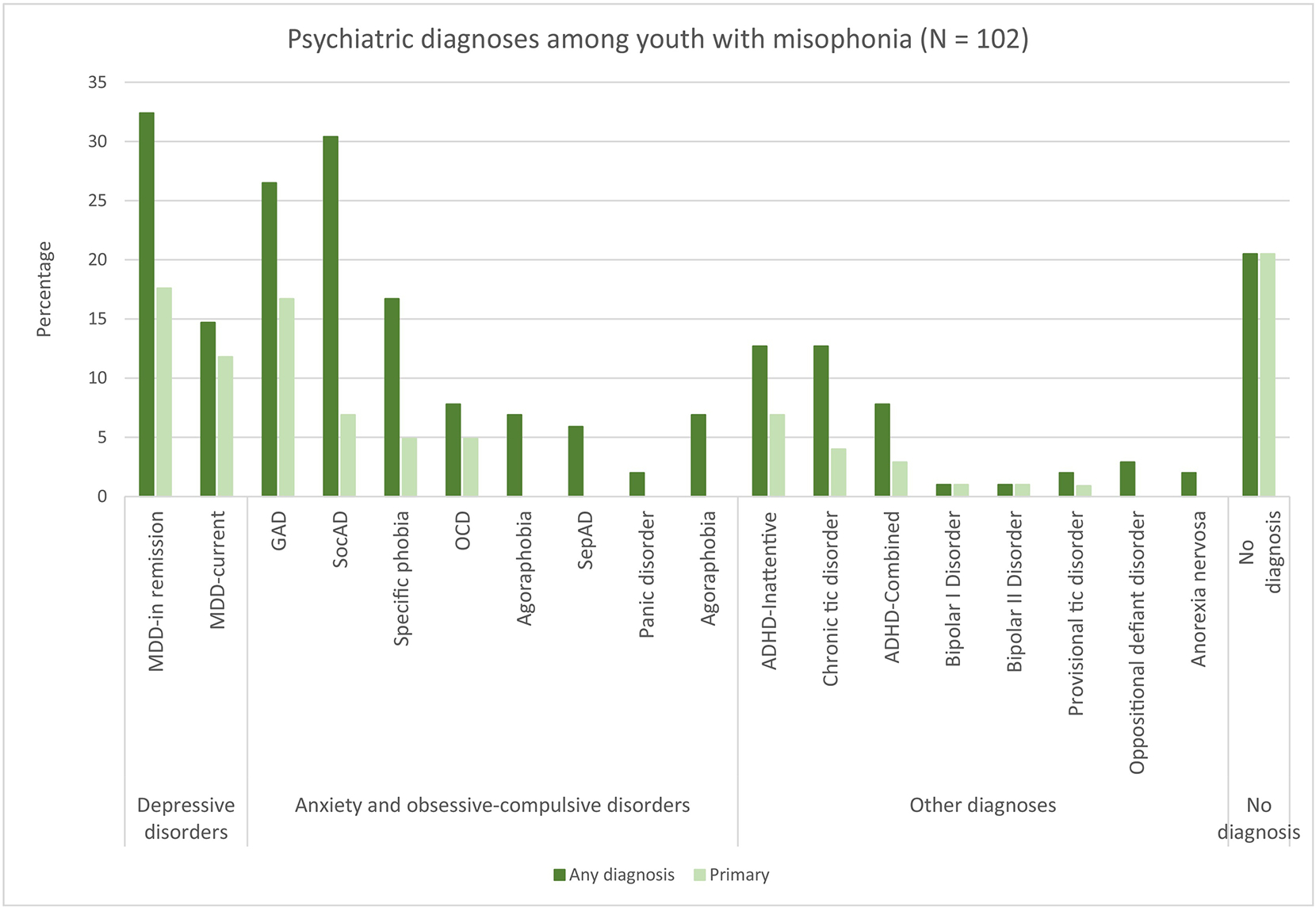
Results: The most common misophonia triggers included eating (96 %), breathing (84 %), throat sounds (66 %), and tapping (54 %). Annoyance/irritation, verbal aggression, avoidance behavior, and family impact were nearly universal. Misophonia severity was associated with internalizing symptoms, child-reported externalizing behaviors, and poorer quality of life. High rates of comorbidity with internalizing and neurodevelopmental disorders were found. Quality of life and externalizing behaviors were not significantly different between misophonia and anxiety samples; internalizing symptoms and autism characteristics were significantly higher among youth with anxiety disorders.
Limitations: This self-selected sample was characterized by limited multicultural diversity.
Conclusions: This study presents misophonia as a highly impairing psychiatric syndrome. Future interdisciplinary work should clarify the mechanisms of misophonia, establish evidence-based treatments, and extend these findings to randomly sampled and more culturally diverse populations.
Keywords: Adolescents; Assessment; Children; Comorbidity; Phenomenology; Sensory sensitivity; Treatment.
Copyright © 2023 Elsevier B.V. All rights reserved.
Conflict of interest statement
Conflict of interest The authors declare the following financial interests/personal relationships which may be considered as potential competing interests: Drs. Guzick, Storch, Lewin, and Lijffijt receive grant support from the Ream Foundation. Dr. Guzick also receives grant funding from the Texas Higher Education Coordinating Board unrelated to this study. Dr. Lijffijt has served as principal investigator for studies funded by NeuroRx and VistaGen Therapeutics. Dr. Goodman has received donated devices from Medtronic and is a consultant for Biohaven Pharmaceuticals. Dr. Lewin has unrelated grant support from the Centers for Disease Control and Prevention and Tourette Association of America. He receives editorial and/or publishing honorarium from Springer and Elsevier. He is on the Scientific Advisory Board for the International OCD Foundation and is a Tourette Centers of Excellence Director. He may receive travel compensation for service to the American Psychological Commission on Accreditation or Board of Directors for the American Board of Clinical Child and Adolescent Psychiatry. Dr. Storch discloses the following relationships: consultant for Biohaven Pharmaceuticals; Book royalties from Elsevier, Springer, American Psychological Association, Wiley, Oxford, Kingsley, and Guilford; Stock valued at less than $5000 from NView; Research support from NIH, IOCDF, Ream Foundation, and Texas Higher Education Coordinating Board.
Figures
References
-
- Achenbach TM, Rescorla L, 2001. Manual for the ASEBA School-Age Forms & Profiles. University of Vermont, Research Center for Children, Youth, & Families, Burlington, VT.
-
- Boyle MH, Duncan L, Georgiades K, Bennett K, Gonzalez A, Van Lieshout RJ, Szatmari P, MacMillan HL, Kata A, Ferro MA, Lipman EL, Janus M, 2017. Classifying child and adolescent psychiatric disorder by problem checklists and standardized interviews. International Journal of Methods in Psychiatric Research 26, e1544. 10.1002/mpr.1544 - DOI - PMC - PubMed
-
- Bruni TP, 2014. Test Review: Social Responsesiveness Scale-Second Edition (SRS-2). Journal of Psychological Assessment 32, 365–369. 10.1177/0734282913517525 - DOI
Publication types
MeSH terms
Supplementary concepts
Grants and funding
LinkOut - more resources
Full Text Sources
Medical
