Review
. 2023 Feb:78:102670.
doi: 10.1016/j.conb.2022.102670. Epub 2022 Dec 29.

The age-dependent immune response to ischemic stroke

Affiliations
Review

The age-dependent immune response to ischemic stroke

Mary Claire Tuohy et al. Curr Opin Neurobiol. 2023 Feb.

Abstract

Stroke is a devastating cause of global morbidity and mortality. Ischemic brain injury triggers a profound local and systemic immune response that participates in stroke pathophysiology. In turn, this immune response has emerged as a potential therapeutic target. In order to maximize its therapeutic potential, it is critical to understand how the immune response to ischemic brain injury is affected by age - the strongest non-modifiable risk factor for stroke. The development of multi-omics and single-cell technologies has provided a more comprehensive characterization of transcriptional and cellular changes that occur during aging. In this review, we summarize recent advances in our understanding of how age-related immune alterations shape differential stroke outcomes in older versus younger organisms, highlighting studies in both experimental mouse models and patient cohorts. Wherever possible, we emphasize outstanding questions that present important avenues for future investigation with therapeutic value for the aging population.


Conflict of interest statement

Declaration of competing interest The authors declare that they have no known competing financial interests or personal relationships that could have appeared to influence the work reported in this paper.

Figures
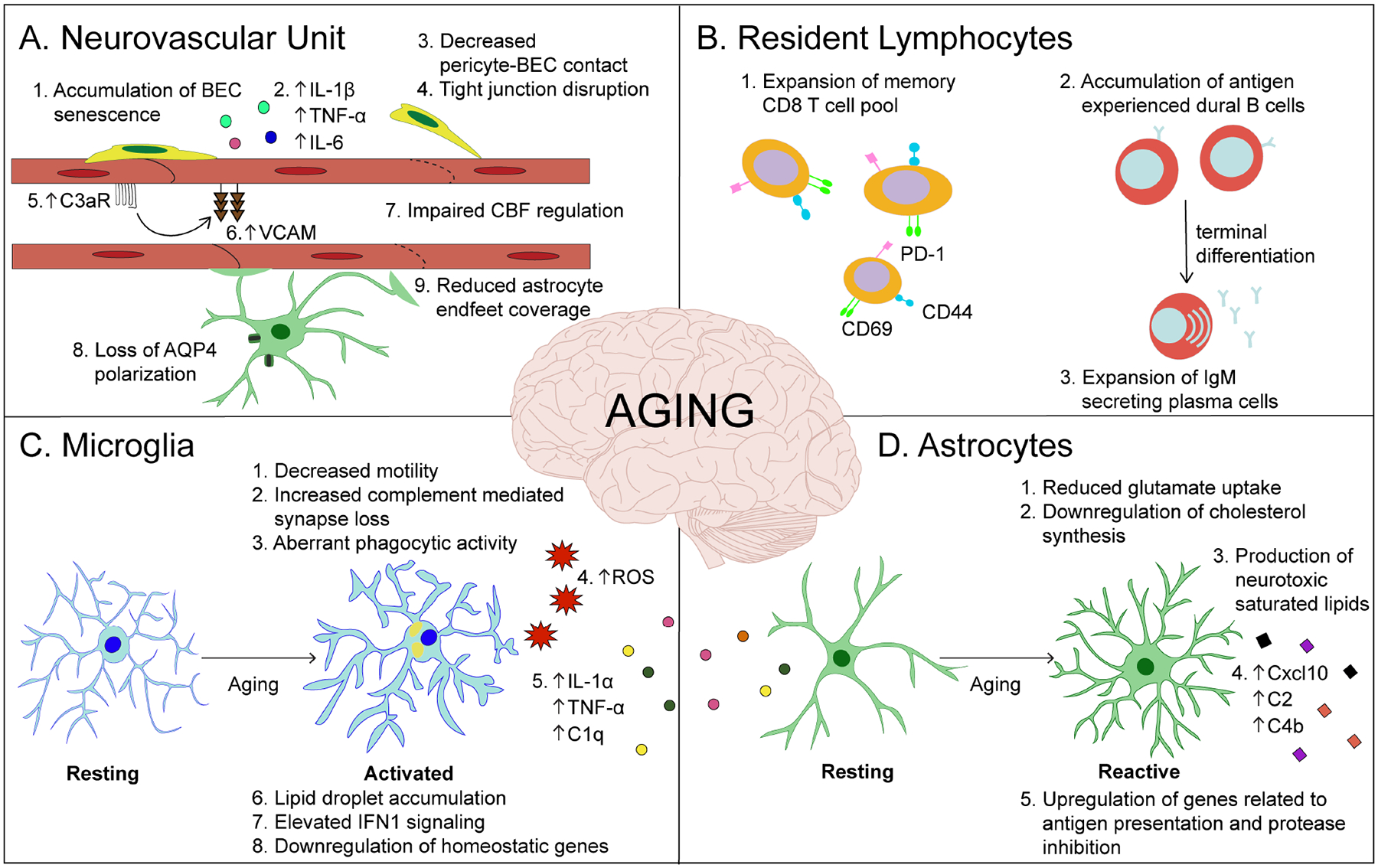
Figure 1.
Figure 1.. Age-related changes in neuro-immune crosstalk.
The aging brain shows increased levels of inflammation. A) Aging results in vascular inflammation (red), which is characterized by increased expression of cell adhesion molecules (e.g. VCAM-1), cytokine production, blood-brain barrier permeability and dysregulation of vascular tone - all of which contribute to age-related atherosclerosis, hypertension, and stroke. B) There is a prominent increase in activated memory CD8+ T cells (orange) in the aged brain. Aged dura shows a distinct population of antigen experienced B cells (red) with an expansion of IgM plasma cells. C) Aged microglia (light blue) upregulate expression of proinflammatory cytokines and type one interferon (IFN1) signaling, downregulate homeostatic genes and accumulate lipid droplets. Functionally, aged microglia exhibit a reduced phagocytic capacity and motility. Microglia-derived C3 complement component mediates age-dependent synapse loss in neurons. Activated microglia further produce IL-1α, TNFα, and C1q, which are necessary and sufficient to induce a neuroinflammatory reactive astrocyte phenotype (green) exacerbated in the aged brain. D) Reactive astrocytes (green) in the aged brain significantly upregulate C3, C4b, Cxcl10, GFAP, Serpina3n and major histocompatibility complex (MHC) class I genes. The production of complement and saturated lipids by reactive astrocytes, as well as a downregulation of cholesterol synthesis, favor synapse elimination in the aged brain.
Figure 2.
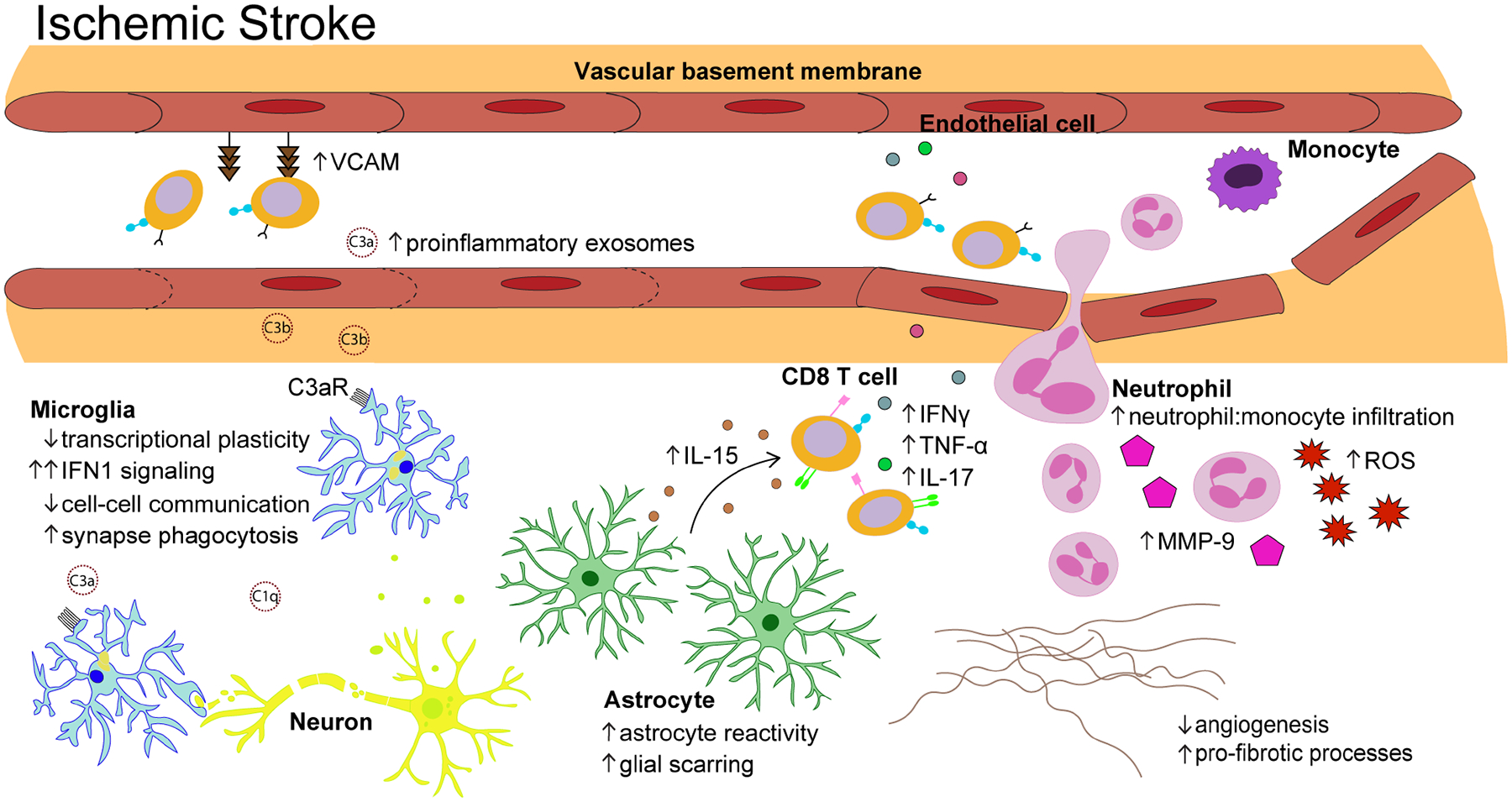
Figure 2.. The immune response to ischemic stroke in the aged brain.
Following ischemic stroke, aged microglia (light blue) demonstrate a blunted transcriptional response dominated by genes associated with IFN1 signaling. The complement components that infiltrate the brain from serum exosomes bind to C3a receptors on aged microglia and trigger excessive synapse phagocytosis. Astrocyte reactivity (green) is exacerbated after ischemic stroke, leading to accelerated glial scar formation. Ischemic injury triggers aged astrocytes to significantly upregulate IL-15 which promotes further accumulation of CD8+ T cells (orange) that recruit other peripheral immune cells through secretion of proinflammatory cytokines. The ratio of neutrophils (pink) to monocytes (purple) is significantly increased in the aged brain after ischemic stroke and infiltrating neutrophils are highly metabolically active, secreting large amounts of matrix metalloproteinase (MMP)-9 and reactive oxygen species (ROS). Genes related to angiogenesis and extracellular matrix (ECM) remodeling (e.g. Col3a1, Col6a1, Pdgfrb, Lox, Angptl4, Ecm, Mmp12, Eln) are significantly downregulated in the aged brain relative to that observed in young animals, indicative of reduced vascular remodeling.

References

    1. Collaborators, G.B.D.S., Global, regional, and national burden of stroke and its risk factors, 1990–2019: a systematic analysis for the Global Burden of Disease Study 2019. Lancet Neurol, 2021. 20(10): p. 795–820. - PMC - PubMed
    1. Bamford J, et al., A prospective study of acute cerebrovascular disease in the community: the Oxfordshire Community Stroke Project--1981–86. 2. Incidence, case fatality rates and overall outcome at one year of cerebral infarction, primary intracerebral and subarachnoid haemorrhage. J Neurol Neurosurg Psychiatry, 1990. 53(1): p. 16–22. - PMC - PubMed
    1. Bonita R, Solomon N, and Broad JB, Prevalence of stroke and stroke-related disability. Estimates from the Auckland stroke studies. Stroke, 1997. 28(10): p. 1898–902. - PubMed
    1. Kammersgaard LP, et al., Short- and long-term prognosis for very old stroke patients. The Copenhagen Stroke Study. Age Ageing, 2004. 33(2): p. 149–54. - PubMed
    1. Rothwell PM, et al., Population-based study of event-rate, incidence, case fatality, and mortality for all acute vascular events in all arterial territories (Oxford Vascular Study). Lancet, 2005. 366(9499): p. 1773–83. - PubMed

Publication types