


Waldenström macroglobulinemia: 2023 update on diagnosis, risk stratification, and management
- PMID: 36588395
- PMCID: PMC10249724
- DOI: 10.1002/ajh.26796
Waldenström macroglobulinemia: 2023 update on diagnosis, risk stratification, and management
Abstract
Disease overview: Waldenström macroglobulinemia (WM) is a lymphoplasmacytic lymphoma with immunoglobulin M (IgM) monoclonal protein. Clinical features include anemia, thrombocytopenia, hepatosplenomegaly, lymphadenopathy, and rarely hyperviscosity.
Diagnosis: Presence of IgM monoclonal protein associated with ≥10% clonal lymphoplasmacytic cells in bone marrow confirms the diagnosis. The L265P mutation in MYD88 is detectable in more than 90% of patients and is found in most IgM MGUS patients. MYD88 is not required for the diagnosis.
Risk stratification: Age, hemoglobin level, platelet count, β2 microglobulin, LDH, and monoclonal IgM concentrations are characteristics that are predictive of outcomes.
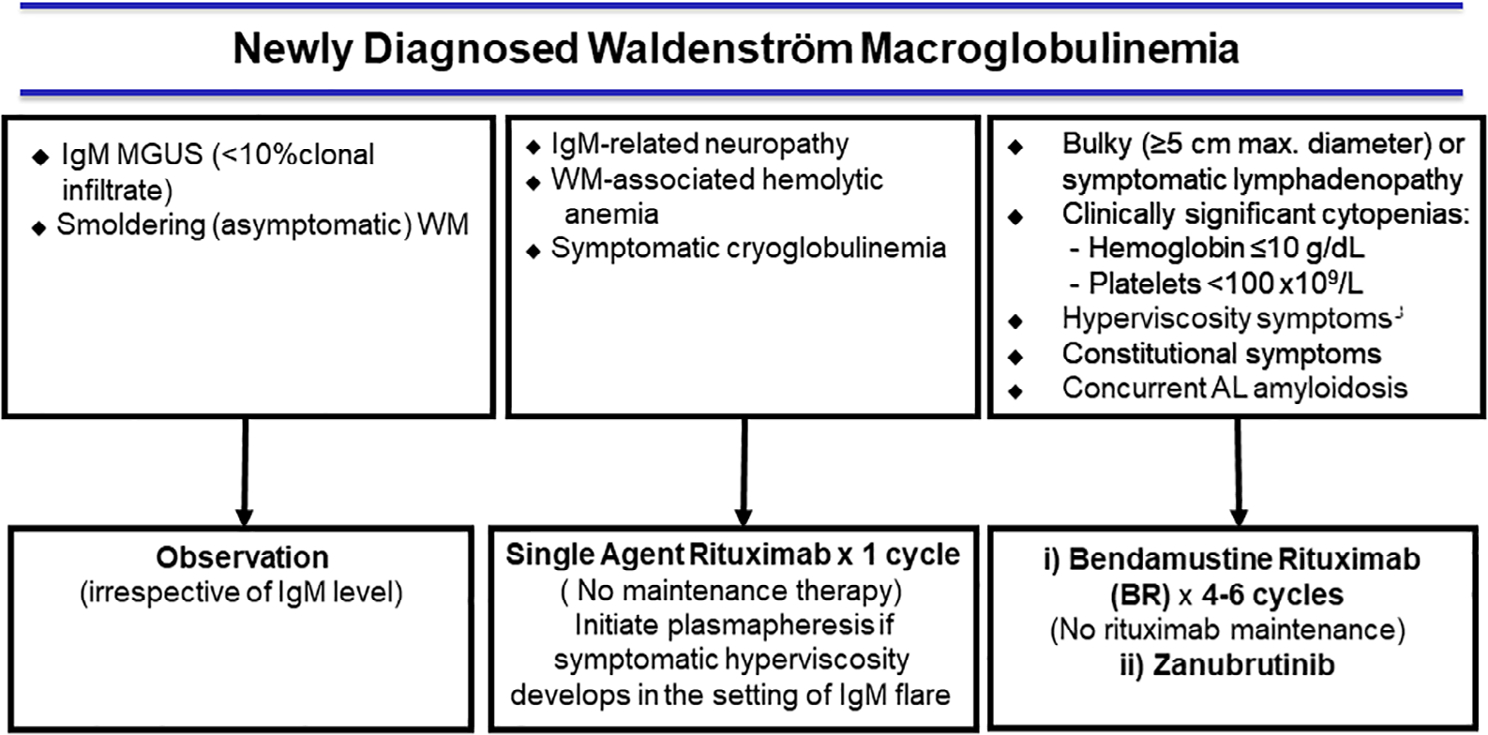
Risk-adapted therapy: Not all patients who fulfill WM criteria require therapy; these patients can be observed until symptoms develop. Rituximab-monotherapy is inferior to regimens that combine it with bendamustine, an alkylating agent, a proteosome inhibitor, or a BTK inhibitor. The preferred Mayo Clinic induction is either rituximab and bendamustine (without rituximab maintenance) or zanubrutinib.
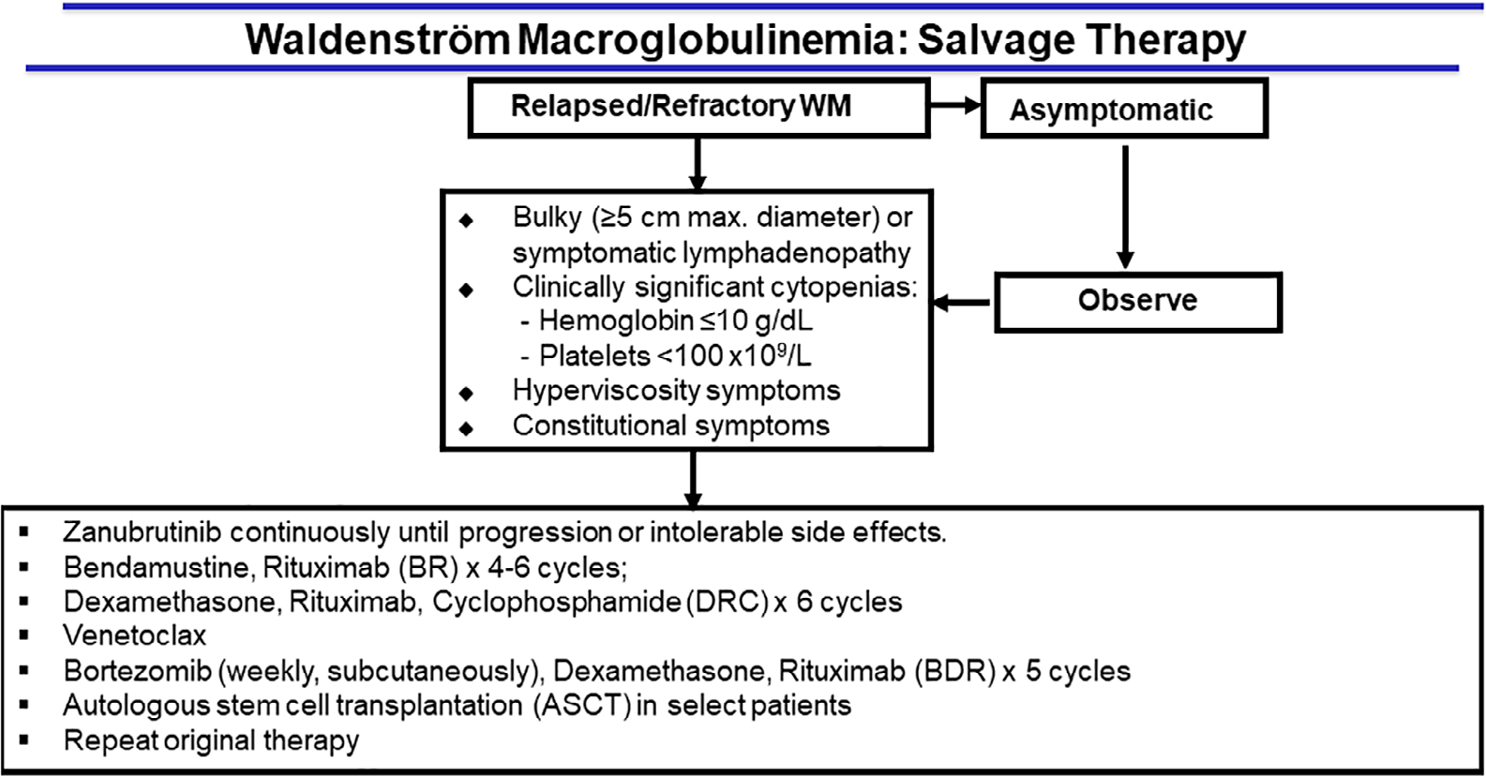
Management of refractory disease: Bortezomib, cyclophosphamide, fludarabine, thalidomide, everolimus, Bruton Tyrosine Kinase inhibitors, carfilzomib, lenalidomide, bendamustine, and venetoclax have all been shown to have activity in relapsed WM. Given WM's natural history, the reduction of therapy toxicity is an important part of treatment selection.
© 2023 Wiley Periodicals LLC.
Conflict of interest statement
CONFLICT OF INTEREST
Dr Gertz has received honoraria from Celgene Corporation (Summit, NJ), Millennium: The Takeda Oncology Company (Cambridge, MA), The Binding Site Group Ltd (Birmingham, United Kingdom), Onyx (San Francisco, CA), Novartis (Basel, Switzerland), Ionis (Carlsbad, CA), Amgen (Thousand Oaks, CA); Prothena (San Francisco, CA) Sandoz (Princeton, NJ), AbbVie (North Chicago, IL), Alnylam (Cambridge, MA), Prothena (South San Francisco, CA), Janssen (Beerse, Belgium), Spectrum (Henderson, NV), Apellis (Louisville, KY), Medscape(New York, NY), Physicians Education Resource(Cranbury NJ), Research to Practice (Miami, FL), Teva (Petah Tikva, Israel), Astra Zeneca.
Figures
References
-
- Castillo JJ, Advani RH, Branagan AR, et al. Consensus treatment recommendations from the tenth international workshop for Waldenstrom macroglobulinaemia. Lancet Haematol. 2020;7(11):e827–e837. - PubMed
-
- Trojani A, Di Camillo B, Bossi LE, et al. Identification of a candidate gene set signature for the risk of progression in IgM MGUS to smoldering/symptomatic Waldenstrom macroglobulinemia (WM) by a comparative transcriptome analysis of B cells and plasma cells. Cancers. 2021;13(8):1837. doi: 10.3390/cancers13081837. - DOI - PMC - PubMed
Publication types
MeSH terms
Substances
Grants and funding
LinkOut - more resources
Full Text Sources
Research Materials