


40 Years of Duocarmycins: A Graphical Structure/Function Review of Their Chemical Evolution, from SAR to Prodrugs and ADCs
- PMID: 36590260
- PMCID: PMC9795467
- DOI: 10.1021/jacsau.2c00448
40 Years of Duocarmycins: A Graphical Structure/Function Review of Their Chemical Evolution, from SAR to Prodrugs and ADCs
Erratum in
-
Correction to "40 Years of Duocarmycins: A Graphical Structure/Function Review of Their Chemical Evolution, from SAR to Prodrugs and ADCs".JACS Au. 2023 Apr 19;3(5):1534. doi: 10.1021/jacsau.3c00137. eCollection 2023 May 22. JACS Au. 2023. PMID: 37234106 Free PMC article.
Abstract
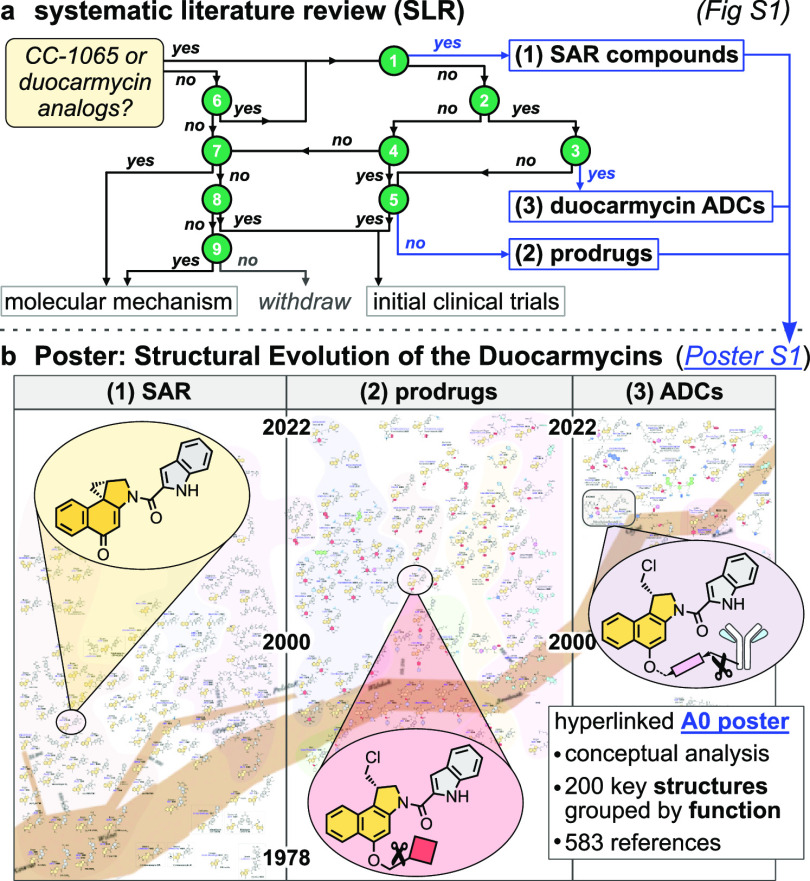
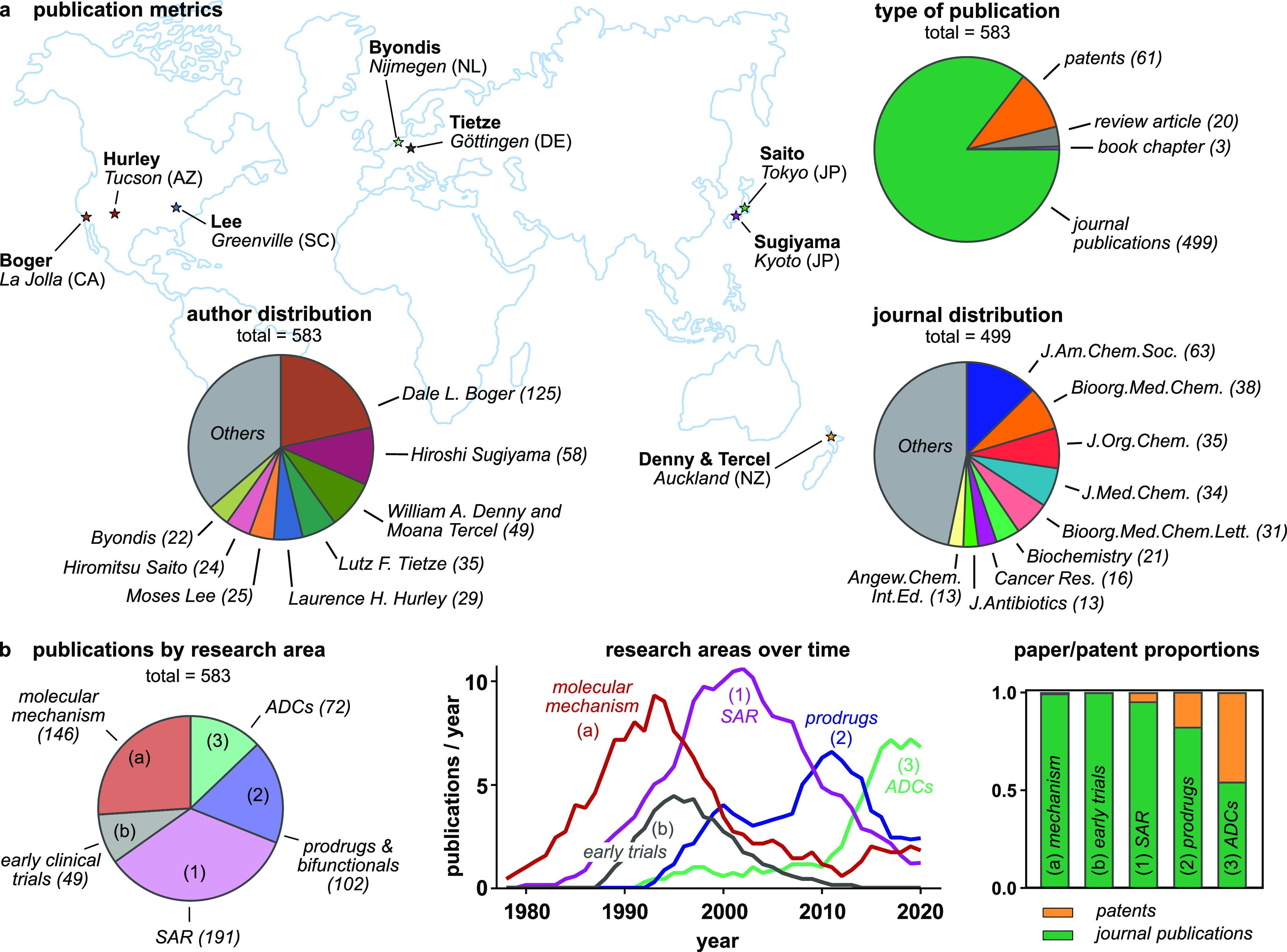
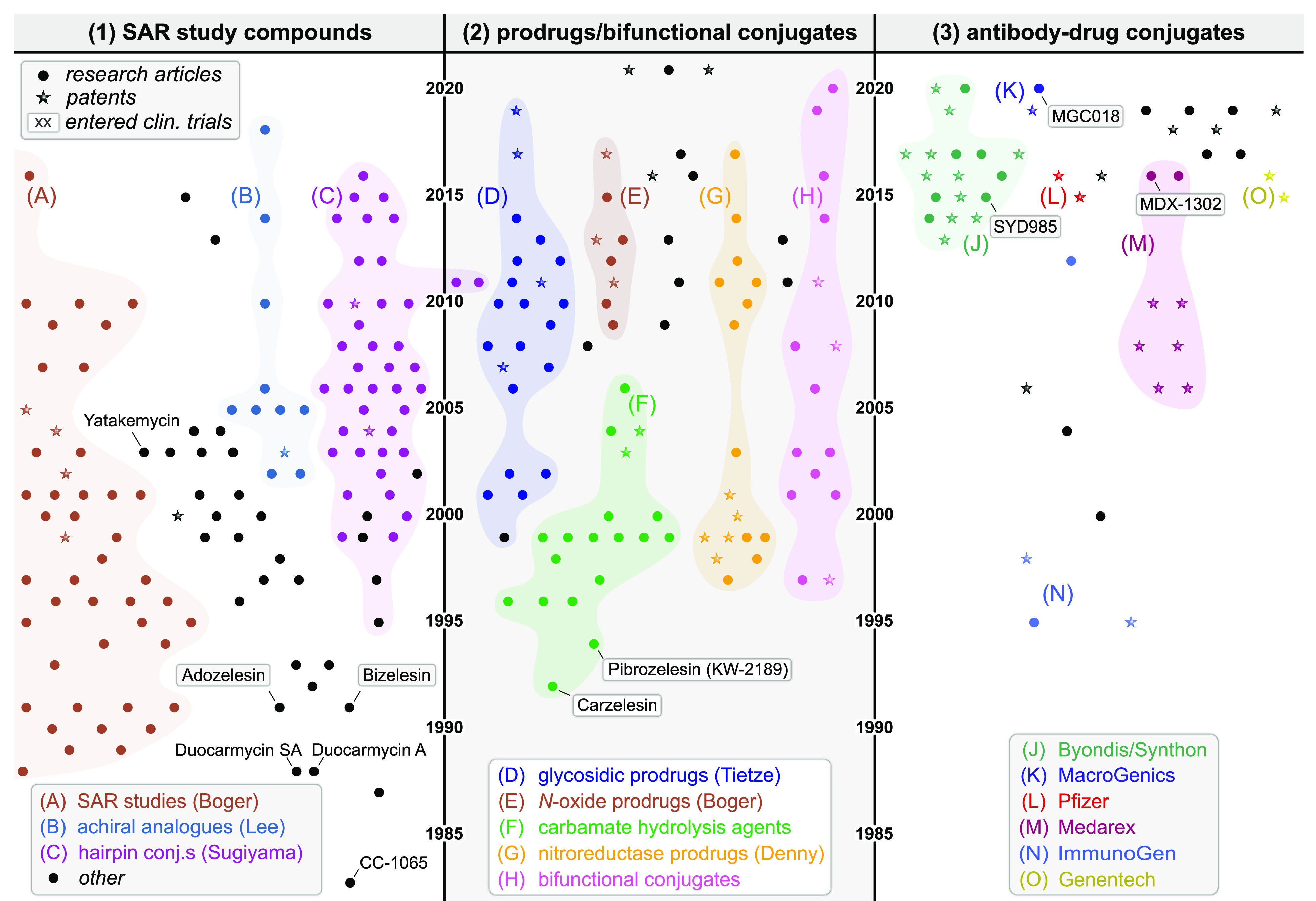
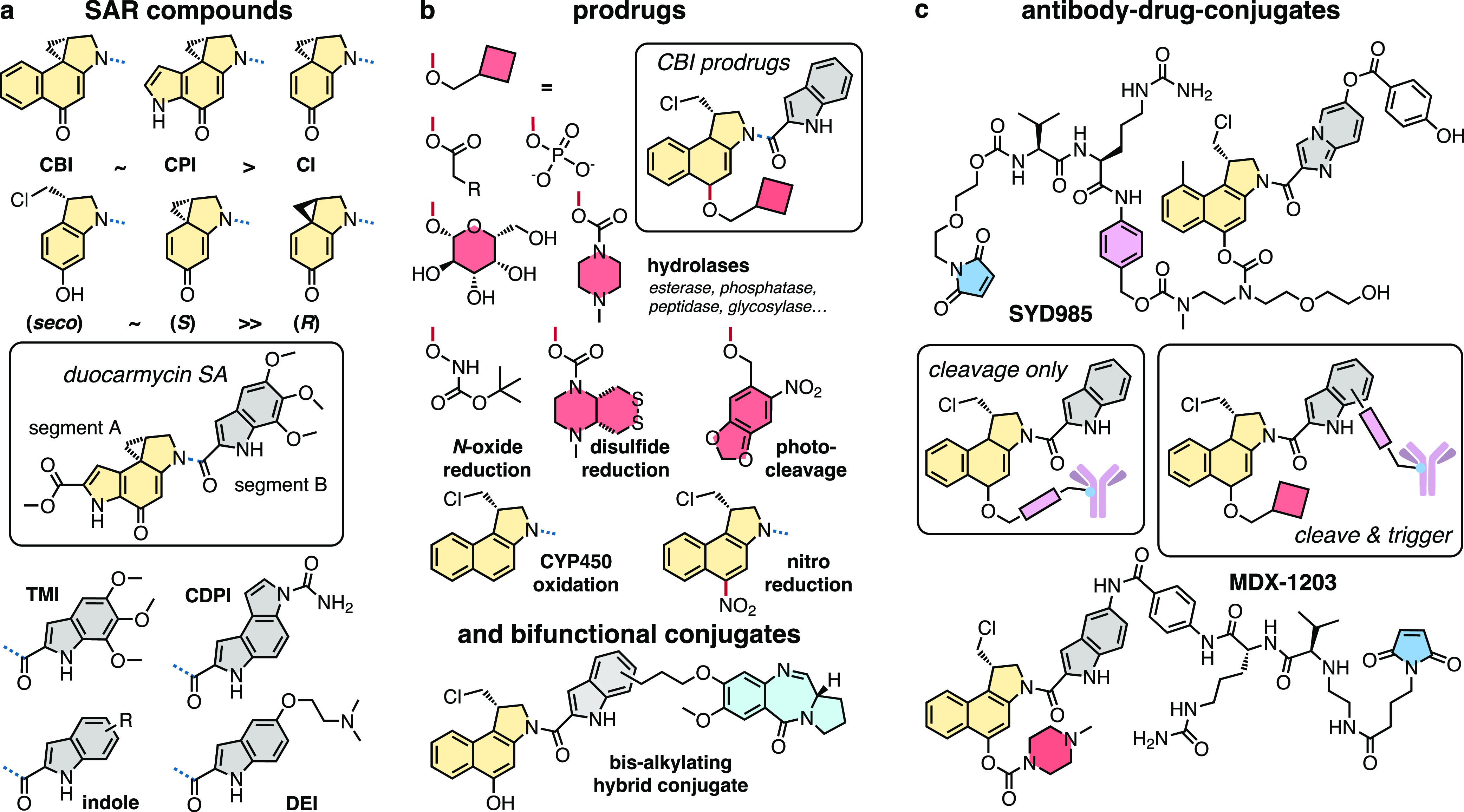
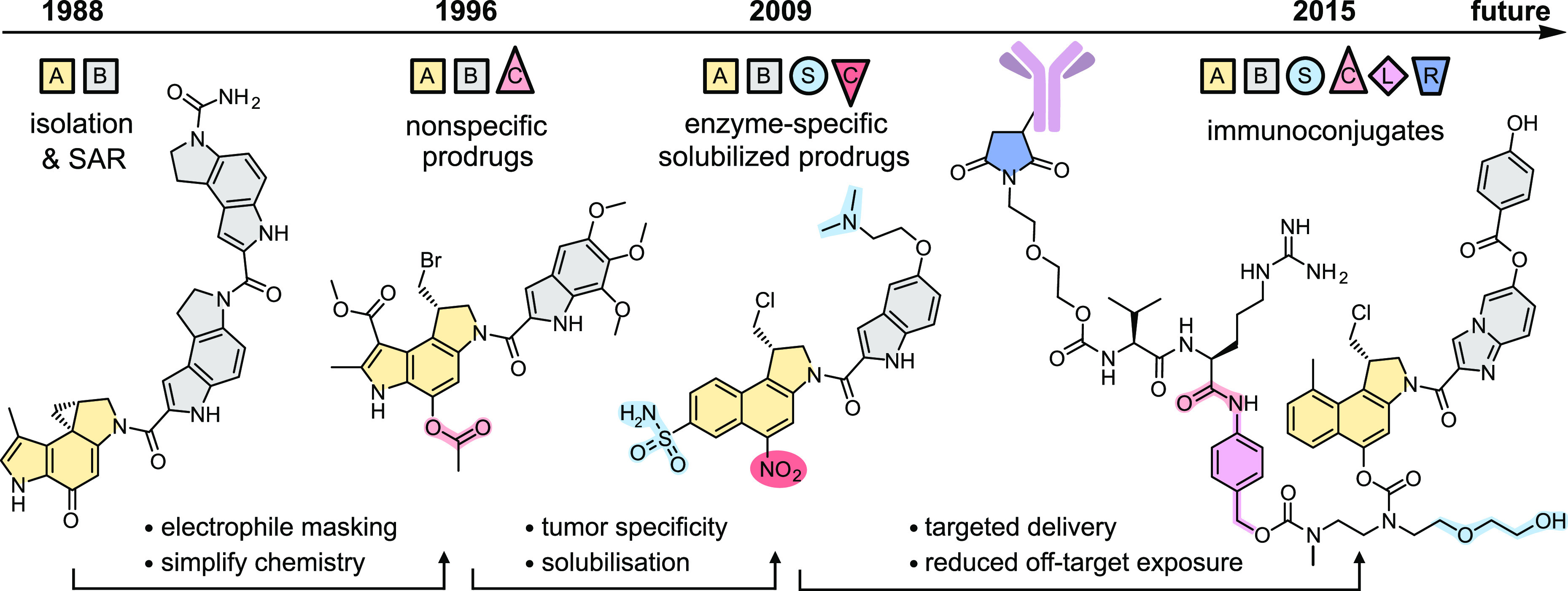
Synthetic analogues of the DNA-alkylating cytotoxins of the duocarmycin class have been extensively investigated in the past 40 years, driven by their high potency, their unusual mechanism of bioactivity, and the beautiful modularity of their structure-activity relationship (SAR). This Perspective analyzes how the molecular designs of synthetic duocarmycins have evolved: from (1) early SAR studies, through to modern applications for directed cancer therapy as (2) prodrugs and (3) antibody-drug conjugates in late-stage clinical development. Analyzing 583 primary research articles and patents from 1978 to 2022, we distill out a searchable A0-format "Minard map" poster of ca. 200 key structure/function-tuning steps tracing chemical developments across these three key areas. This structure-based overview showcases the ingenious approaches to tune and target bioactivity, that continue to drive development of the elegant and powerful duocarmycin platform.
© 2022 The Authors. Published by American Chemical Society.
Conflict of interest statement
The authors declare no competing financial interest.
Figures
References
-
- Hanka L. J.; Dietz A.; Gerpheide S. A.; Kuentzel S. L.; Martin D. G. CC-1065 (NSC-298223), A New Antitumor Antibiotic. Production, in Vitro Biological Activity, Microbiological Assays and Taxonomy of the Producing Microorganism. J. Antibiot. 1978, 31 (12), 1211–1217. 10.7164/antibiotics.31.1211. - DOI - PubMed
-
- Boger D. L.; Coleman R. S. Total Synthesis of (+)-CC-1065 and Ent-(−)-CC-1065. J. Am. Chem. Soc. 1988, 110 (4), 1321–1323. 10.1021/ja00212a067. - DOI
-
- Boger D. L.; Machiya K.; Hertzog D. L.; Kitos P. A.; Holmes D. Total Synthesis and Preliminary Evaluation of (+)- and Ent-(−)-Duocarmycin SA. J. Am. Chem. Soc. 1993, 115 (20), 9025–9036. 10.1021/ja00073a019. - DOI
Publication types
LinkOut - more resources
Full Text Sources
Other Literature Sources
Miscellaneous