


Impact of the COVID-19 Pandemic on Liver Cancer Staging at a Multidisciplinary Liver Cancer Clinic
- PMID: 36590894
- PMCID: PMC9782462
- DOI: 10.1097/AS9.0000000000000207
Impact of the COVID-19 Pandemic on Liver Cancer Staging at a Multidisciplinary Liver Cancer Clinic
Abstract
To compare liver cancer resectability rates before and during the COVID-19 pandemic.
Background: Liver cancers usually present with nonspecific symptoms or are diagnosed through screening programs for at-risk patients, and early detection can improve patient outcomes. In 2020, the COVID-19 pandemic upended medical care across all specialties, but whether the pandemic was associated with delays in liver cancer diagnosis is not known.
Methods: We performed a retrospective review of all patients evaluated at the Johns Hopkins Multidisciplinary Liver Cancer Clinic from January 2019 to June 2021 with a new diagnosis of suspected or confirmed hepatocellular carcinoma (HCC) or biliary tract cancer (BTC).
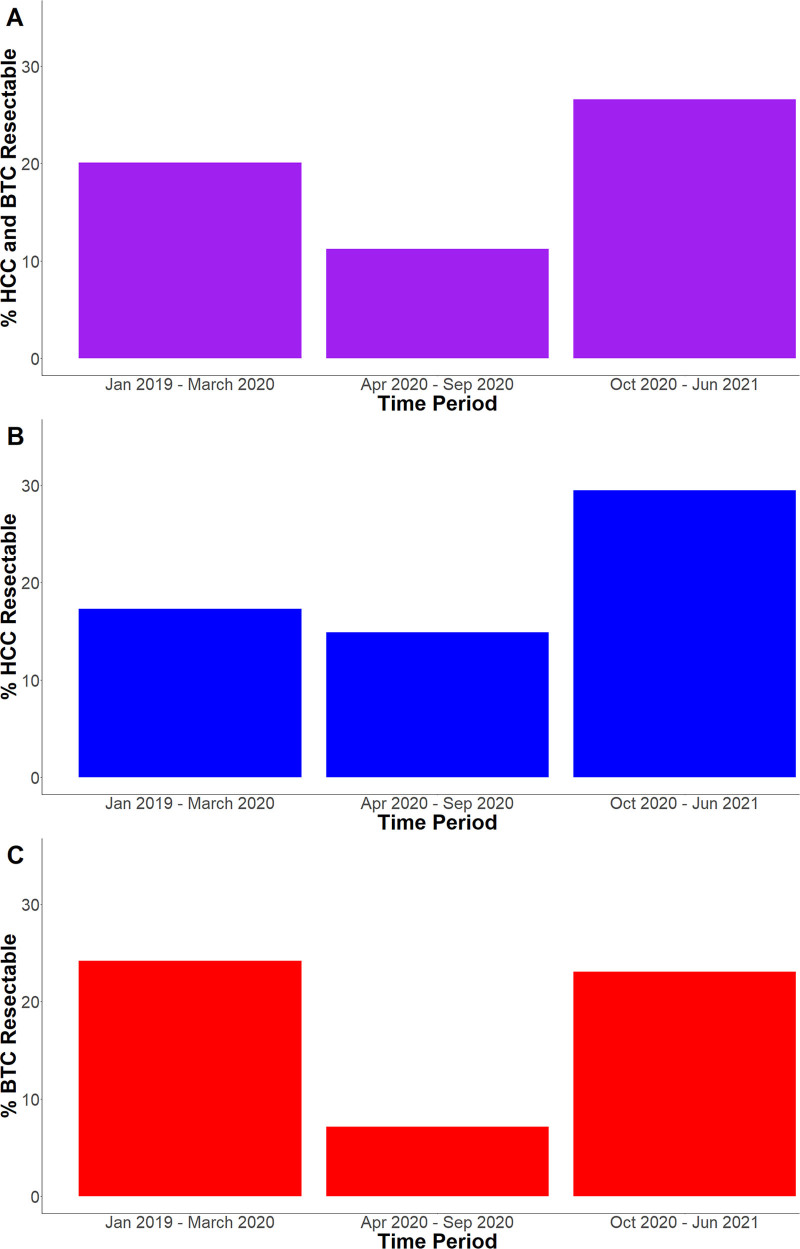
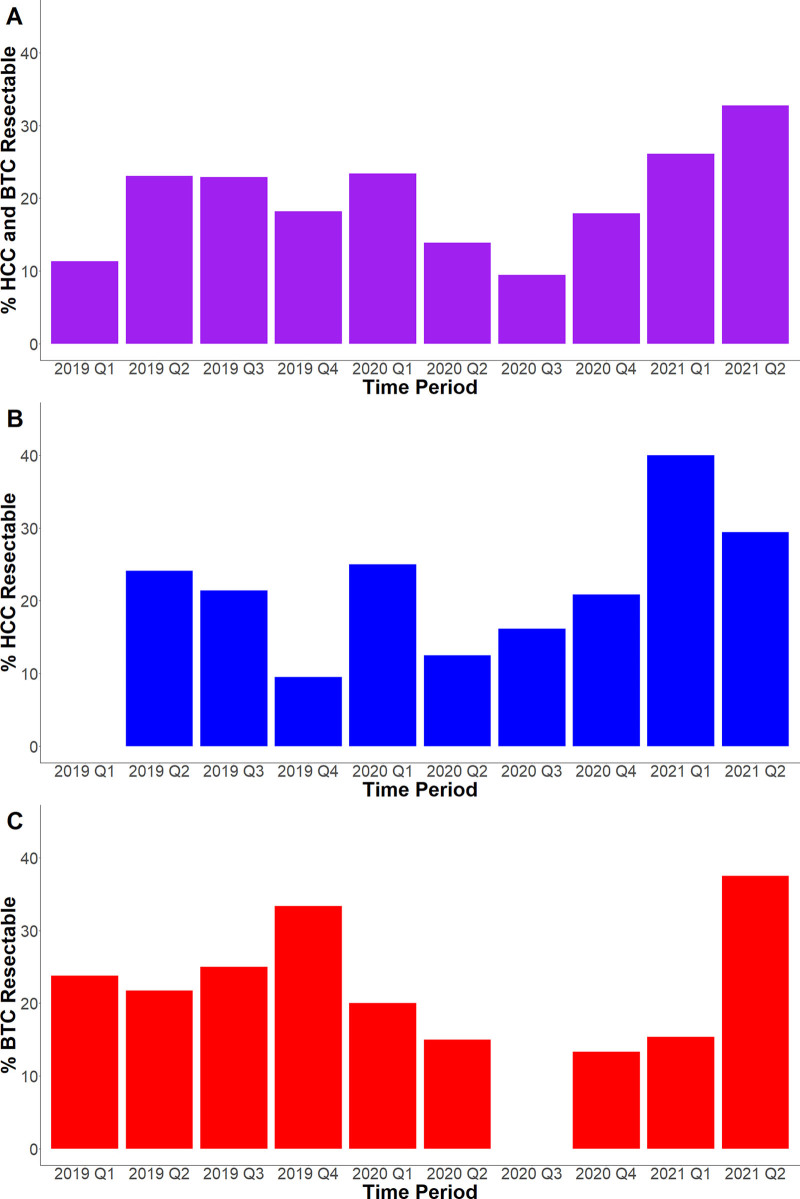
Results: There were 456 liver cancer patients (258 HCC and 198 BTC). From January 2019 to March 2020 (pre-pandemic), the surgical resectability rate was 20%. The subsequent 6 months (early pandemic), the resectability rate decreased to 11%. Afterward from October 2020 to June 2021 (late pandemic), the resectability rate increased to 27%. The resectability rate early pandemic was significantly lower than that for pre-pandemic and later pandemic combined (11% lower; 95% confidence interval [CI], 2%-20%). There was no significant difference in resectability rates pre-pandemic and later pandemic (7% difference; 95% CI, -3% to 16%). In subgroup analyses, the early pandemic was associated with a larger impact in BTC resectability rates than HCC resectability rates. Time from BTC symptom onset until Multidisciplinary Liver Clinic evaluation increased by over 6 weeks early pandemic versus pre-pandemic (Hazard Ratio, 0.63; 95% CI, 0.44-0.91).
Conclusions: During the early COVID-19 pandemic, we observed a drop in the percentage of patients presenting with curable liver cancers. This may reflect delays in liver cancer diagnosis and contribute to excess mortality related to the COVID-19 pandemic.
Keywords: COVID-19; bile duct cancer; cholangiocarcinoma; hepatocellular carcinoma; liver cancer.
Copyright © 2022 The Author(s). Published by Wolters Kluwer Health, Inc.
Conflict of interest statement
Disclosure: D.L. was funded by a grant from the Johns Hopkins Center for Innovative Medicine. M.Y. was funded by grants from the National Institutes of Health and National Cancer Institute. The remaining authors declare that they have nothing to disclose.
Figures
References
-
- Akinyemiju T, Abera S, Ahmed M, et al. ; Global Burden of Disease Liver Cancer Collaboration. The burden of primary liver cancer and underlying etiologies from 1990 to 2015 at the global, regional, and national level: results from the Global Burden Of Disease Study 2015. JAMA Oncol. 2017;3:1683. - PMC - PubMed
-
- Bray F, Ferlay J, Soerjomataram I, et al. Global cancer statistics 2018: GLOBOCAN estimates of incidence and mortality worldwide for 36 cancers in 185 countries. CA Cancer J Clin. 2018;68:394–424. - PubMed
-
- American Cancer Society. Liver Cancer Survival Rates. 2021. Available at: https://www.cancer.org/cancer/liver-cancer/detection-diagnosis-staging/s.... Accessed December 30, 2021.
-
- American Cancer Society. Survival Rates for Bile Duct Cancer. 2021. Available at: https://www.cancer.org/cancer/bile-duct-cancer/detection-diagnosis-stagi.... Accessed December 30, 2021.
Grants and funding
LinkOut - more resources
Full Text Sources
