. 2023 Feb;29(2):358-365.
doi: 10.1038/s41591-022-02138-x. Epub 2023 Jan 2.

Infectiousness of SARS-CoV-2 breakthrough infections and reinfections during the Omicron wave

Affiliations

Infectiousness of SARS-CoV-2 breakthrough infections and reinfections during the Omicron wave

Sophia T Tan et al. Nat Med. 2023 Feb.

Abstract

Severe acute respiratory syndrome coronavirus 2 (SARS-CoV-2) breakthrough infections in vaccinated individuals and reinfections in previously infected individuals have become increasingly common. Such infections highlight a broader need to understand the contribution of vaccination, including booster doses, and natural immunity to the infectiousness of individuals with SARS-CoV-2 infections, especially in high-risk populations with intense transmission, such as in prisons. Here we show that both vaccine-derived and naturally acquired immunity independently reduce the infectiousness of persons with Omicron variant SARS-CoV-2 infections in a prison setting. Analyzing SARS-CoV-2 surveillance data from December 2021 to May 2022 across 35 California state prisons with a predominately male population, we estimate that unvaccinated Omicron cases had a 36% (95% confidence interval (CI): 31-42%) risk of transmitting infection to close contacts, as compared to a 28% (25-31%) risk among vaccinated cases. In adjusted analyses, we estimated that any vaccination, prior infection alone and both vaccination and prior infection reduced an index case's risk of transmitting infection by 22% (6-36%), 23% (3-39%) and 40% (20-55%), respectively. Receipt of booster doses and more recent vaccination further reduced infectiousness among vaccinated cases. These findings suggest that, although vaccinated and/or previously infected individuals remain highly infectious upon SARS-CoV-2 infection in this prison setting, their infectiousness is reduced compared to individuals without any history of vaccination or infection. This study underscores benefit of vaccination to reduce, but not eliminate, transmission.


Conflict of interest statement

Competing interests: JAL has received grants, honoraria, and speaker fees from Pfizer; grants and honoraria from Merck, Sharp, & Dohme; and honoraria from VaxCyte; all unrelated to the subject of this work. ATK and DS received funding from California Prison Health Care Receivership. The remaining authors have no disclosures.

Figures

Figure 1:
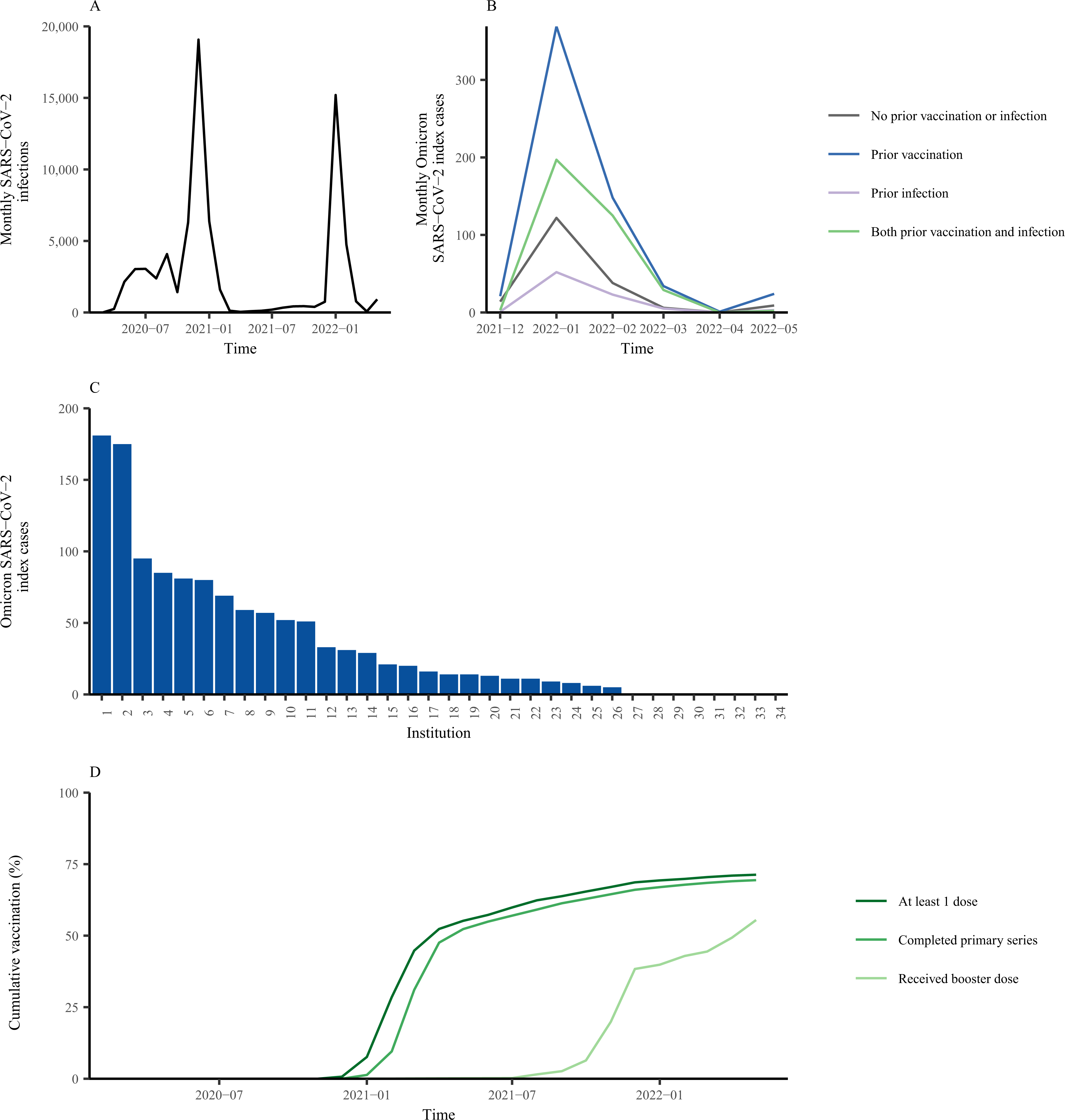
Figure 1:. SARS-CoV-2 infections and vaccination over time in the study population in California state prisons.
We obtained data on SARS-CoV-2 infections, vaccination, and contact history for residents incarcerated in the California state prison system from March 1, 2020, to May 20, 2022. Panel A shows the number of SARS-CoV-2 infections over time in the study population. Panel B shows the number of SARS-CoV-2 index cases included in the analysis over time, stratified by history of prior natural infection and vaccination. Panel C shows the number of SARS-CoV-2 index cases by institution during the Omicron wave (December 15, 2021, to May 20, 2022) included in the analysis. Panel D shows the COVID-19 vaccine coverage over time for residents in the California state prison system by primary series and booster dose. The shaded region in panels A and D corresponds with the Omicron variant wave.
Figure 2:
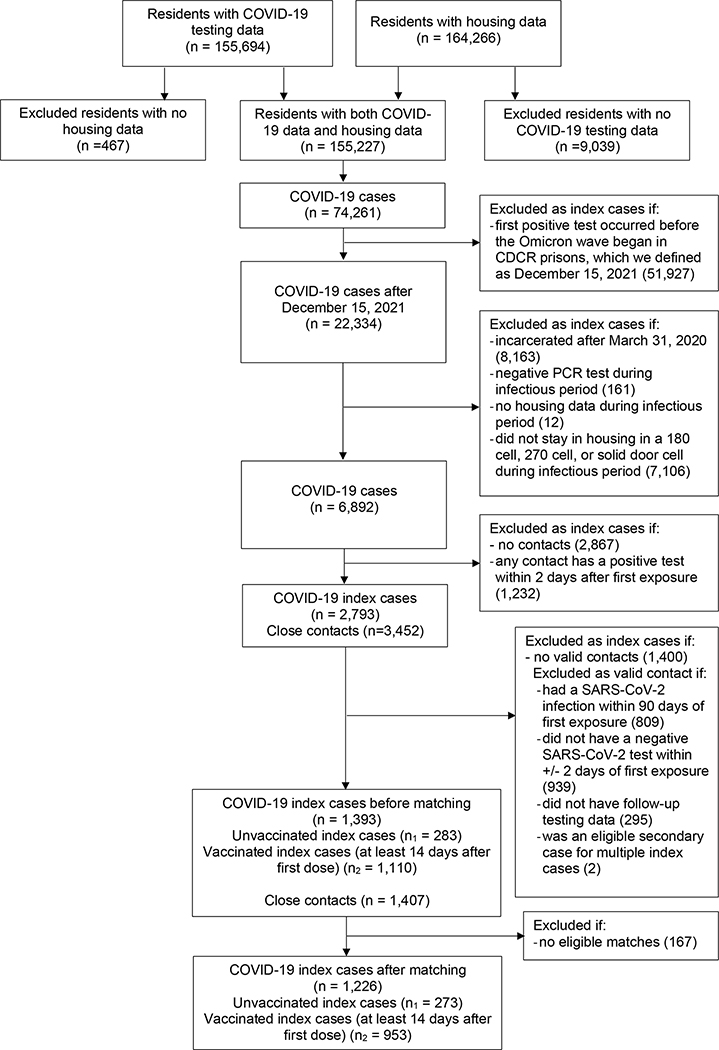
Figure 2:. Study population flow chart.
We obtained data on residents incarcerated in the California state prison system from March 1, 2020, to May 20, 2022, who were diagnosed with COVID-19 based on a positive molecular test. We applied the inclusion and exclusion criteria to Omicron index cases of COVID-19 and close contacts who shared a cell for at least one night. The sample size at each step is plotted in the figure.
Figure 3:
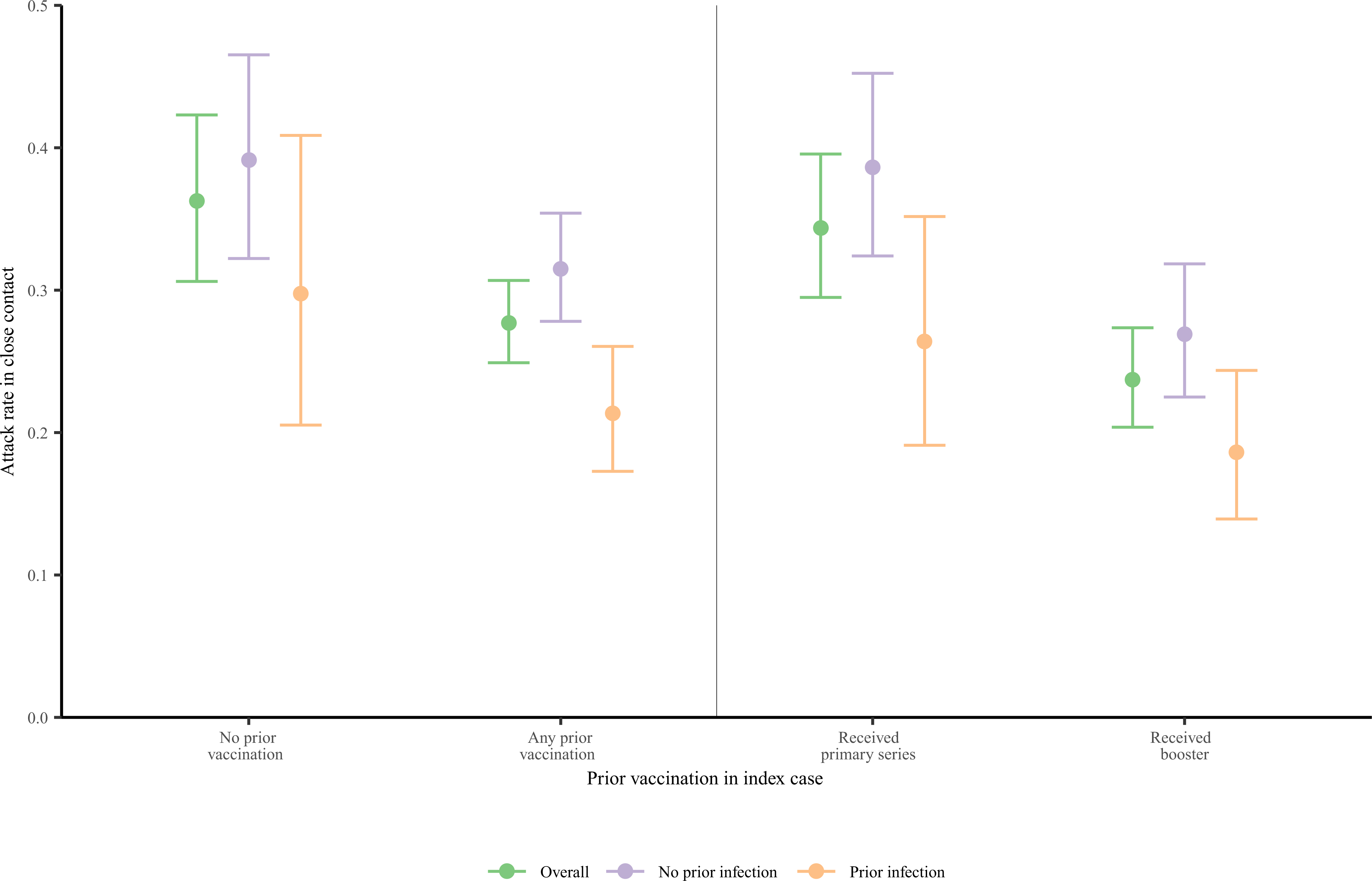
Figure 3:. Unadjusted Omicron SARS-CoV-2 attack rate in close contact based on index cases’ vaccine and prior natural infection status.
We identified index cases of SARS-CoV-2 infections in residents of the California state prison system who were in close contact with another resident who was confirmed negative for SARS-CoV-2 at the time of contact. We estimated the outcome of subsequent SARS-CoV-2 infection in the close contact under different immune conditions of the index case, with a composite study outcome of attack rate. The attack rate is the probability of infection in the close contact given exposure to an index case. We plot the unadjusted attack rate (represented by points) and 95% confidence intervals (represented by error bars) of SARS-CoV-2 in the close contact stratified by the index cases’ overall vaccine status, the number of vaccine doses in the index case, and index cases’ history of natural infection.
Figure 4:
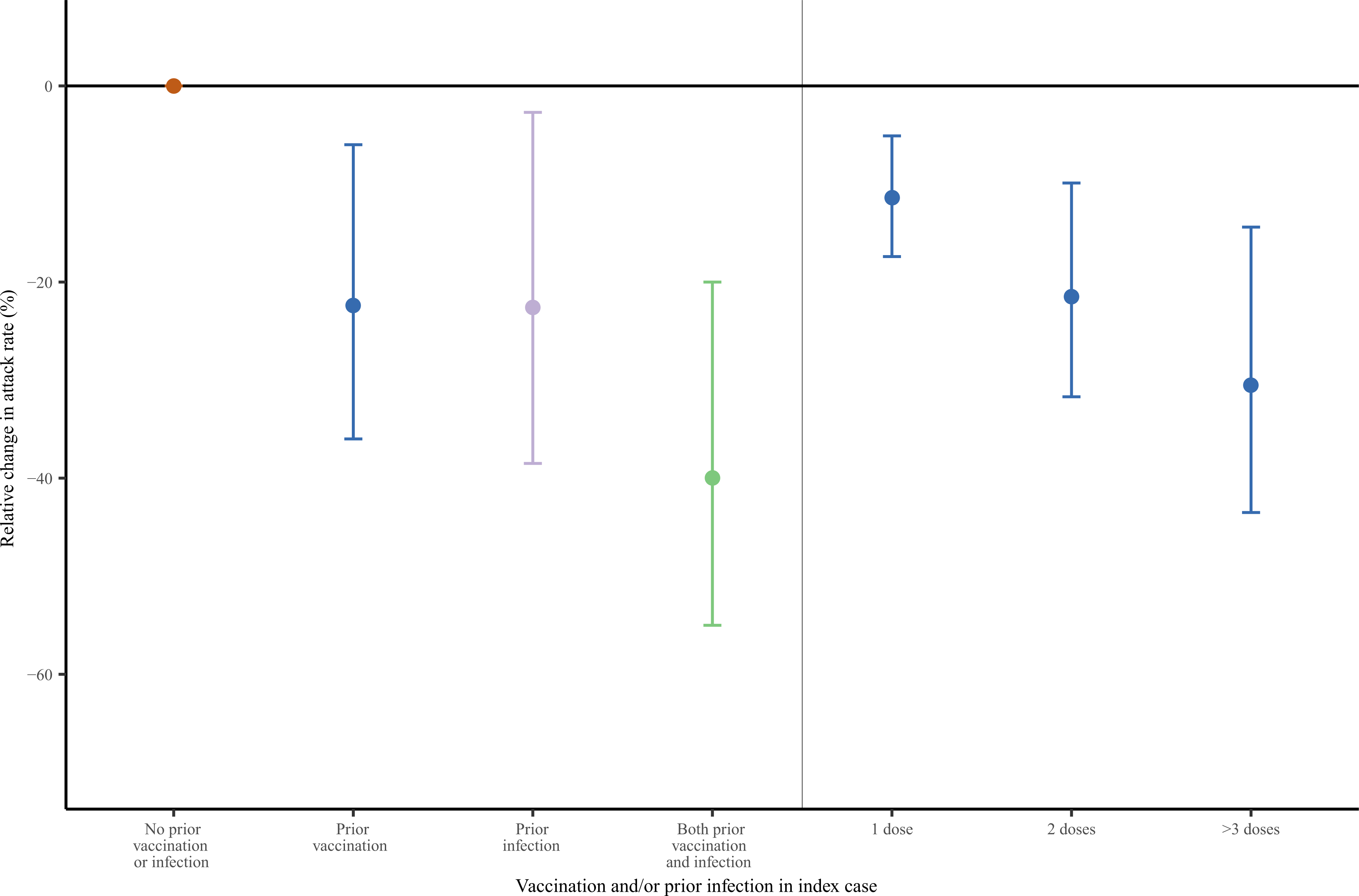
Figure 4:. Relative change in Omicron SARS-CoV-2 attack rate in close contacts based on index cases’ vaccine and prior natural infection status in an adjusted model.
We applied a robust Poisson regression model to estimate the relationship between vaccination and natural immunity in index cases on their risk of SARS-CoV-2 transmission in close contacts. We plotted the adjusted relative reduction in infectiousness of index cases (represented as points), as measured via attack rate in close contacts, conferred by vaccination alone, prior infection alone, and both prior vaccination and infection. The estimate for both prior vaccination and infection is based on a linear combination of regression coefficients, given lack of formal statistical interaction between vaccination and prior infection. We conducted a separate regression analysis (right side of graph) that was stratified based on the number of vaccine doses received by the index case. We plotted cluster-robust 95% confidence intervals (represented by error bars).

Update of

References

    1. Koelle K, Martin MA, Antia R, Lopman B, Dean NE. The changing epidemiology of SARS-CoV-2. Science. 2022;375(6585):1116–1121. doi: 10.1126/science.abm4915 - DOI - PMC - PubMed
    1. Pulliam JRC, van Schalkwyk C, Govender N, et al. Increased risk of SARS-CoV-2 reinfection associated with emergence of Omicron in South Africa. Science. 2022;376(6593):eabn4947. doi: 10.1126/science.abn4947 - DOI - PMC - PubMed
    1. Altarawneh HN, Chemaitelly H, Hasan MR, et al. Protection against the Omicron Variant from Previous SARS-CoV-2 Infection. N Engl J Med. 2022;386(13):1288–1290. doi: 10.1056/NEJMc2200133 - DOI - PMC - PubMed
    1. Accorsi EK, Britton A, Fleming-Dutra KE, et al. Association Between 3 Doses of mRNA COVID-19 Vaccine and Symptomatic Infection Caused by the SARS-CoV-2 Omicron and Delta Variants. JAMA. 2022;327(7):639–651. doi: 10.1001/jama.2022.0470 - DOI - PMC - PubMed
    1. CDC. COVID Data Tracker. Centers for Disease Control and Prevention. Published March 28, 2020. Accessed June 9, 2022. https://covid.cdc.gov/covid-data-tracker

Methods-only references

    1. Meyerowitz EA, Richterman A, Gandhi RT, Sax PE. Transmission of SARS-CoV-2: A Review of Viral, Host, and Environmental Factors. Ann Intern Med. 2021;174(1):69–79. doi: 10.7326/M20-5008 - DOI - PMC - PubMed
    1. Substantial undocumented infection facilitates the rapid dissemination of novel coronavirus (SARS-CoV-2). Accessed June 28, 2022. 10.1126/science.abb3221 - DOI - PMC - PubMed
    1. Introduction. Accessed June 9, 2022. https://cran.r-project.org/web/packages/MatchIt/vignettes/MatchIt.html
    1. Zou G A Modified Poisson Regression Approach to Prospective Studies with Binary Data. Am J Epidemiol. 2004;159(7):702–706. doi: 10.1093/aje/kwh090 - DOI - PubMed
    1. sophttan/CDCR-CalProtect. GitHub. Accessed June 9, 2022. https://github.com/sophttan/CDCR-CalProtect

Publication types

Supplementary concepts